By Yevhen Kovalchuk · Updated August 2, 2026 · 6 min read
Short answer
A2L is an ASHRAE safety class for refrigerants with low toxicity and mild flammability. R-32 and R-454B are the best-known A2Ls and replace R-410A in new comfort-cooling equipment because their global warming potential is much lower. They need A2L-rated equipment, leak detection where required, updated codes and technician training. Federal rules changed in May 2026, so check the current dates.
A2L refrigerants are a safety class from ASHRAE Standard 34. The “A” means lower toxicity, and “2L” means mildly flammable, with a very low burning velocity (10 cm/s or less). They are replacing R-410A and similar high-GWP refrigerants in new air-conditioning and some refrigeration equipment because they have far lower global warming potential. The best-known A2Ls are R-32 and R-454B.
What does A2L mean?
ASHRAE classifies refrigerants by toxicity (A lower, B higher) and flammability (1 none, 2L mild, 2 flammable, 3 higher). A2L refrigerants burn only under specific conditions, need a stronger ignition source than propane, and burn slowly. That is why safety rules focus on charge size, ventilation, leak detection and ignition sources rather than banning use.
Which refrigerants are A2L?
| Refrigerant | Type | GWP (AR4, approx.) | Replaces |
|---|---|---|---|
| R-32 | single HFC | about 675 | R-410A in residential and light commercial |
| R-454B | HFC/HFO blend | about 466 | R-410A |
| R-452B | HFC/HFO blend | about 698 | R-410A |
| R-1234ze(E) | HFO | under 1 | R-134a in some chillers |
| R-410A (for comparison) | HFC blend | about 2,088 | not A2L, being phased down |
GWP values vary with the assessment report used. Check the manufacturer’s data and the regulation that applies.
Why is the industry changing?
The AIM Act directs EPA to cut HFC production and consumption by 85% by 2036. Its Technology Transitions rule sets GWP limits for new equipment by sector; for many new comfort-cooling systems that limit is 700. R-410A has a GWP above 2,000, so new systems moved to A2L options. In May 2026 EPA published a revised version of the Technology Transitions requirements, and some compliance dates and sell-through allowances changed. Dates for 2027 also apply to some systems, such as certain supermarket refrigeration and variable refrigerant flow systems. Read the current EPA pages before relying on a date; see what is changing in 2026.
What changes for equipment and codes?
- Equipment. Compressors, coils, controls and sensors are designed for A2L use. An A2L refrigerant must not be put in a system that was not designed for it.
- Leak detection. Many A2L systems include refrigerant sensors and mitigation, such as running the fan when a leak is detected.
- Codes. Texas adopted the 2024 editions of the International and Uniform Mechanical Codes, effective September 1, 2026, in part because the 2021 editions do not cover A2L installation and service. Local rules still vary, and Austin and Dallas differ in what they enforce.
- Cylinders. A2L cylinders have a red band at the top and use different fittings from R-410A.
What do technicians need to do differently?
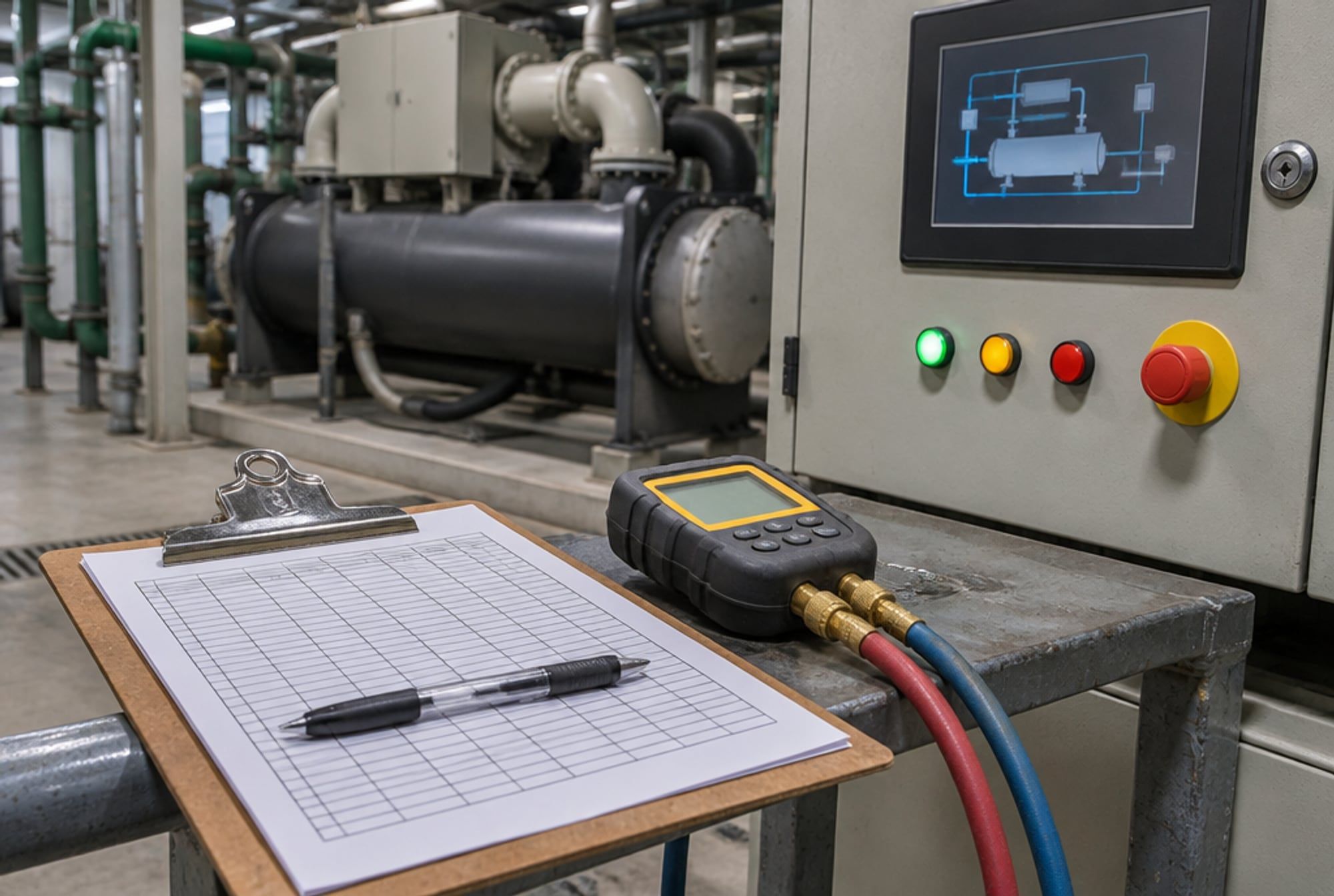
- Use tools rated for A2L: recovery machines, vacuum pumps, leak detectors and gauges.
- Remove ignition sources and ventilate the work area when handling refrigerant.
- Follow the manufacturer’s charge limits for the room volume.
- Keep EPA Section 608 certification current and complete A2L-specific training offered by manufacturers and trade groups.
What should facility teams do now?
- List equipment by refrigerant and age, including how much refrigerant each system holds.
- Know which systems are covered by 2026 and 2027 rules and by EPA leak repair requirements.
- Plan replacements, not emergency swaps, for equipment near the end of its life.
- Check that your service contractors and their technicians are trained for A2L and certified.
How do you plan a site for A2L equipment?
Start with an inventory. List every system on the site, its refrigerant, the charge in pounds and the room it sits in. Charge size matters because A2L requirements, such as leak detection and ventilation, are tied to the charge relative to the room volume. A small split system and a large rooftop unit are not the same case.
Next, check the transition timing. The HFC phasedown schedule and the January 2027 HFC deadlines decide which new equipment will ship with A2L refrigerants, so replacement budgets should assume it. For rooftop units in particular, read RTU basics and the A2L transition before locking a replacement plan.
Finally, look at your own records. Equipment nameplates, leak logs and refrigerant purchase records should be in one place, and mixed fleets (older HFC units next to new A2L units) need clear labeling so nobody assumes one refrigerant for both. Mildly flammable does not mean unmanageable: most of the work is documentation, ventilation and training, not exotic hardware.
Frequently asked questions
Are A2L refrigerants dangerous?
They are mildly flammable but harder to ignite than propane and burn slowly. Safety comes from design, charge limits, detection and trained handling.
Can I use R-454B in an old R-410A system?
No. R-454B systems are designed for that refrigerant’s pressures, oils and safety features. Do not retrofit unless the manufacturer approves it.
Will R-410A servicing stop?
Reports of the current rules say there is no end date for servicing existing R-410A systems, but supply and price may change. Check the EPA pages.
We follow these rules because we plan to enter the Central Texas market. We are hiring and looking for partners. See our open positions or partnership options.