By Marcus Lindqvist · Updated August 6, 2026 · 7 min read
Short answer
An ammonia refrigeration system uses R-717 in a vapor-compression cycle with an open-drive compressor, condenser, receiver, expansion devices and evaporators. Ammonia is efficient and has zero ozone depletion and no global warming potential, but it is toxic and needs careful design, training and compliance. Facilities holding 10,000 pounds or more are generally covered by OSHA Process Safety Management and EPA Risk Management Program rules.
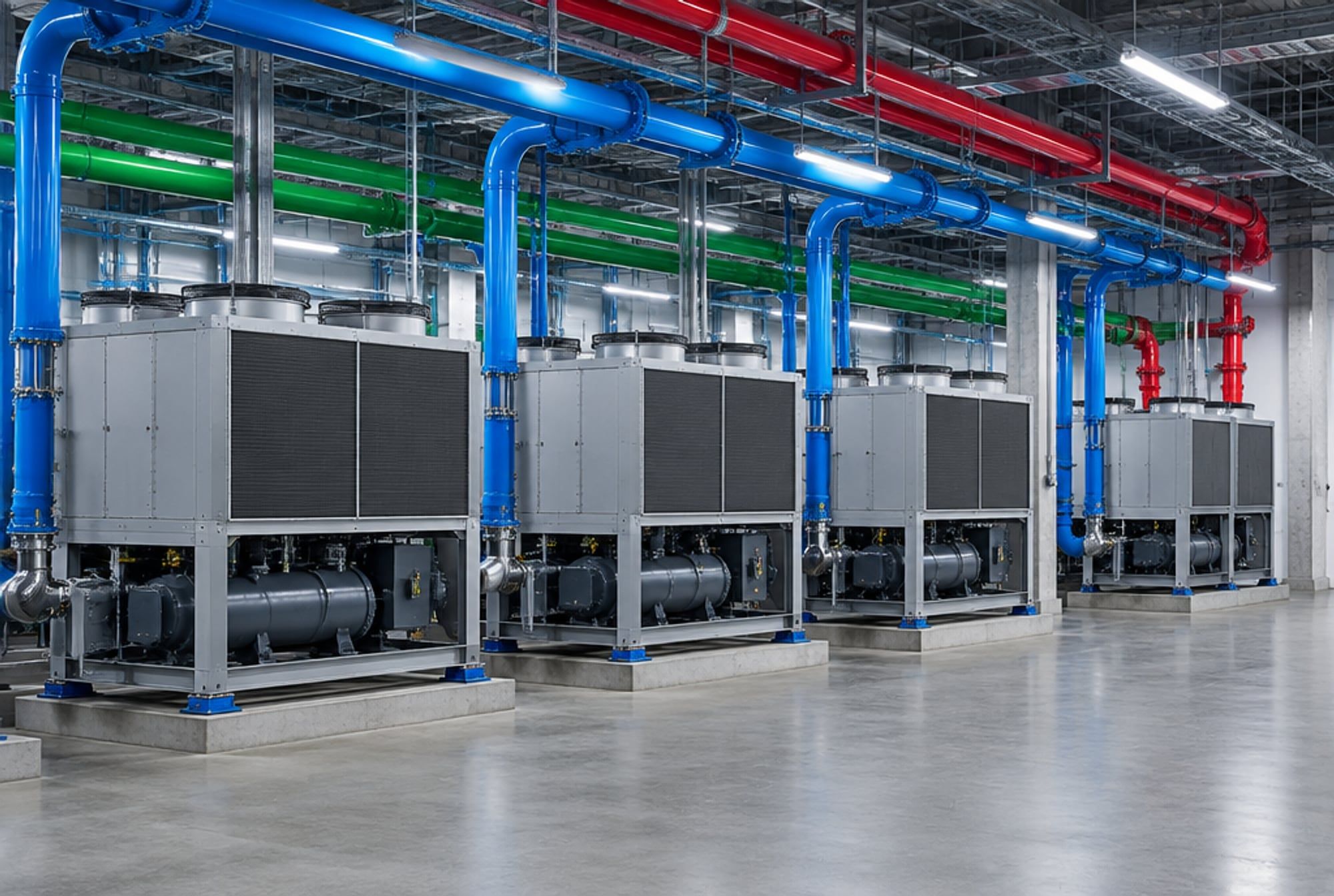
An ammonia refrigeration system is a vapor-compression refrigeration plant that uses anhydrous ammonia, refrigerant number R-717, as the working fluid. It follows the same cycle as other refrigeration systems: evaporate, compress, condense, expand. What sets it apart is the refrigerant. Ammonia is highly efficient and environmentally benign, but it is toxic, so the system is built, operated and regulated differently from an HFC plant. Ammonia is the standard choice in food processing, cold storage, breweries and large industrial refrigeration.
Why is ammonia used?
- Efficiency. Ammonia has excellent thermodynamic properties, so plants use less energy per ton.
- Environment. Ammonia has an ozone depletion potential of zero and a global warming potential of essentially zero, so it is not affected by the HFC phasedown.
- Detectability. Its strong odor warns people at low concentrations, well below harmful levels.
- Lighter than air. A leak tends to rise and disperse in open spaces.
- Cost. Ammonia is inexpensive and available.
What are the main components?
| Component | Role |
|---|---|
| Compressor | Raises the pressure of ammonia vapor; usually open-drive screw or reciprocating machines |
| Oil separator and cooler | Removes oil from the discharge gas and returns it to the compressor |
| Condenser | Rejects heat; evaporative, water-cooled or air-cooled |
| High-pressure receiver | Holds liquid ammonia from the condenser |
| Expansion devices | Valves that drop pressure and meter liquid to evaporators |
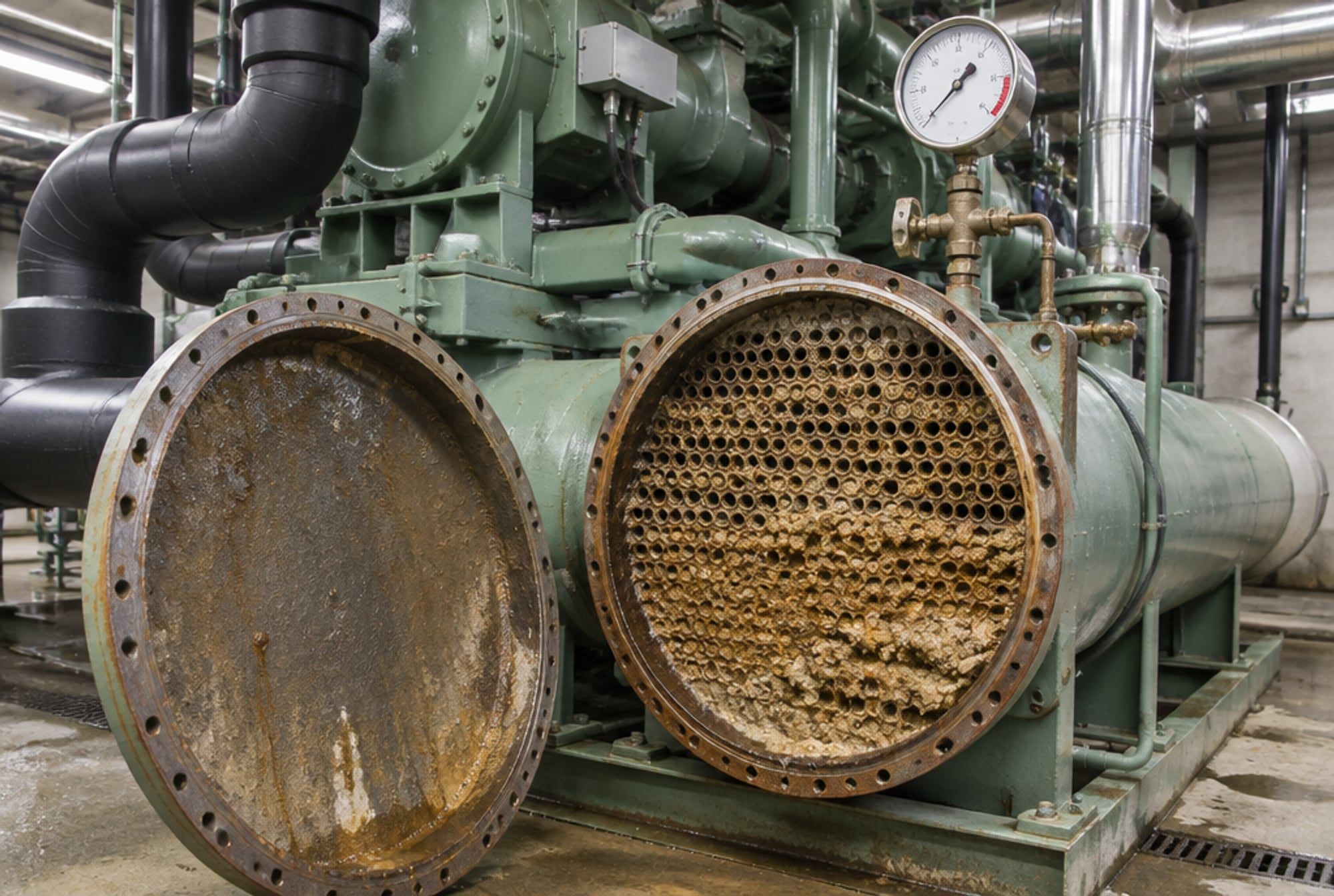
| Evaporators | Coils or plate heat exchangers that absorb heat from the product, room or fluid |
| Low-pressure receiver or surge drum | Separates liquid and vapor, feeds pumps or coils |
| Pumps (in pumped systems) | Circulate liquid ammonia through evaporators |
| Piping, valves and relief devices | Carbon steel piping, isolation valves and pressure relief |
| Controls and detection | PLC controls, ammonia sensors, alarms and ventilation |
Many plants use pumped recirculation, where liquid ammonia is pumped to evaporators and returns as a liquid-vapor mix. Others use direct expansion or secondary coolants such as glycol, which keep ammonia in the machine room.
Why must the compressor be open-drive?
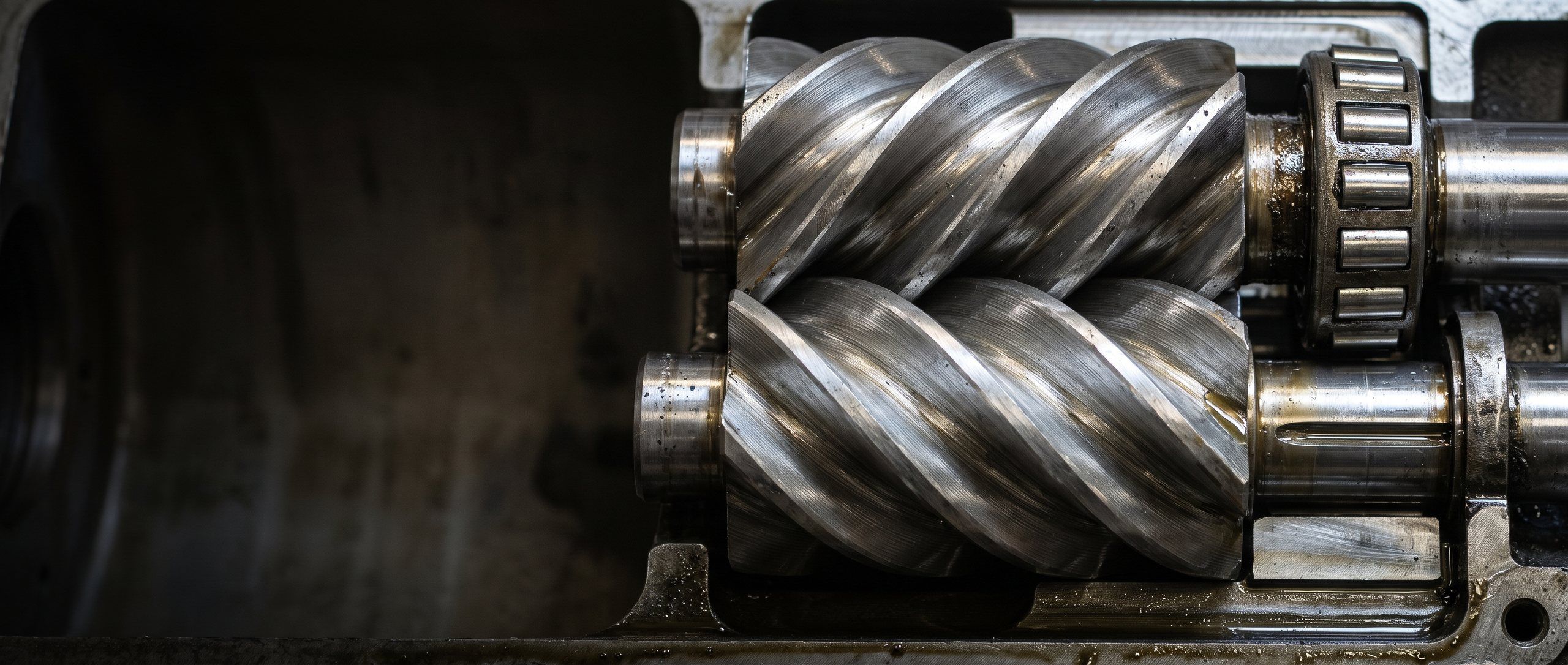
Ammonia attacks copper and copper alloys, so motors with copper windings cannot sit in ammonia vapor. Ammonia compressors are open-drive, with the motor outside and a shaft seal, and the wetted parts avoid copper and brass. This is explained in hermetic vs semi-hermetic vs open compressors. Screw compressors are common; see how a screw compressor works.
What are the hazards?
Ammonia is toxic and, at high concentrations, flammable. Typical hazards are:
- Inhalation and chemical burns from a release.
- Hydraulic shock when liquid is trapped or pushed through piping with vapor.
- Overpressure from blocked relief paths or heat on trapped liquid.
- Fire or explosion risk in confined spaces at high concentrations, though ammonia is hard to ignite.
ASHRAE classes ammonia as B2L: higher toxicity and mildly flammable. Exposure limits are set by regulators, and the odor threshold is far below those limits. Always rely on the facility’s emergency plan and the manufacturer’s and standard’s requirements.
Which rules apply?
Two federal programs commonly cover ammonia refrigeration:
- OSHA Process Safety Management (PSM), 29 CFR 1910.119. Applies to processes with 10,000 pounds or more of anhydrous ammonia. It requires process safety information, hazard analysis, operating procedures, training, mechanical integrity, management of change, incident investigation and emergency planning.
- EPA Risk Management Program (RMP), 40 CFR Part 68. Applies to stationary sources with more than the threshold quantity, which is 10,000 pounds for anhydrous ammonia. It requires a risk management plan, hazard assessment and emergency response. EPA proposed changes to RMP in 2026, so check the current status.
Facilities below those thresholds are still subject to the OSHA General Duty Clause, the EPA General Duty Clause and local codes. Confirm requirements with the regulators and the site’s safety team.
Which industry standards matter?
The International Institute of Ammonia Refrigeration publishes the main standards for closed-circuit ammonia systems:
- IIAR 2: design of closed-circuit ammonia refrigeration systems.
- IIAR 5: start-up and commissioning.
- IIAR 6: inspection, testing and maintenance.
- IIAR 7: operating procedures.
- IIAR 8: decommissioning.
- IIAR 9: minimum safety criteria for existing systems, with deadlines for upgrades.
Many of these are referenced by codes and by recognized and generally accepted good engineering practice used in PSM and RMP programs.
How do you operate and maintain a plant safely?
- Train operators and keep procedures current.
- Keep machinery room ventilation, detectors and alarms tested.
- Inspect relief valves, pressure vessels and piping on a schedule, and document results.
- Manage changes through a formal process.
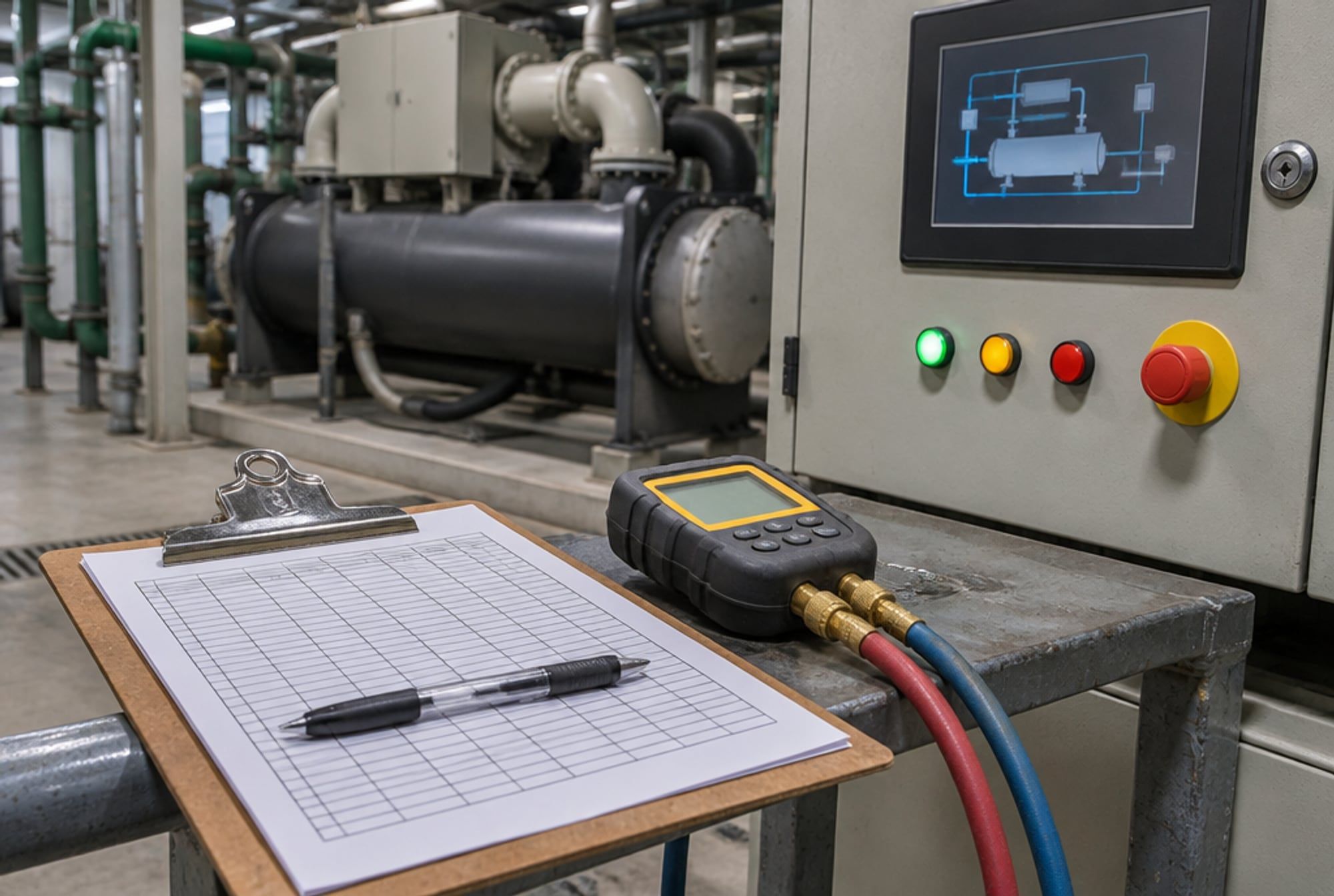
- Keep logs of pressures, temperatures, oil and amps; trends show developing problems, as explained in five signs a compressor is wearing out.
- Test oil and watch for water in the system; see what oil analysis tells you.
How does ammonia compare with HFC systems?
| Factor | Ammonia (R-717) | HFC or HFO systems |
|---|---|---|
| Environmental impact | zero ODP, GWP near zero | varies; many HFCs face phasedown |
| Energy efficiency | typically high in large systems | good, varies by refrigerant |
| Toxicity | toxic | low to moderate |
| Flammability | low (B2L) | none to mild (A1, A2L) |
| Typical scale | large industrial | all sizes |
| Compressor | open drive | hermetic, semi-hermetic or open |
| Regulation | PSM and RMP over 10,000 lb | HFC and leak repair rules |
For the refrigerant side of the picture, see what is changing in 2026.
Frequently asked questions
Is ammonia refrigeration safe?
With proper design, training, detection and maintenance, ammonia plants have a long industrial record. The risk is real, so safety programs and compliance matter.
Why do food plants use ammonia?
It is efficient at large scale, affordable and not affected by HFC regulations, which suits plants that run most hours of the year.
Can ammonia be used in small systems?
Small ammonia systems exist, often packaged with a secondary coolant. Most installations are large industrial plants.
SpecServis engineers in Ukraine work with industrial refrigeration plants. We are planning to enter the Central Texas market and are looking for technicians, partners and a company to buy. See our open positions or partnership options.