By Tamika Brooks · Updated September 3, 2026 · 6 min read
Short answer
A chiller removes heat from water or a water-glycol mix using a vapor-compression refrigeration cycle: an evaporator cools the water, a compressor raises the refrigerant pressure, a condenser rejects the heat, and an expansion device lowers the pressure again. The cooled water, typically around 44°F, is pumped to air handlers or process equipment and returns about 10°F warmer.
A chiller is a refrigeration machine that cools water, or a water-glycol mix, instead of cooling air directly. The chilled fluid is pumped through a building or a process and carries heat back to the chiller, which pushes that heat out to the air or to a cooling tower. Hospitals, data centers, food plants, breweries and large office buildings use chillers because water moves heat far more efficiently over long distances than air does.
What are the four main parts of a chiller?
Every vapor-compression chiller has the same four components, connected by refrigerant piping:
- Evaporator. Liquid refrigerant boils at low pressure and absorbs heat from the chilled water passing through the heat exchanger. The water leaves colder; the refrigerant leaves as a low-pressure gas.
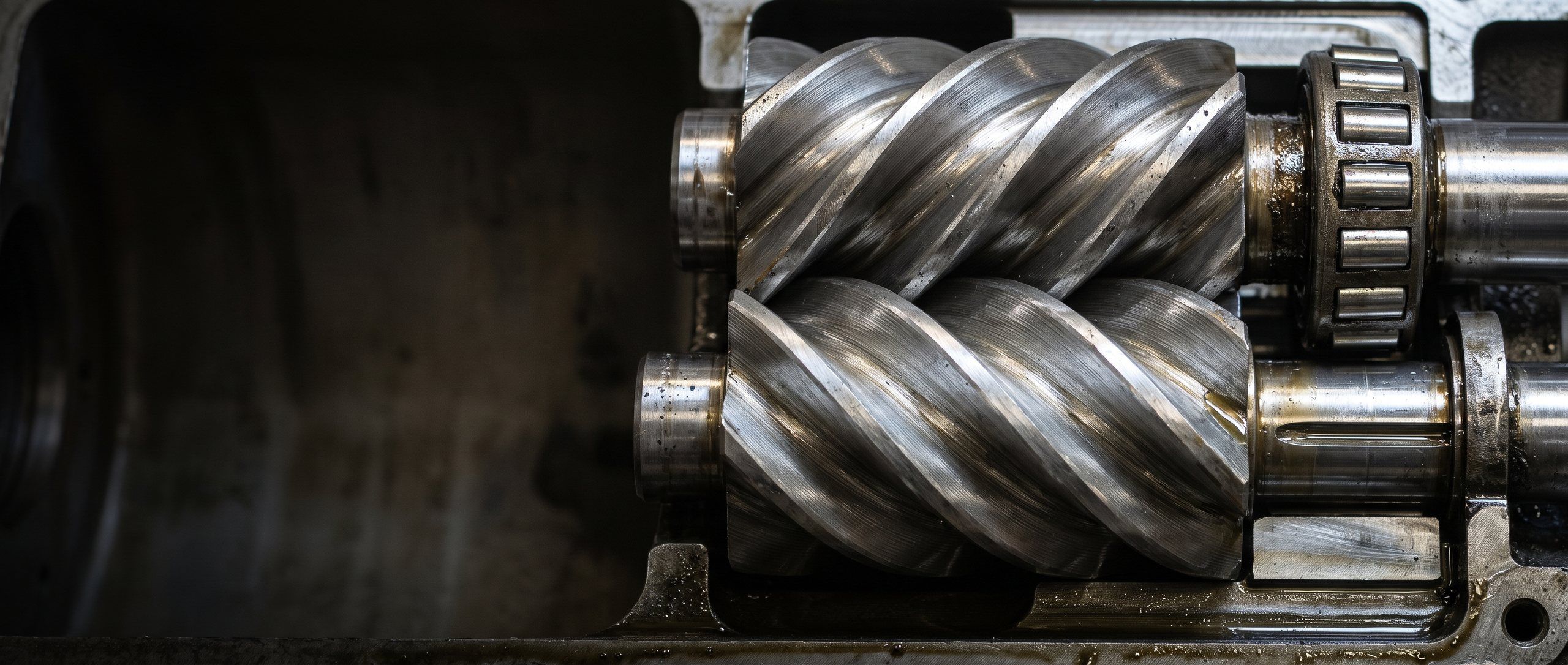
- Compressor. It draws in that gas and raises its pressure and temperature. This is where most of the electrical energy goes. Chillers use scroll, screw, reciprocating or centrifugal compressors, chosen by capacity.
- Condenser. The hot, high-pressure gas gives up heat to outdoor air (air-cooled) or to condenser water (water-cooled) and turns back into a liquid.
- Expansion device. An expansion valve or orifice drops the pressure of the liquid, which cools it, and the cycle starts again.
How does the chilled water loop work?
The refrigerant circuit is only half of the system. Around it sits a water loop:
- Pumps send chilled water from the evaporator to cooling coils in air handlers, fan coils or process heat exchangers.
- The water absorbs heat and returns to the evaporator warmer.
- A common design point is 44°F leaving and 54°F returning, a 10°F temperature difference, though process and data center systems often run warmer or cooler.
The cooling load is described in tons. One ton of refrigeration is 12,000 BTU per hour, about the heat needed to melt one ton of ice in 24 hours. Chiller capacity runs from a few tons for small scroll units to several thousand tons for large centrifugal machines.
What happens to the heat the chiller removes?
The condenser must reject the heat from the building plus the heat added by the compressor. The method is the main way chillers are classified:
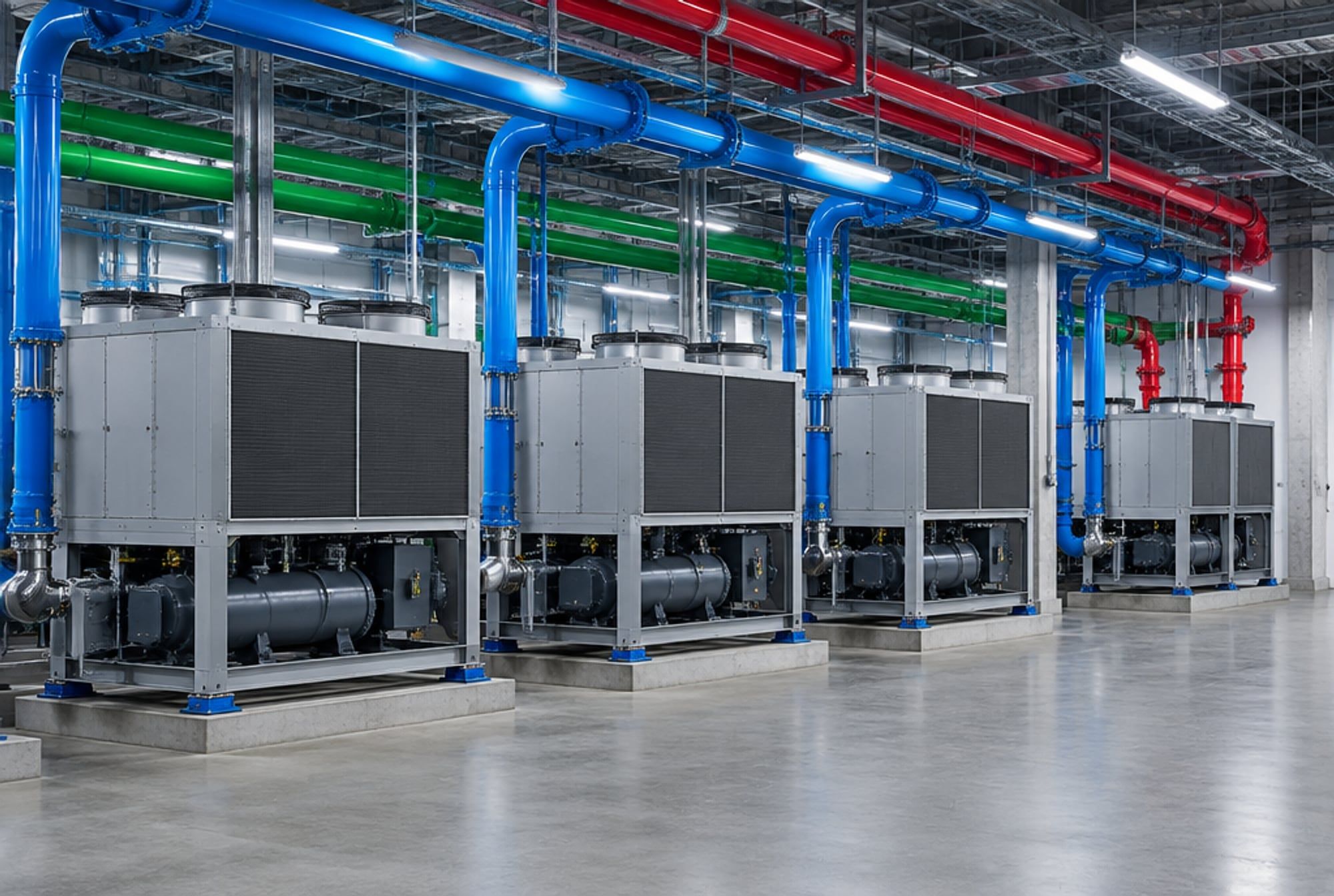
- Air-cooled: fans blow outdoor air across condenser coils. Simple and no water use, but capacity and efficiency fall as the outdoor temperature rises. See air-cooled vs water-cooled chillers.
- Water-cooled: condenser water flows to a cooling tower, which rejects heat by evaporating a small part of the water. More efficient, but it needs water, treatment and tower upkeep.
What do the standard ratings mean?
Manufacturers rate chillers at standard conditions so models can be compared. AHRI Standard 550/590 is the common reference in the U.S. A typical water-cooled rating uses 44°F leaving chilled water and 85°F entering condenser water; air-cooled ratings use 95°F outdoor air. Efficiency is usually shown as kW per ton (lower is better), plus part-load figures such as IPLV and NPLV, which matter because chillers spend most hours below full load.
Rules of thumb vary by machine, but water-cooled chillers are often in the range of about 0.5 to 0.7 kW per ton at full load, while air-cooled units are commonly 0.9 to 1.3. Always compare against the manufacturer’s data for the actual conditions.
What controls a chiller?
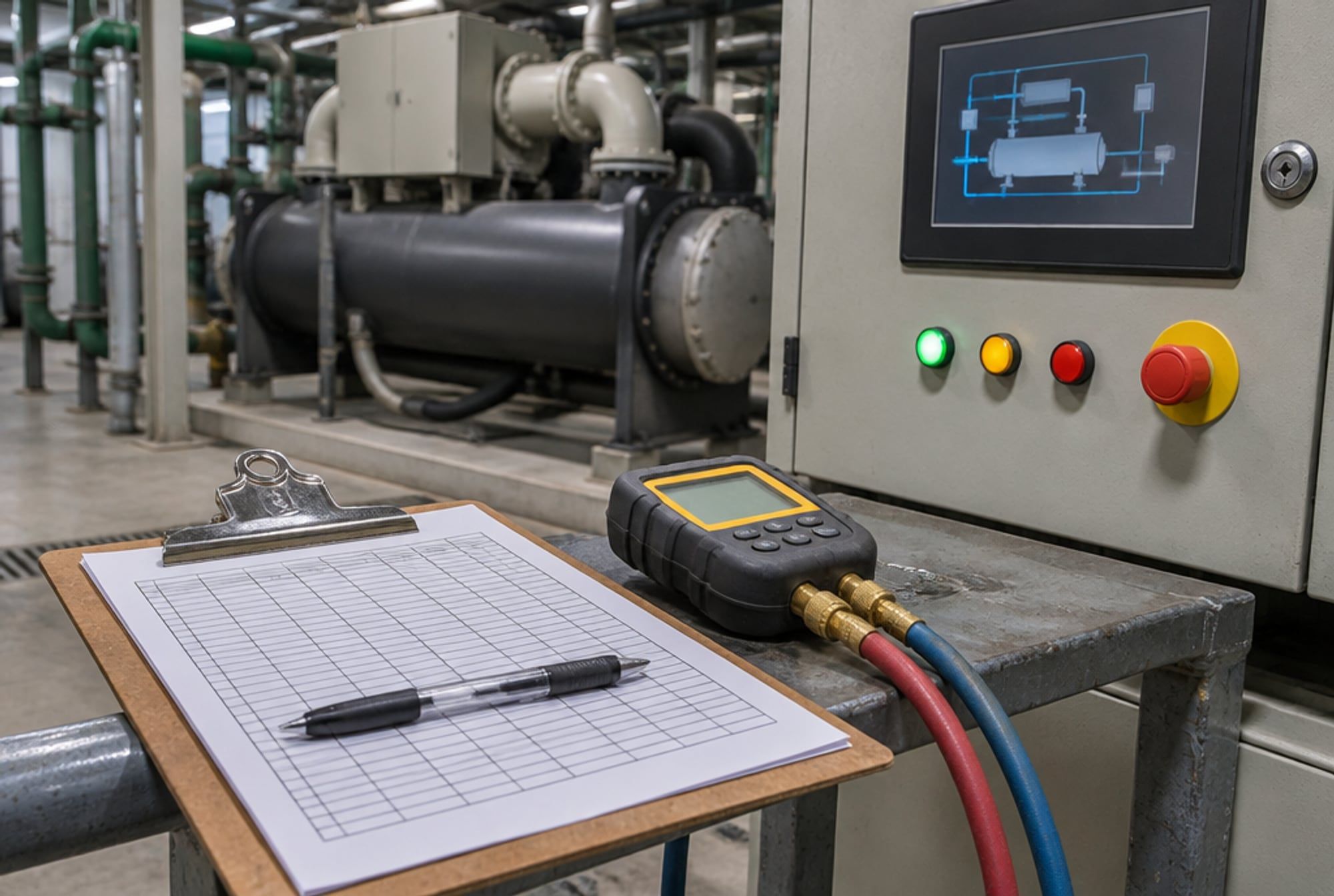
Modern chillers use a microprocessor panel that:
- holds the leaving water temperature setpoint;
- unloads the compressor (slide valve on screws, inlet guide vanes or speed control on centrifugal machines, staging on scroll units) as load drops;
- protects the machine with trips for low evaporator pressure, high discharge pressure, low oil pressure, motor overload and freeze protection;
- reports to a building automation system.
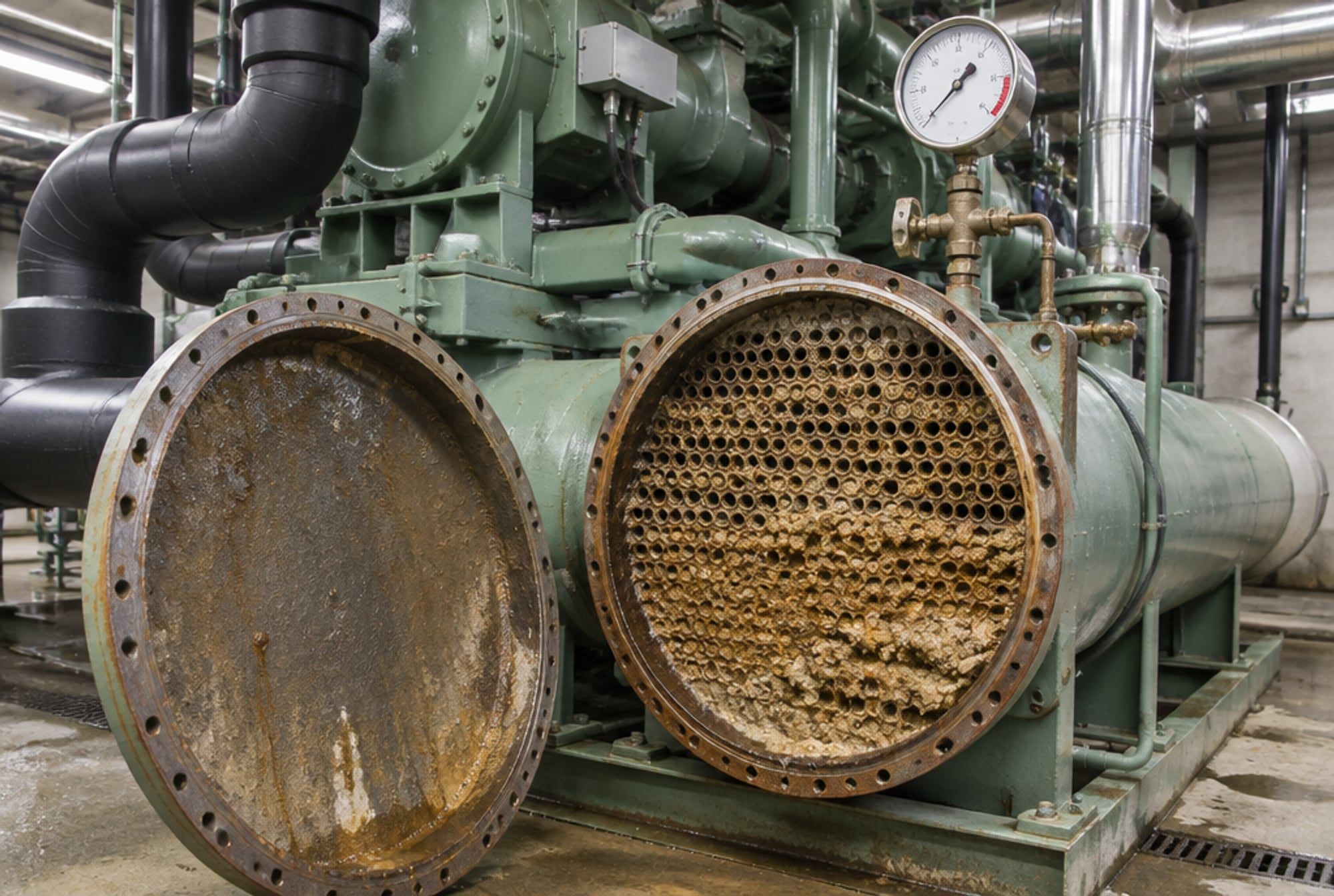
Good plants also record logs: leaving and entering water temperatures, refrigerant pressures, approach temperatures and amps. Changes against that history are the earliest sign of fouled tubes, low charge or compressor wear, as we describe for compressors in five signs a compressor is wearing out.
How is a chiller different from a rooftop unit or a split system?
| Feature | Chiller | Rooftop unit or split system |
|---|---|---|
| What it cools | Water or glycol | Air directly (DX coil) |
| Typical scale | One machine serves many zones or a whole process | One unit per zone |
| Distribution | Piped water to many coils | Ductwork |
| Where it fits | Large buildings, campuses, process, data centers | Smaller buildings and single zones |
Frequently asked questions
What is a chiller used for?
It supplies cold water for comfort cooling in large buildings and for process cooling in industries such as food and beverage, plastics, pharmaceuticals and data centers.
How long does a chiller last?
It depends on type, duty and maintenance. Commonly cited service lives are around 20 years or more for water-cooled machines and somewhat less for air-cooled units. Compressors are often overhauled during that life rather than replacing the whole chiller.
What refrigerants do chillers use?
Common ones include R-134a, R-513A, R-1234ze and, for some large industrial plants, ammonia. Regulation is moving the market to lower-GWP options; see what is changing in 2026.
SpecServis engineers in Ukraine work with industrial chillers and refrigeration plants. We are planning to enter the Central Texas market and are looking for technicians, partners and a company to buy. See our open positions or partnership options.