By Priya Raman · Updated November 4, 2026 · 6 min read
Short answer
Breweries and beverage plants cool tanks and process lines with a pumped loop of propylene glycol and water, chilled below 32°F by a glycol chiller. The right design starts from the peak heat load, the coldest fluid temperature and the pump and valve controls, not from a chiller size alone. Keeping the mix at the lowest safe concentration and testing it regularly protects both efficiency and product.
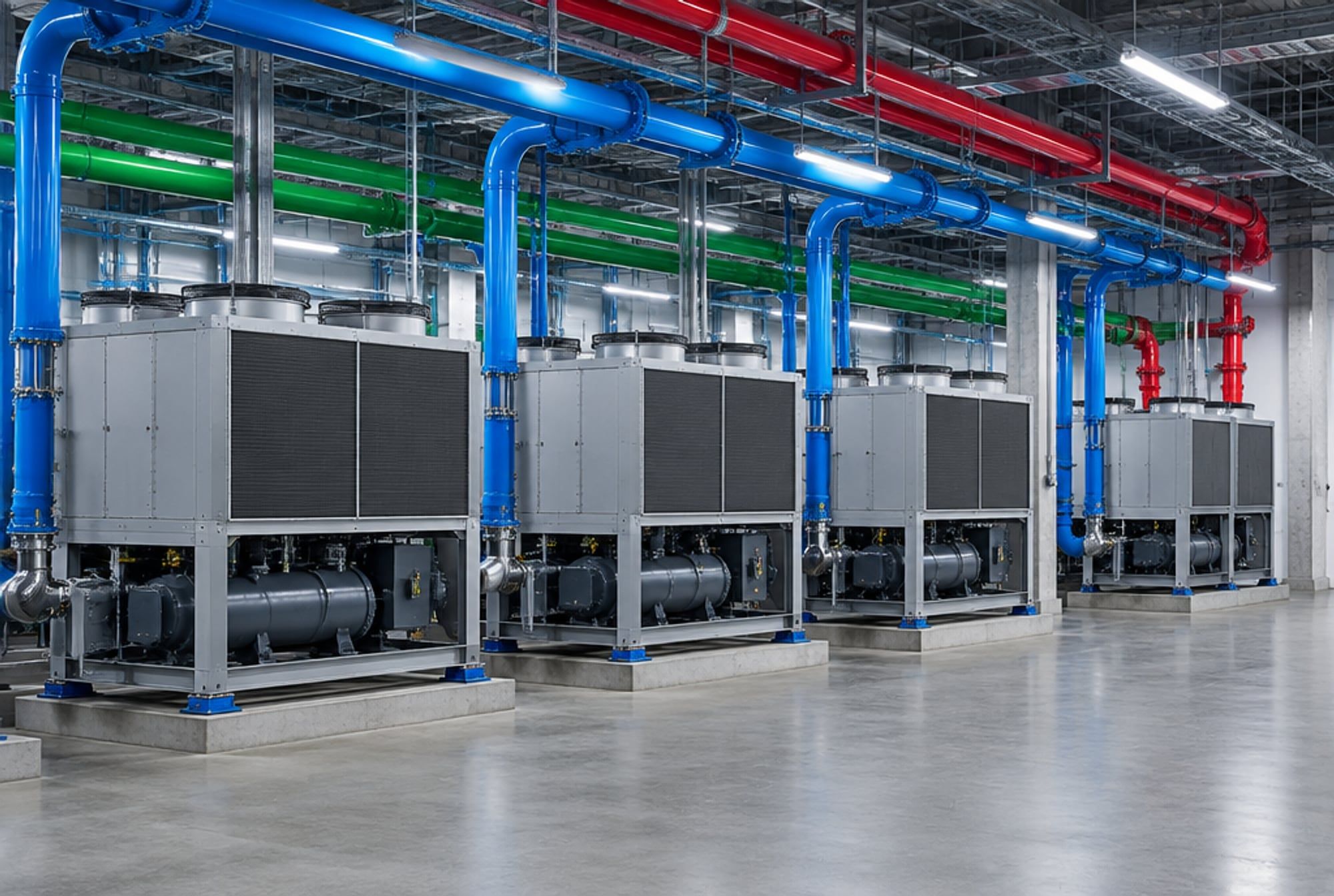
A brewery or beverage plant usually cools tanks and process lines with a closed glycol loop: a chiller cools a mix of water and propylene glycol, pumps send it to jackets on fermenters, heat exchangers and bright tanks, and it returns warmer to be chilled again. The loop lets one chiller serve many vessels at different temperatures. Getting it right comes down to four things: the heat load, the glycol mix, the controls and the hygiene of everything the fluid touches.
Why do breweries and beverage plants use glycol loops?
Fermentation releases heat, and finished product must be held cold. Plain water cannot run much below 40°F without risking ice in the evaporator, while many beer and beverage steps call for fluid near or below 32°F. Glycol lowers the freezing point so the chiller can supply fluid in that range. For the general chemistry and the heat transfer penalty, see glycol chillers explained.
A loop also keeps refrigerant out of the production area. The refrigerant stays in the chiller, and only the glycol mix travels to the tanks.
Which glycol and what concentration?
Where a leak could reach food or drink, plants normally choose food-grade propylene glycol (PG) rather than ethylene glycol, which is toxic. Check your local codes and your product safety plan, and use an inhibited grade made for closed cooling loops.
Concentration is a trade-off:
- Too low and the evaporator or the coldest tank jacket can freeze.
- Too high and the fluid becomes thicker and carries less heat, so pumps work harder and the chiller delivers less capacity.
A sound approach is to set the freeze point comfortably below the coldest refrigerant-side temperature the chiller will see, then hold the mix at the lowest concentration that meets that margin. Use the fluid manufacturer’s freeze and viscosity charts for the exact product rather than rules of thumb.
What information is needed to size the chiller?
Sizing starts from the load, not the tank count. Typical inputs:
| Input | Why it matters |
|---|---|
| Peak simultaneous heat load | Several fermenters in active fermentation at once set the peak |
| Cool-down duty | Crash-cooling a tank is often the largest short-term load |
| Lowest supply temperature | Drives the glycol mix and the chiller’s low-temperature rating |
| Ambient design temperature | Air-cooled units lose capacity in Texas summer heat |
| Loop volume and pipe length | Sets pump head and the thermal mass in the system |
| Future expansion | Extra tanks later can overload a chiller sized exactly for today |
Selections must use glycol-corrected capacity and pump data. A common error is choosing the chiller from water-based ratings. See chiller sizing basics for the general method and industrial chillers: types and selection for the equipment options. Heat rejection matters too: air-cooled vs water-cooled chillers compares the two.
Some plants add a buffer or storage tank so the chiller does not short-cycle when only one tank is calling for cooling.
How are the tanks and loop controlled?
Each tank usually has a temperature sensor and a solenoid or modulating valve on its glycol jacket. When the tank is above setpoint, the valve opens and cold glycol flows. A good control setup includes:
- Accurate tank sensors in the right position, checked against a reference.
- A stable supply temperature from the chiller, with a sensible setpoint rather than the coldest possible one.
- Pump control that matches flow to demand, for example with a variable speed drive, so valves do not fight a constant high pressure.
- A bypass or differential pressure arrangement so flow stays within the chiller’s allowed range when most valves are closed.
- Alarms for high supply temperature, low flow and low glycol level.
Low flow is one of the main causes of evaporator damage, which is covered in chiller evaporator freeze-up: causes and prevention.
How do you keep a glycol loop hygienic and healthy?
The glycol loop is not product-contact, but it sits next to product, and a failure can contaminate a tank or waste a batch. Good habits:
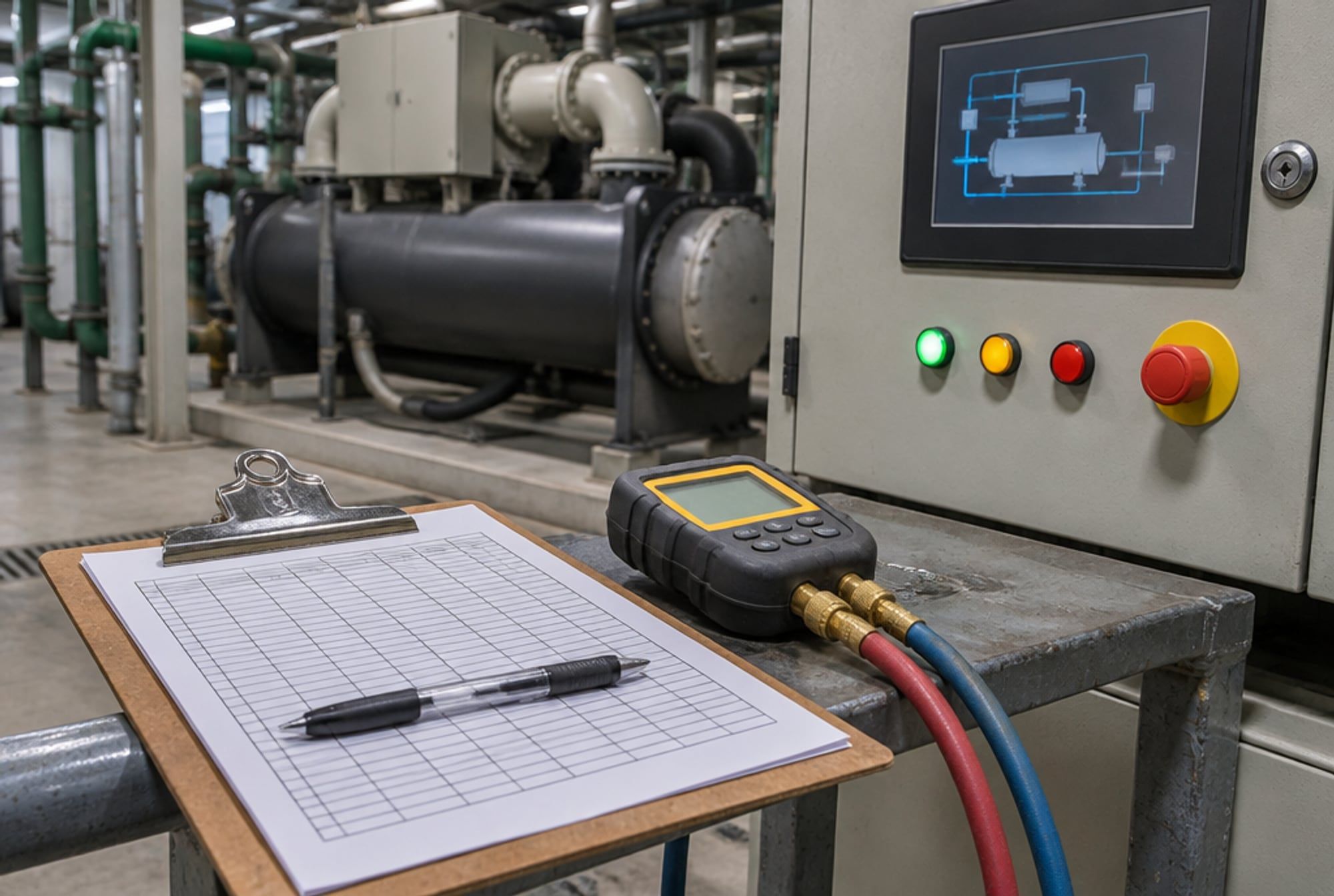
- Keep records. Log glycol concentration, pH and test dates next to the chiller log.
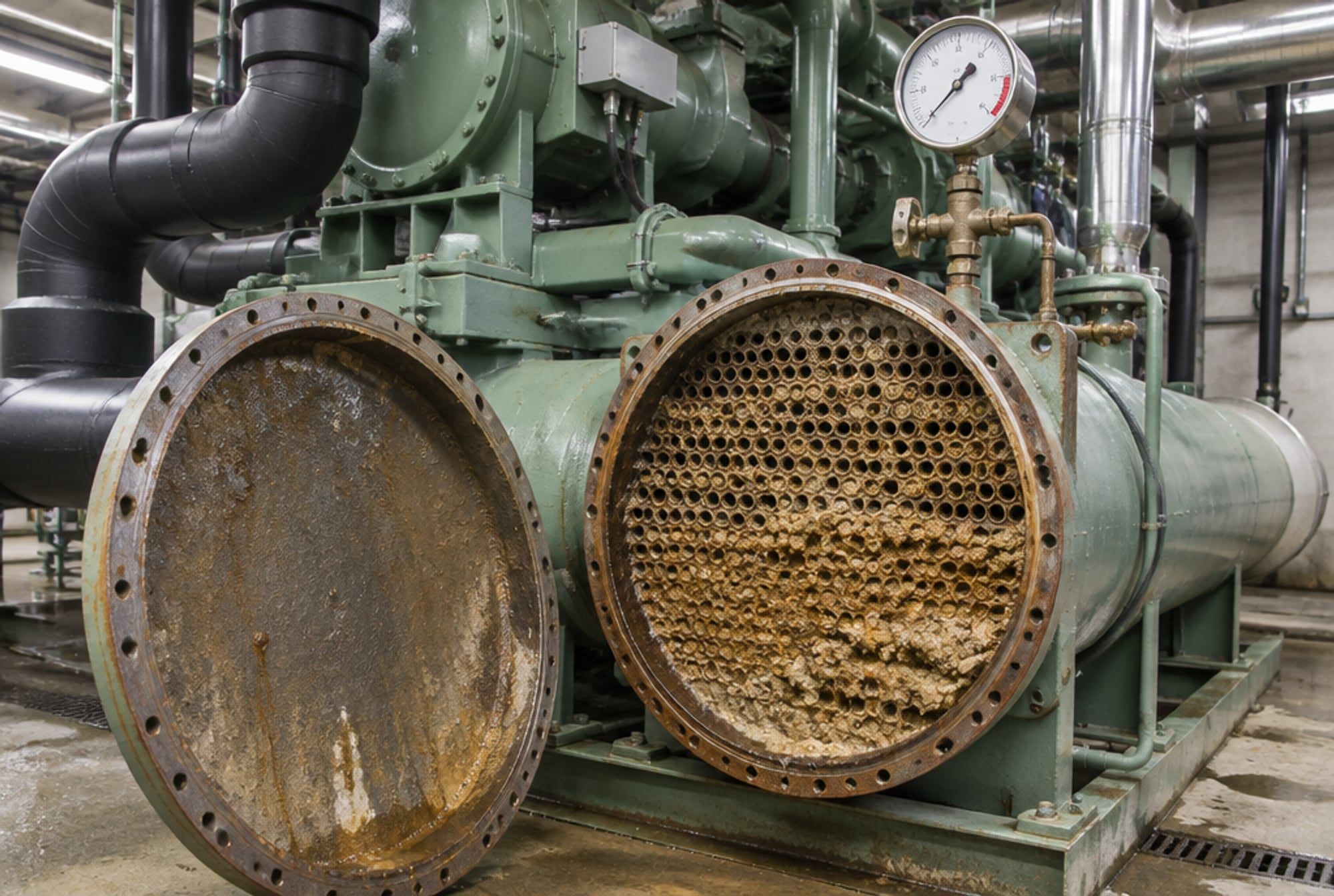
- Test on a schedule. Check concentration with a refractometer and watch pH and reserve alkalinity. A falling pH suggests the inhibitors are used up or the glycol is degrading.
- Look for contamination. Dark color, odor, sludge or metals in a lab report all deserve follow-up.
- Mix with suitable water and avoid galvanized parts, which can react with some inhibitors.
- Keep air out of the loop with proper venting and a pressurized expansion tank.
- Plan for leaks. Jacket and gasket leaks can put glycol into product. Consider pressure-testing jackets and keeping the loop at a lower pressure than the product side where the design allows.
- Separate duties. Many plants keep the cold-side loop for fermenters apart from other process loops, so a problem in one does not cascade.
Cleaning and sanitation of product-contact surfaces follows its own food safety program. The glycol loop should be documented as part of it.
Frequently asked questions
What temperature should a brewery glycol loop run at?
It depends on the process step. Many plants supply glycol somewhere near the freezing point of water for crash-cooling and a few degrees warmer for active fermentation, but the right number comes from your recipes and tank design. Set the chiller to the warmest supply temperature that still meets your cooling needs.
Is propylene glycol safe around beverages?
Food-grade propylene glycol has low toxicity and is the usual choice where a leak could reach product. It still should not be allowed into beverages, so keep the loop under pressure control, inspect jackets and follow your food safety plan.
Can one chiller handle fermenters and cold storage?
Sometimes, but the two have different temperature and load patterns. A single chiller on one glycol loop is simpler, while separate loops or units give better control and redundancy. The decision depends on loads, temperatures and budget.
SpecServis engineers in Ukraine have worked on cooling for food and beverage producers. We are planning to enter Central Texas and are looking for technicians and partners. See our open positions or partnership options.