By Yevhen Kovalchuk · Updated August 19, 2026 · 8 min read
Short answer
A CO2 transcritical system uses R-744 (carbon dioxide) as the refrigerant and rejects heat above its critical point of about 88°F, so there is no condensation on the high side. A gas cooler replaces the condenser, and high-side pressure can reach about 1,500 psi. The refrigerant has a GWP of 1, but efficiency falls in hot weather unless the design adds ejectors, parallel compression or subcooling.
A CO2 transcritical refrigeration system uses carbon dioxide (R-744) and, on warm days, rejects heat at a pressure and temperature above the refrigerant’s critical point. Above that point CO2 does not condense into a liquid; it cools as a dense gas in a gas cooler instead of a condenser. The refrigerant has a global warming potential of 1 and is non-flammable, so it is widely used in supermarkets and growing in cold storage. The trade-offs are very high pressure and lower efficiency when ambient temperatures are high.
What does “transcritical” mean?
Every refrigerant has a critical point: a temperature and pressure above which liquid and gas are no longer distinct. For CO2 the critical point is about 87.8°F (31°C) and about 1,070 psia (7.38 MPa). Conventional refrigerants such as R-134a and R-404A have much higher critical temperatures, so heat rejection in normal weather happens below the critical point and the gas condenses.
With CO2, outdoor air on a typical summer day in Texas is above 88°F. The system therefore runs in two modes:
- Subcritical. When the outdoor temperature is low enough, the high side stays below the critical point and the gas condenses, as in a conventional system.
- Transcritical. When it is warm, the high side runs above the critical point. The heat rejection device is a gas cooler, and the pressure is controlled by a high-pressure valve instead of a condenser setpoint.
How does a CO2 transcritical system work?
A basic booster system for a supermarket has these parts:
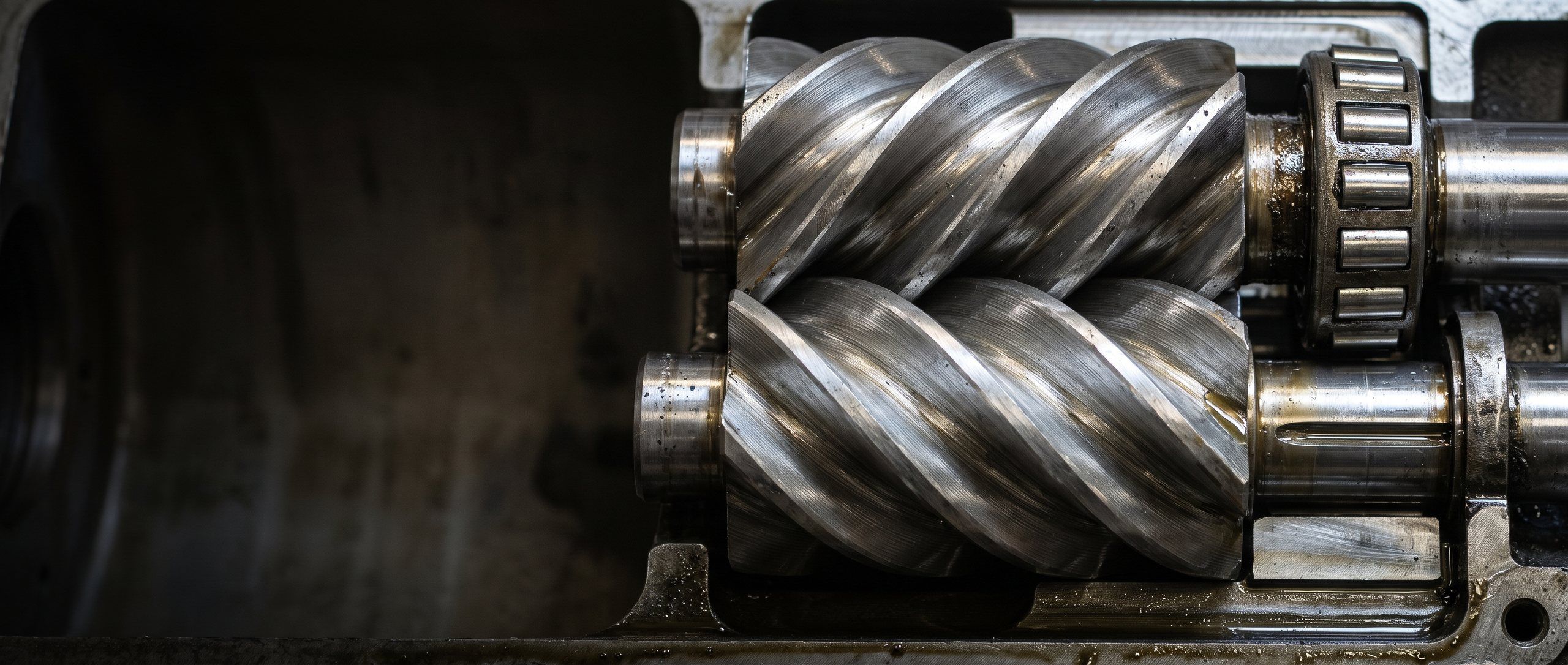
- Compressors. Low-temperature compressors discharge into the suction of medium-temperature compressors, and the combined flow goes to the gas cooler. Reciprocating and, increasingly, scroll and screw designs are used; see refrigeration compressor types.
- Gas cooler. A coil with fans removes heat from the hot, high-pressure CO2. In transcritical mode the CO2 temperature drops without a phase change.
- High-pressure control valve. It maintains the optimum gas cooler pressure for the outdoor temperature and lowers the pressure into a flash tank.
- Flash tank (receiver). It separates liquid and flash gas at an intermediate pressure, often about 500 to 650 psi.
- Evaporators. Liquid goes to medium- and low-temperature cases and coolers, where it boils and absorbs heat.
- Flash gas bypass or parallel compression. Gas from the receiver is compressed directly from the intermediate pressure instead of being throttled, which saves energy.
Pressures are the main difference from HFC systems. High-side design pressure is often 1,450 psi (100 bar) or more, and standstill pressure when the system is off can be high enough to need a relief or small standby cooling unit.
How does it compare with other refrigerants?
| Property | CO2 (R-744) | R-404A | R-290 (propane) | Ammonia (R-717) |
|---|---|---|---|---|
| GWP (AR4, approx.) | 1 | about 3,900 | about 3 | 0 |
| Safety class | A1 | A1 | A3 | B2L |
| Critical temperature | about 88°F | about 161°F | about 206°F | about 270°F |
| Typical high-side pressure | up to about 1,500 psi | about 250 to 400 psi | about 200 to 300 psi | about 150 to 250 psi |
| Typical use | supermarkets, cold storage, some industrial | legacy retail refrigeration | small self-contained cases | large industrial |
Values are approximate and depend on operating conditions. See R-290 propane refrigeration and ammonia refrigeration system basics for those refrigerants, and R-404A replacement with R-448A or R-449A for the HFC route.
Why is CO2 attractive under current rules?
The AIM Act is reducing HFC supply and setting GWP limits for new equipment by subsector. CO2 has a GWP of 1, so it is not an HFC and is not subject to the phasedown allowance system. EPA’s Technology Transitions rule lists GWP limits for new retail food refrigeration systems; systems with very low GWP refrigerants comfortably meet them. Check the current EPA pages for the dates that apply to your system type, and see what is the AIM Act HFC phasedown for the background. Non-flammability is a safety advantage in public spaces over propane.
What are the challenges of transcritical CO2 in hot climates?
Efficiency falls as the outdoor air gets warmer, because the gas cooler outlet temperature rises and more refrigeration effect is lost in the expansion. In a hot, humid state like Texas this matters, and it was the main reason CO2 was slow to spread in the southern U.S. Designers use several approaches:
- Parallel compression. Compress flash gas directly rather than throttling it.
- Ejectors. They recover expansion energy and reduce compressor work.
- Adiabatic or evaporative gas cooler assistance. Water spray or pads cool the air entering the coil on hot days.
- Mechanical subcooling. A small separate system cools the CO2 leaving the gas cooler.
- Heat recovery. Waste heat from the gas cooler circuit heats water or the building.
Studies and manufacturer data from the past decade report that well-designed systems with these features can be competitive in warm climates, but energy results depend on design and local weather, so ask for modeling for the specific site. Do not rely on one headline number.
What service and safety issues are specific to CO2?
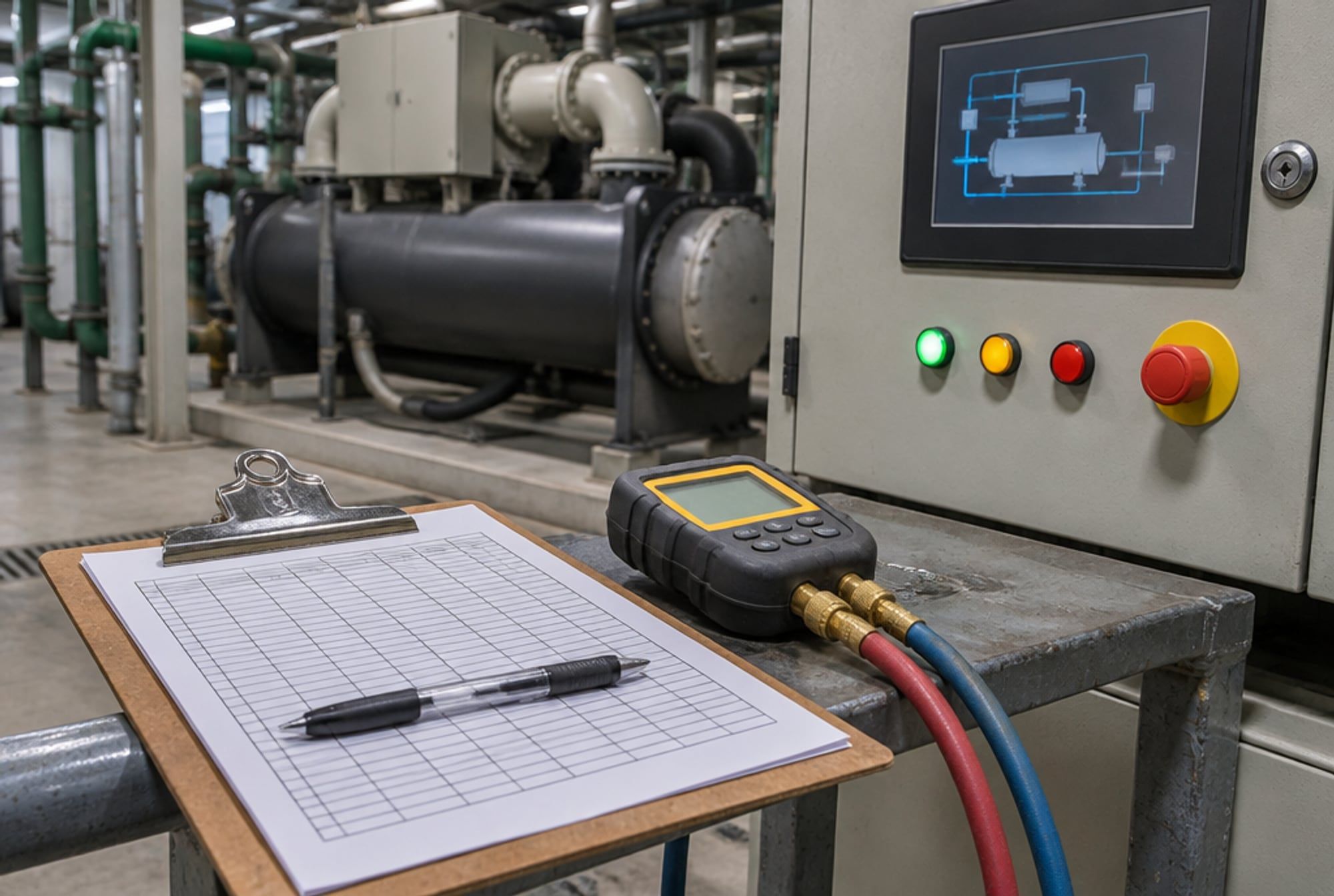
- High pressure. Gauges, hoses and recovery equipment must be rated for CO2 pressures. Standard HFC gauge sets are not suitable.
- Dry ice formation. If CO2 is released from a liquid line to atmosphere or reduced below its triple point (about 75 psi), solid CO2 forms and can block lines and valves.
- Asphyxiation. CO2 is heavier than air and not toxic in the normal sense, but high concentrations displace oxygen. OSHA lists a permissible exposure limit of 5,000 ppm over an eight-hour average. Machine rooms need ventilation and often gas detection.
- Standstill pressure. A system that loses power can heat up and vent through relief valves. Designers add backup cooling or controlled venting.
- Training. Technicians need CO2-specific training. Section 608 certification applies to the handling of regulated refrigerants; check how the current rules treat CO2 and other substitutes.
For general guidance on keeping plants in good order, see the chiller maintenance checklist; many of the same logging and inspection habits apply.
Where is CO2 transcritical used?
- Supermarket refrigeration racks, with a growing number of installations in North America.
- Cold storage and distribution warehouses, often as a cascade with ammonia on the low-temperature side.
- Ice rinks and some process cooling.
- Heat pumps for hot water, taking advantage of the high discharge temperature.
Frequently asked questions
Is CO2 a good refrigerant for hot climates like Texas?
It can be, but only with design features such as parallel compression, ejectors or gas cooler assistance. A basic booster system loses efficiency in heat. Ask for site-specific energy modeling and manufacturer references in similar climates.
Is R-744 the same as R-290?
No. R-744 is carbon dioxide, non-flammable and used at very high pressure. R-290 is propane, flammable and used at moderate pressure in small systems.
Do CO2 systems need a special license in Texas?
Texas rules for air conditioning and refrigeration contracting are administered by TDLR and depend on the work performed. See how to get a Texas Class A ACR license for the general framework, and confirm the specific work with TDLR.
SpecServis engineers in Ukraine design, rebuild and maintain compressors and industrial refrigeration plants. We are planning to enter the Central Texas market and are looking for technicians, partners and a company to buy. See our open positions or partnership options.
Sources
- Wikipedia: Carbon dioxide as a refrigerant (R-744)
- U.S. EPA: Technology Transitions
- U.S. EPA: GreenChill partnership (advanced refrigeration)
- ASHRAE Standard 34: Designation and Safety Classification of Refrigerants
- OSHA: Carbon dioxide occupational chemical database
- NIST: Carbon dioxide thermophysical data (WebBook)