By Tamika Brooks · Updated November 3, 2026 · 7 min read
Short answer
In Texas, TACLA is the Class A air conditioning and refrigeration contractor license with no capacity limit, and TACLB is the Class B license limited by equipment capacity. TDLR describes Class B as cooling systems of 25 tons or less and heating systems of 1.5 million BTU per hour or less. Always confirm the current thresholds on tdlr.texas.gov before planning work or hiring.
TACLA is the Texas Class A air conditioning and refrigeration (ACR) contractor license, and TACLB is the Class B license. The difference is the size of the equipment the holder may work on: Class A has no capacity limit, while Class B is limited to cooling systems of 25 tons or less and heating systems of 1.5 million BTU per hour or less, as TDLR describes them. These thresholds are set by the Texas Occupations Code and TDLR rules and can change, so confirm the current figures on tdlr.texas.gov. This article is general information, not legal advice.
What do TACLA and TACLB mean?
TDLR license numbers carry a prefix that tells you the license type. “TACLA” followed by digits is a Class A ACR contractor license, and “TACLB” is a Class B. The suffix letter on the number (such as C) can relate to the endorsement. You can look up any number on the TDLR public license search to see the class, status, endorsement and expiration date.
The class answers the question “how large?” The endorsement answers “what kind?” See Texas ACR endorsements explained for the second half.
How do Class A and Class B compare?
| Feature | Class A (TACLA) | Class B (TACLB) |
|---|---|---|
| Cooling capacity | No limit | 25 tons or less, per TDLR |
| Heating capacity | No limit | 1.5 million BTU per hour or less, per TDLR |
| Typical scope | Commercial and industrial plants, large rooftop fleets, chillers, large refrigeration systems | Residential and smaller light commercial systems |
| Scope depends on | Endorsement (E, R or C) | Endorsement (E, R or C) |
The table is a simplified summary of how TDLR describes the classes. The rule and the statute are the authority, not this table.
How is tonnage measured?
A ton of cooling is 12,000 BTU per hour, which is the heat absorbed by melting one ton of ice over a day. Equipment is rated in tons on the nameplate. For an explanation of reading ratings, see how to read a compressor nameplate.
The practical questions come when a project is not a single unit:
- Multiple units. A building with several 10-ton rooftop units has a larger total capacity than any one unit. Whether the limit applies to a single system or the aggregate on the project is exactly the kind of question to put to TDLR in writing.
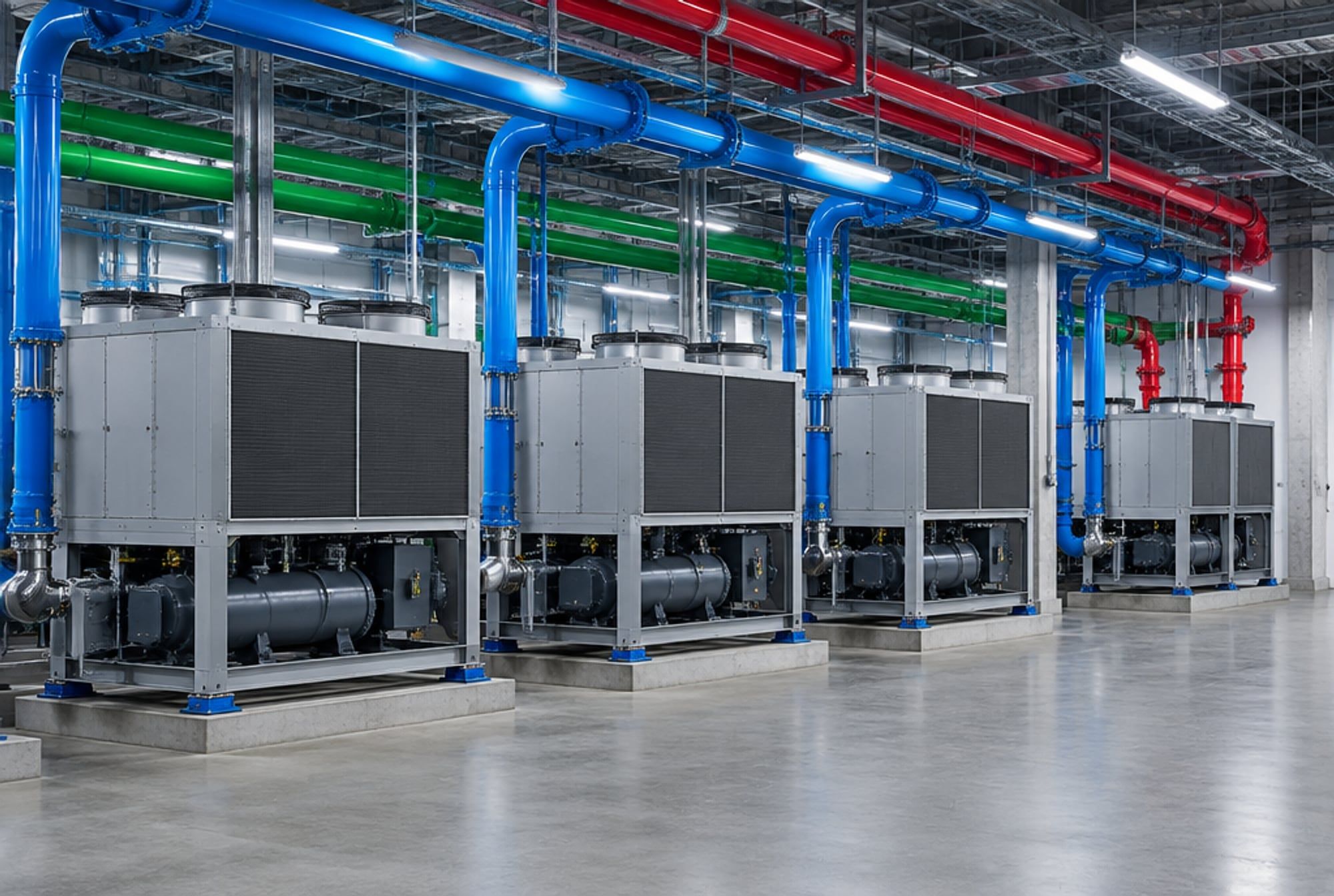
- Chiller plants. A central plant may combine several chillers, and the plant size will usually exceed Class B limits. See chiller sizing basics.
- Refrigeration. Refrigeration load is also described in capacity terms. Rack systems and cold storage can exceed Class B limits quickly.
- Replacements and expansions. A replacement or addition changes the capacity on a site, so check it against the license limit.
Which projects typically need a Class A license?
Without quoting any rule you should rely on, the following situations are common reasons to look for a Class A holder:
- Water-cooled and air-cooled chillers above the Class B limit.
- Large rooftop unit fleets and central plants. See RTU basics and the A2L transition.
- Industrial and cold-storage refrigeration, including ammonia systems. See industrial chillers: types and selection.
- Data center cooling plants, which can be very large.
- Any company that wants to bid work of any size without being capped.
For a company building a team, that last point is the reason many choose Class A for the license holder it hires or acquires.
How do you check the current limits?
Do not rely on a blog post, including this one. Follow this process:
- Open the TDLR Air Conditioning and Refrigeration program page.
- Find the contractor license page and read the class definitions.
- Read the Texas Occupations Code, Chapter 1302, and 16 TAC Chapter 75 for the statutory language.
- Use the TDLR license search to check a specific holder’s class and endorsement.
- For a borderline project, email or call TDLR and keep the answer in writing.
For a background on the rules in force and recent changes, see TDLR Chapter 75 rules update 2026.
What if you work beyond your license scope?
TDLR treats work outside a license’s scope as a violation, and penalties can range from fines to suspension or revocation for serious or repeated cases. Enforcement often starts with a complaint. See TDLR inspections and complaints. A license holder should know exactly where the limits of their class and endorsement lie.
Can a Class B holder upgrade?
TDLR has an application process for the license classes, and moving from B to A generally involves the exam and experience requirements for Class A. The details change, so see how to get a Texas Class A ACR license and the TDLR pages. Also compare the difference in classes in Texas ACR license types: Class A vs Class B.
Frequently asked questions
Is the 25-ton limit per unit or per project?
This is a question to put to TDLR in writing. Do not assume. Rules and interpretations can change, and the answer may depend on how a project is structured.
Can a Class A holder do everything?
Class A removes the size limit, but the endorsement still defines the type of work: environmental air conditioning, commercial refrigeration and process cooling, or both. Confirm the endorsement matches the work.
Where do I verify a license number?
Use the license search on tdlr.texas.gov. It shows class, endorsement, status and expiration date, and any published enforcement action.
SpecServis engineers in Ukraine work on chillers, compressors and refrigeration plants, and we are planning to enter the Central Texas market. If you hold a Class A license or are working toward one, see our open positions or talk to us about partnership.