By Priya Raman · Updated August 26, 2026 · 7 min read
Short answer
Data center cooling removes the heat produced by servers and rejects it outdoors. Most facilities use air cooling with chilled water from chillers, plus containment and free cooling where the climate allows. As AI racks climb past 40 kW, liquid cooling is added. In Texas, heat and water supply shape the choice between air-cooled and water-cooled plants.
Every watt a server uses ends up as heat, and data center cooling is the system that removes it. A typical plant moves heat from the server room to a chilled water loop, then to outdoor air or a cooling tower. The design goal is to keep server inlet air inside the range the equipment tolerates while using as little energy and water as possible.
How much cooling does a data center need?
Nearly all the electricity delivered to IT equipment becomes heat, so the cooling load roughly equals the IT load plus fan, pump and power-conversion losses. A 10 MW IT hall needs roughly 10 MW of heat rejection, or about 2,800 tons of refrigeration, before losses. That scale is why chiller plants and their efficiency matter so much.
ASHRAE Technical Committee 9.9 recommends server inlet temperatures of about 64°F to 81°F (18°C to 27°C) for most equipment classes. Warmer inlet air lets the plant run chillers at higher chilled water temperatures or skip them for more hours.
What are the main cooling approaches?
| Approach | How it works | Typical use |
|---|---|---|
| CRAC units | Computer room air conditioners with built-in compressors (DX) | Small and older rooms |
| CRAH units | Air handlers with chilled water coils, fed by chillers | Mid-size and large halls |
| In-row and rear-door units | Cooling placed at the rack | Higher-density rows |
| Direct-to-chip liquid | Cold plates on processors, fluid loop to a heat exchanger | AI and high-performance computing |
| Immersion | Servers submerged in dielectric fluid | Specialized high-density |
See CRAC vs CRAH vs chiller for how the air-side options differ, and liquid cooling for AI data centers for the high-density options.
What role do chillers play?
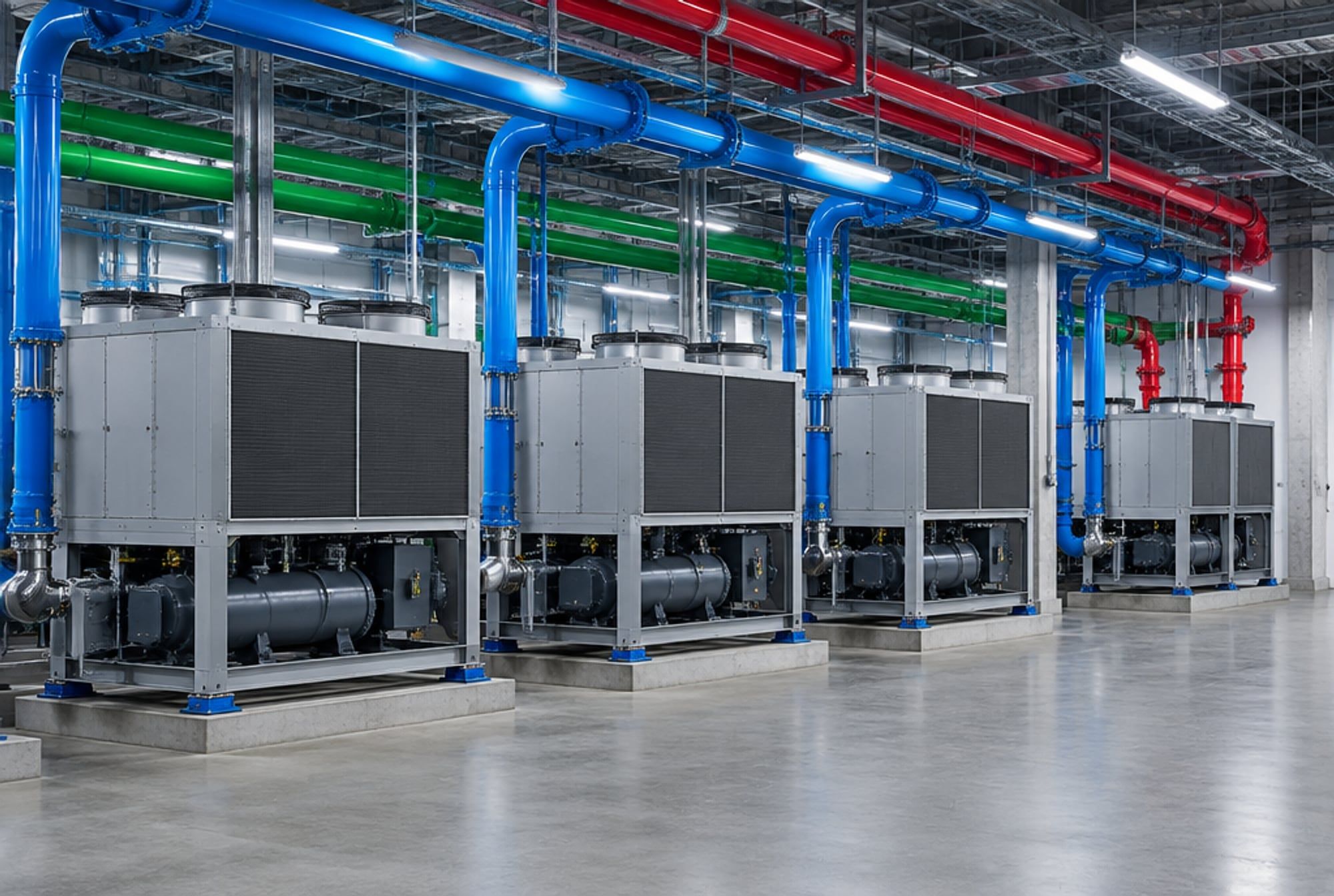
In most large halls, chillers produce the chilled water that CRAH units or liquid-cooling heat exchangers use. Plants are built with redundancy, so a failed machine does not stop cooling. Chillers may be air-cooled or water-cooled, and high-efficiency designs raise the chilled water temperature and use variable-speed drives to cut energy.
What is free cooling?
Free cooling uses cool outdoor air or water instead of running compressors. Air-side economizers bring outdoor air in directly; water-side economizers use a heat exchanger between the condenser water and the chilled water loop. Texas summers limit free cooling to cooler months and nights, so many Texas plants still rely on mechanical cooling for much of the year.
What is PUE?
Power usage effectiveness is total facility energy divided by IT energy. A PUE of 1.5 means 0.5 kWh of overhead, mostly cooling, for every 1 kWh of IT load. Modern designs target roughly 1.2 to 1.4, though results depend on climate and load. PUE says nothing about water use, which is why many operators now also report water usage effectiveness.
Why is water use a Texas issue?
Water-cooled plants evaporate water at the towers. A University of Texas at Austin report estimates data centers could account for 3% to 9% of Texas water use by 2040, and the state has been collecting data from operators on power, water sources and cooling systems. Air-cooled and closed-loop liquid designs reduce evaporation, but they use more electricity in hot weather. Large load interconnection rules at ERCOT also push operators to be specific about cooling design and load. These policies are changing, so check current ERCOT and state guidance before relying on a specific rule.
What are the common design choices?
- Containment. Hot-aisle or cold-aisle containment stops hot and cold air from mixing, which allows warmer supply temperatures.
- Higher temperatures. Running the chilled water loop warmer improves chiller efficiency.
- Variable speed. Fans, pumps and compressors that follow load save energy at part load.
- Redundancy. N+1 or 2N designs keep cooling running during maintenance and faults.
- Heat reuse. Warm return water can feed nearby buildings in some locations, though it is uncommon in Texas so far.
What should an operator track day to day?
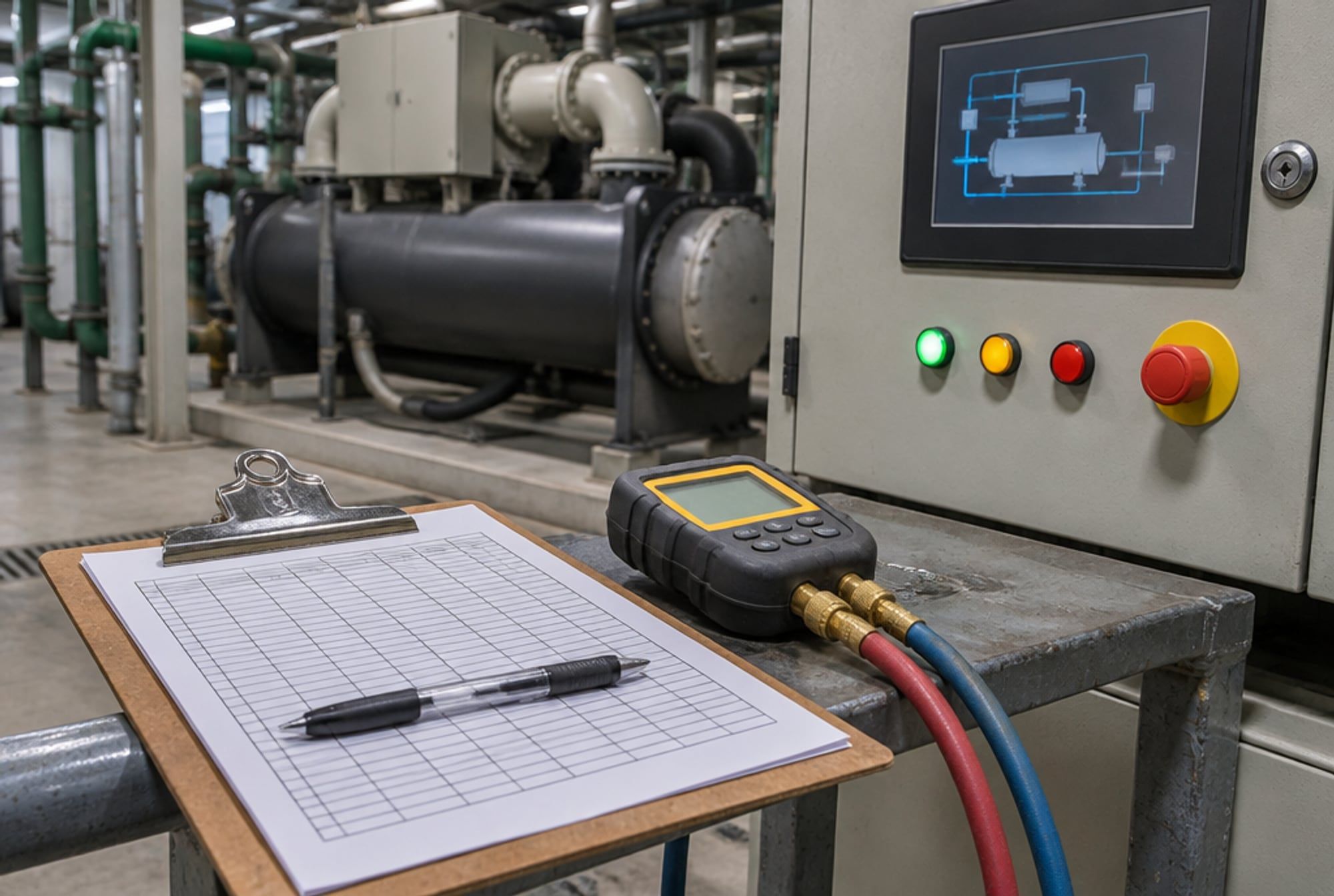
Design is only half the picture. Operators of cooling systems should track a short list of readings every day, because drift is the first sign of trouble.
- Supply and return temperatures at the chilled water loop and at the room. A shrinking temperature difference (delta T) usually means water is being pumped for little benefit.
- Chiller and pump power, trended against load, to catch efficiency loss early.
- Condenser or tower approach, which shows when heat rejection is struggling.
- Alarm history, including nuisance alarms, because repeated small alarms often precede a large one.
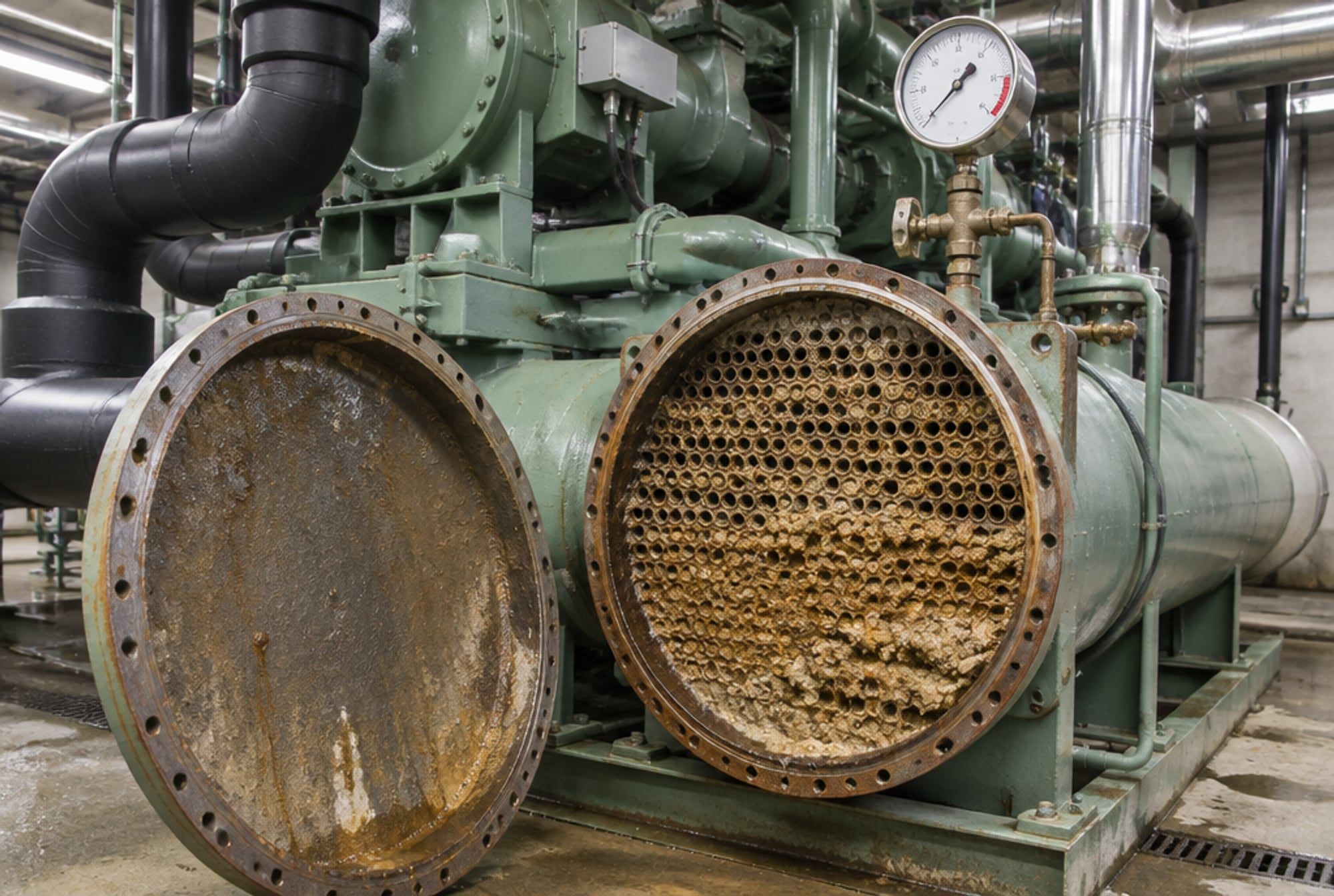
A simple chiller log sheet makes this routine, and the chiller maintenance checklist gives a schedule for what to inspect and when. Where the plant is water-cooled, the water treatment basics article explains why chemistry belongs on the same log.
None of this is complicated; it is a matter of recording the same numbers the same way, so a change is visible before it becomes an outage.
Frequently asked questions
What is the most common way to cool a data center?
Chilled water from chillers feeding CRAH units, with hot or cold aisle containment, is the most common design for large halls.
Do data centers need chillers in Texas?
Most large ones do, because outdoor conditions rarely allow free cooling year round. Some designs use warm-water liquid cooling that can reject heat with dry coolers for more hours.
Is liquid cooling replacing air cooling?
It is being added for high-density AI racks, but air cooling still handles much of the heat in most facilities.
SpecServis engineers in Ukraine work with industrial refrigeration and chiller plants. We are planning to enter Central Texas and want to meet people who work on cooling plants. See our open positions or partnership options.