By Priya Raman · Updated August 24, 2026 · 5 min read
Short answer
A CRAC unit is a computer room air conditioner with its own compressor and refrigerant circuit (DX). A CRAH unit is an air handler that uses chilled water from a chiller. A chiller is the central plant that makes the chilled water. CRAC suits small rooms; CRAH with chillers suits larger halls and allows higher efficiency.
CRAC, CRAH and chiller are three parts of data center cooling that are often confused. A CRAC (computer room air conditioner) cools air with its own refrigerant compressor. A CRAH (computer room air handler) cools air with chilled water. A chiller is the central machine that makes that chilled water. In short, a CRAH needs a chiller, a CRAC does not. For the wider picture see data center cooling explained.
What is a CRAC unit?
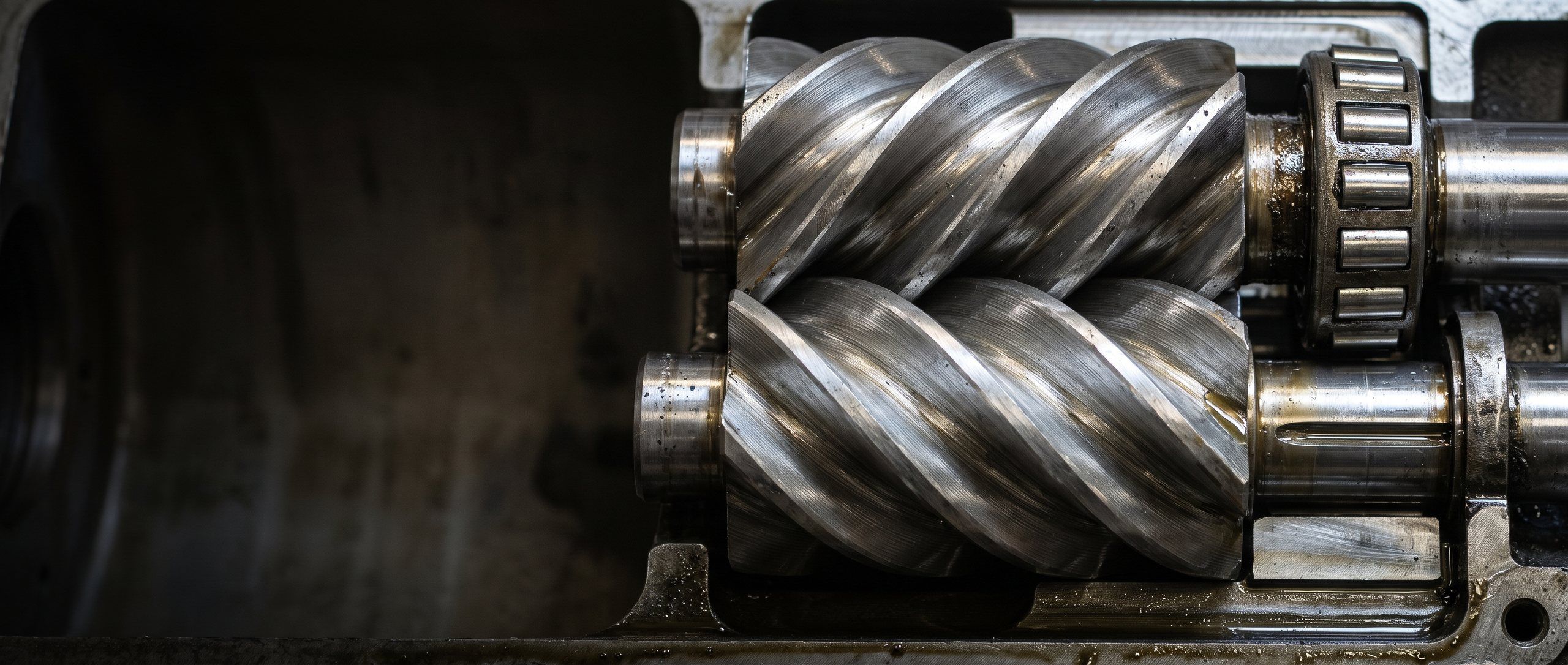
A CRAC is a direct-expansion (DX) air conditioner built for server rooms. It has a compressor, evaporator coil, fans and controls in one cabinet, plus an outdoor condenser or a water- or glycol-cooled condenser. It blows cold air under a raised floor or into the room and takes warm return air back.
- Self-contained, no chilled water plant needed.
- Good for small and mid-size rooms or phased growth.
- Compressors run constantly, which uses more energy than a large central plant at scale.
- Capacity per unit is limited, so large halls need many units, each with its own refrigerant circuit.
What is a CRAH unit?
A CRAH has a chilled water coil and variable-speed fans but no compressor. Chilled water arrives from chillers, passes through the coil and returns warmer. The unit controls air temperature through valve position and fan speed.
- Efficient at scale and at part load, because fan speed and water flow follow load.
- Allows warmer chilled water, which improves chiller efficiency.
- Needs a chiller plant, pumps and piping.
- Fewer refrigerant circuits in the data hall, so less refrigerant on the floor.
What is a chiller’s role?
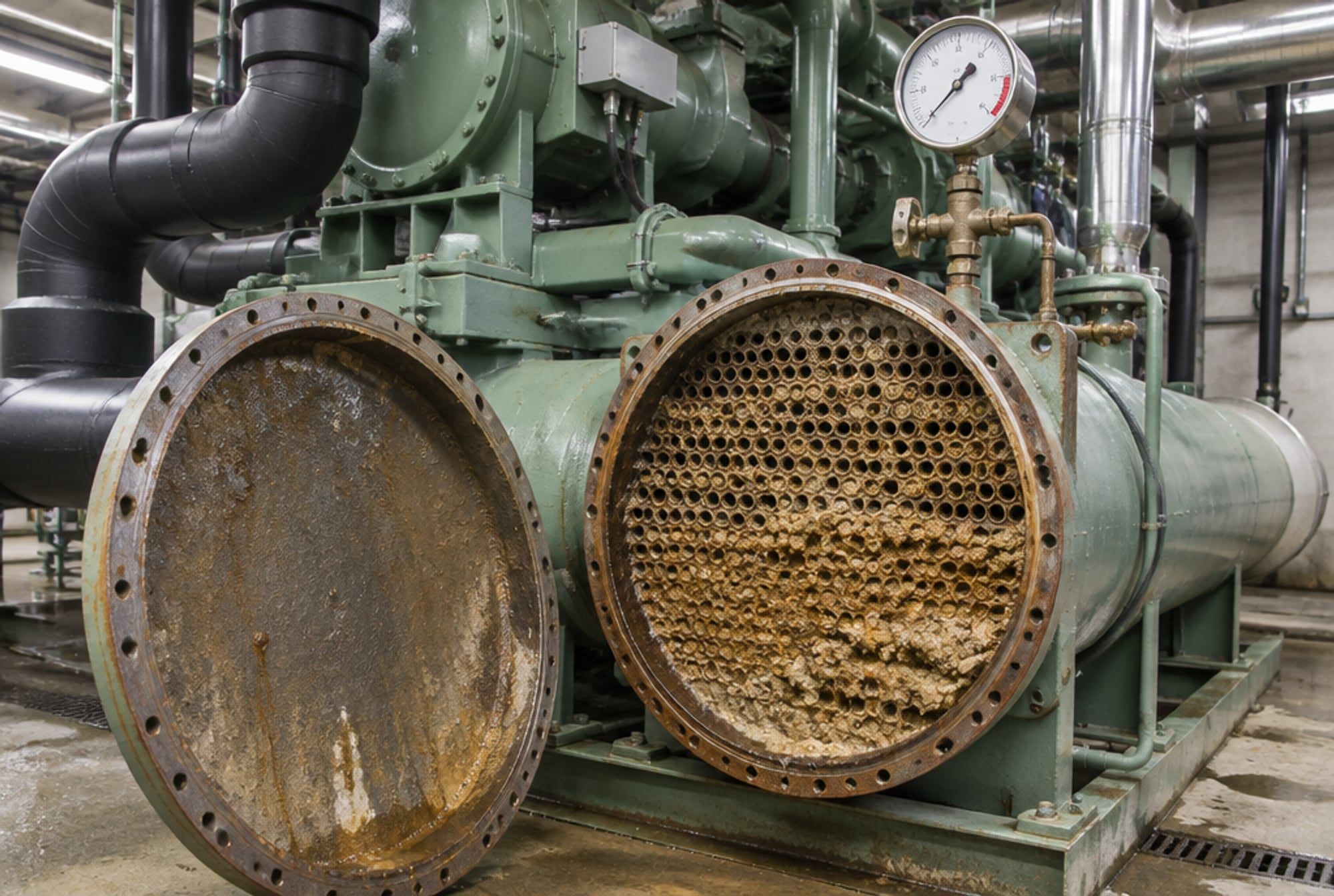
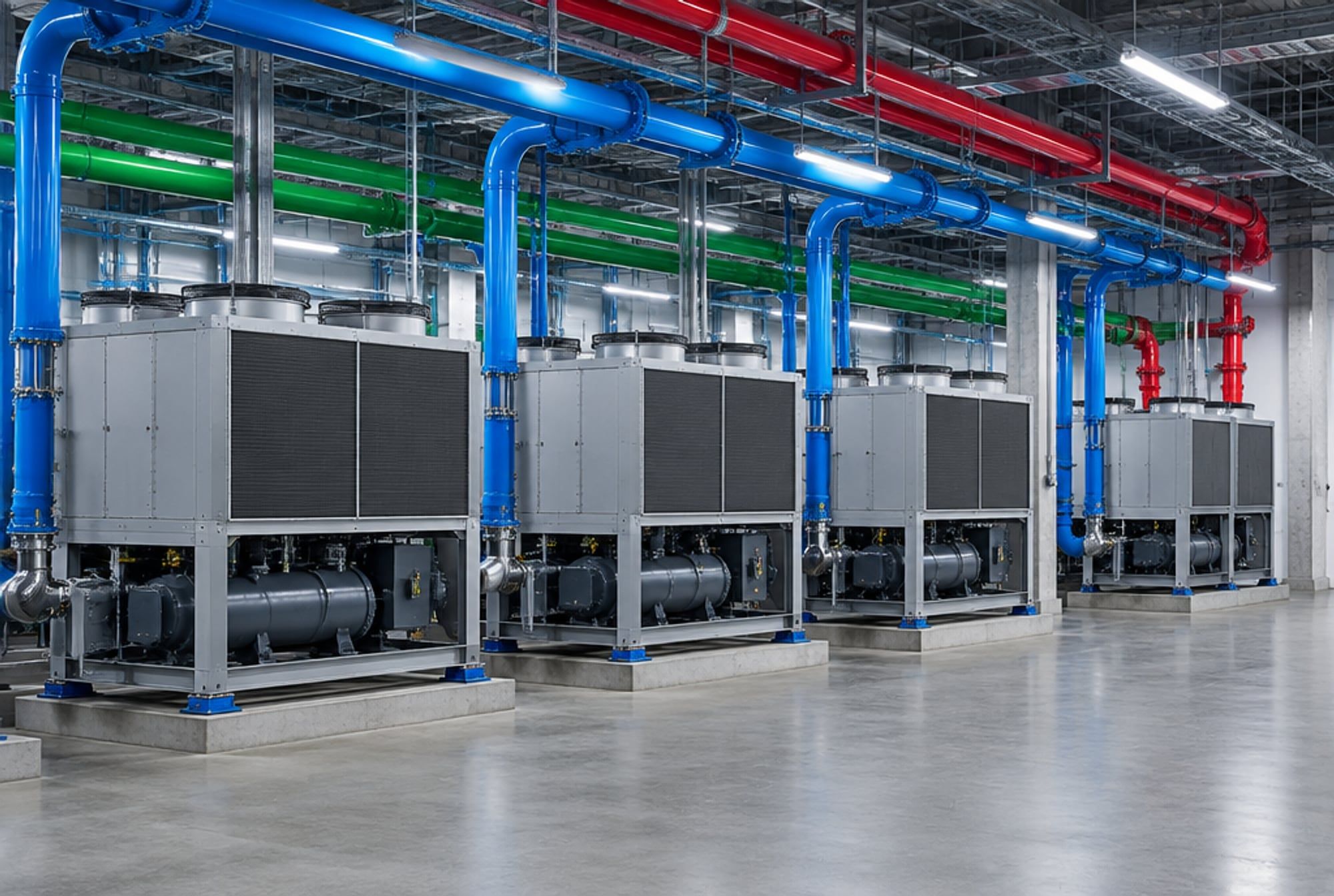
The chiller is the central plant: it cools water and rejects heat outdoors, by air-cooled or water-cooled design. One plant can serve dozens of CRAH units and other loads, such as liquid cooling heat exchangers. Plant options are covered in data center cooling explained.
How do they compare?
| Factor | CRAC | CRAH with chillers |
|---|---|---|
| Cooling method | Refrigerant (DX) in each unit | Chilled water from a central plant |
| Best size | Small to mid-size rooms | Mid-size to very large halls |
| Efficiency at scale | Lower | Higher |
| Part-load performance | Fair; staged or variable compressors help | Strong with variable-speed fans and pumps |
| Upfront complexity | Simpler | Higher: chillers, pumps, piping |
| Redundancy | Add units | N+1 or 2N in the plant |
| Free cooling | Limited | Water-side economizers possible |
| Refrigerant in room | Yes | No, only water |
Where do in-row, rear-door and liquid cooling fit?
Higher-density racks need cooling close to the heat. In-row units sit between racks, rear-door heat exchangers mount on the rack, and direct-to-chip liquid cooling takes heat at the processor. They commonly use chilled water or facility water from the same plant. See liquid cooling for AI data centers.
How do you choose?
- Size. A few racks to a small room: CRAC or split systems. Multi-megawatt halls: CRAH and chillers.
- Growth plan. If load will multiply, a central plant gives more room for expansion.
- Climate and water. Texas heat limits free cooling; water supply decides between air-cooled and water-cooled chillers.
- Density. Over about 15–20 kW per rack, plan for liquid or rear-door cooling.
- Staff and service. A central plant needs staff or contractors comfortable with chillers, pumps and controls.
What questions should you ask before choosing?
Answer these in order, because each one narrows the options.
- What is the load per rack and per room? Low-density rooms can use direct-expansion CRAC units. Higher density usually points to chilled water and CRAH units, or to liquid cooling.
- Is there a chilled water source? If the building already has a plant, CRAH units are an easy addition. If not, the plant itself becomes part of the project.
- How much redundancy is required? Chilled water plants are commonly built with spare capacity; see N+1 redundancy in cooling plants.
- What happens at part load? Rooms rarely run full on day one. Variable-speed fans and valves matter more than nameplate capacity. The PUE explainer shows how cooling overhead is measured.
- How hot does it get outside? In Central Texas, summer design conditions drive chiller sizing. See designing for 105 F.
Write the answers down before talking to equipment vendors. Most poor selections come from skipping the load and redundancy questions, not from picking the wrong brand.
Frequently asked questions
Is a CRAH more efficient than a CRAC?
Generally yes at scale, because central chillers are more efficient than many small DX circuits and CRAH fans can vary speed. Small rooms may favor CRAC for simplicity.
Can CRAC and CRAH units be used together?
Yes. Some facilities add CRAHs to an existing plant or keep CRACs as backup.
What does CRAC stand for?
Computer Room Air Conditioner. CRAH stands for Computer Room Air Handler.
If you design or service data center cooling in Central Texas, we would like to meet you. See our open positions or partnership options.