By Priya Raman · Updated September 17, 2026 · 5 min read
Short answer
Power usage effectiveness (PUE) is total facility energy divided by IT equipment energy. A PUE of 1.0 would mean all power reaches the servers; Uptime Institute's 2025 survey put the global average at about 1.54, while hyperscale operators report roughly 1.1 to 1.15. Cooling is usually the largest overhead, but PUE ignores water use and IT efficiency, so it should be read together with WUE.
PUE, or power usage effectiveness, is the standard ratio for how much of a data center’s energy goes to computing versus overhead. The formula is simple: PUE equals total facility energy divided by IT equipment energy. A PUE of 1.5 means that for every 1.0 kWh used by servers, storage and network gear, another 0.5 kWh goes to cooling, power conversion, lighting and other overhead. It was developed by The Green Grid and is defined in ISO/IEC 30134-2.
How is PUE calculated?
PUE = total facility energy ÷ IT equipment energy.
- Total facility energy is everything measured at the utility meter for the data center: IT load, cooling, power distribution losses (UPS, transformers), lighting and building loads.
- IT equipment energy is the energy used by servers, storage and networking, measured at the output of the power distribution units or at the rack.
Annual PUE, calculated from a full year of energy, is more meaningful than a spot reading, because outdoor temperature changes cooling energy through the seasons. Spot readings on a cool night flatter the number.
What are typical PUE values?
| Facility type | Typical reported PUE |
|---|---|
| Hyperscale operators | about 1.1 to 1.15 (as reported by operators) |
| Global average, Uptime Institute 2025 survey | about 1.54 |
| Older enterprise and colocation sites | about 1.6 to 1.8 |
Uptime Institute’s 15th annual survey found the global average flat at about 1.54 for roughly six years, which it links to legacy facilities and regional cooling constraints. Treat the numbers as indicators, since reporting methods differ.
Why does cooling dominate PUE?
After the IT load itself, cooling is the largest consumer in most halls. Chillers, pumps, fans, cooling towers and air handlers all add to overhead. What improves PUE:
- Warmer supply temperatures, allowed by ASHRAE guidelines, so chillers work less or free cooling runs longer.
- Containment of hot and cold aisles to stop mixing; see data center cooling explained.
- Variable-speed fans, pumps and chillers that follow load; see how a chiller works.
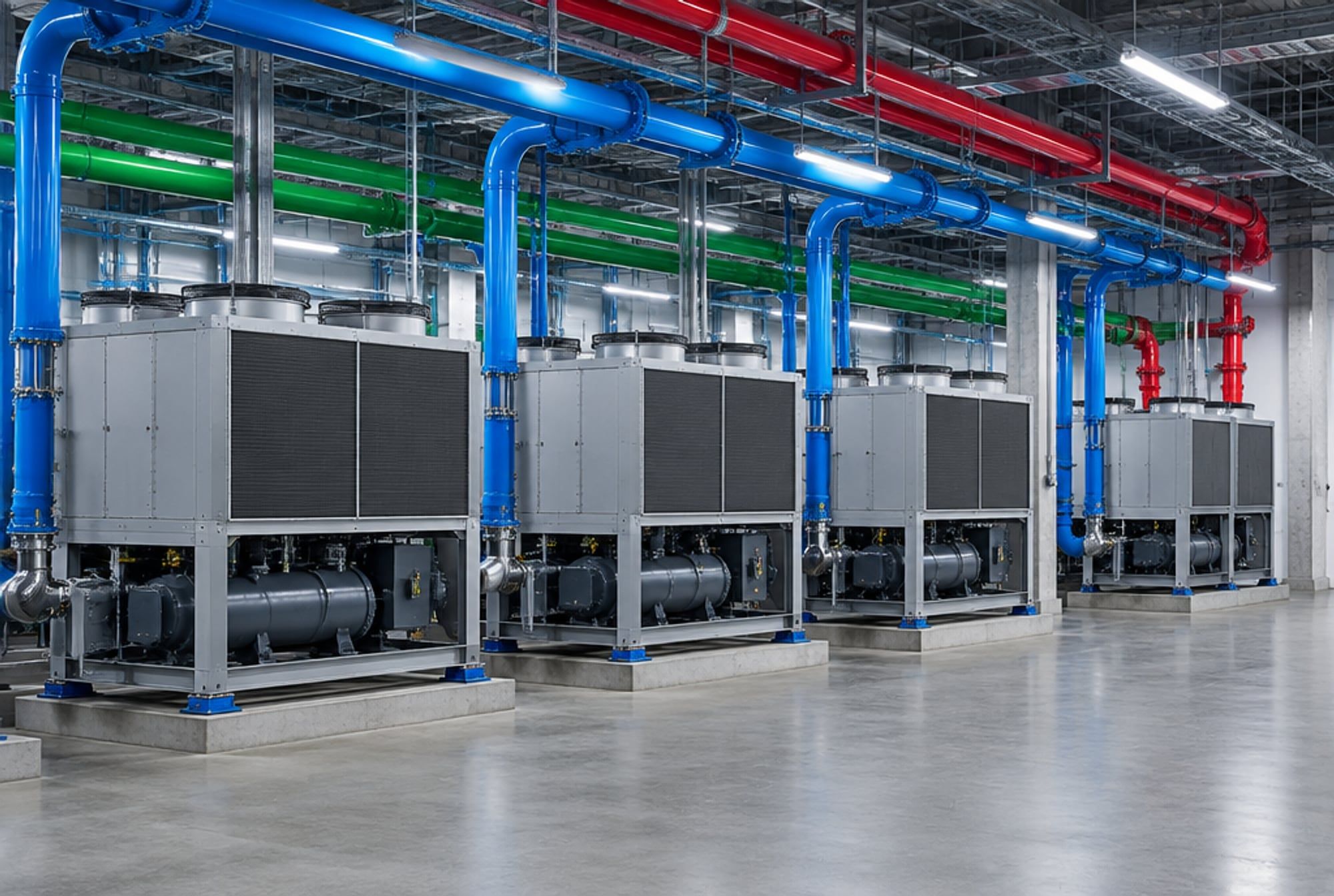
- Efficient central plants: water-cooled chillers and economizers where climate allows; see CRAC vs CRAH vs chiller.
- Liquid cooling for dense racks, which cuts fan energy and allows warmer water; see liquid cooling for AI data centers.
- Efficient power chain: high-efficiency UPS and transformers.
In a hot climate like Texas, free cooling is available fewer hours of the year, so annual PUE is harder to reduce than in a cool climate, all else equal.
What does PUE not tell you?
- It ignores how useful the IT work is. A data center with a PUE of 1.2 running idle servers is wasteful. PUE says nothing about server utilization or compute per watt.
- It ignores water. A plant can lower PUE by evaporating more water in cooling towers. Water usage effectiveness (WUE) fills that gap.
- It ignores carbon. The same kWh may come from very different grid mixes.
- It can be gamed by where you place the measurement boundary, or by counting fans inside servers as IT load. Under the standard, server fan power counts as IT, which is one reason liquid cooling can raise reported PUE for a moment while cutting total energy.
- It is not a capacity metric: it tells efficiency, not available power or cooling.
What is WUE, and why does it matter in Texas?
Water usage effectiveness is annual site water use (liters or gallons) divided by IT energy (kWh). It shows how much water the facility consumes per unit of computing energy. Evaporative cooling lowers energy but uses water; dry cooling saves water but uses more electricity in hot weather.
This trade-off is in the news in Texas. A University of Texas at Austin report estimates data centers could account for 3% to 9% of statewide water use by 2040, and the state has been collecting data from operators about energy, water sources and cooling systems. ERCOT also asks large new loads for detailed information before interconnection. Those requirements are changing, so check ERCOT and state sources before relying on any one rule. Read PUE and WUE together when comparing designs, and add carbon if you report sustainability.
How can an operator improve PUE?
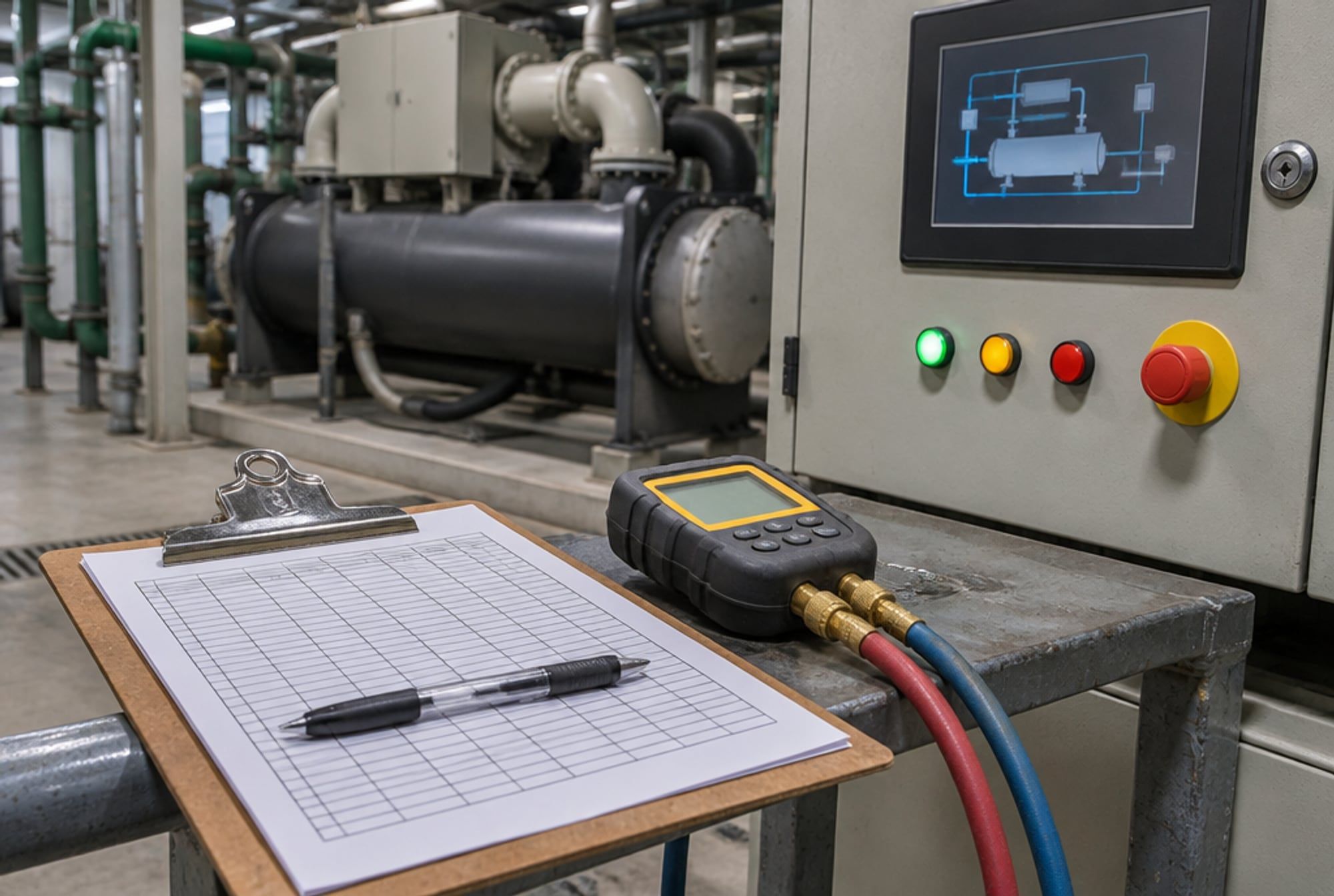
- Meter properly. Sub-meter IT, cooling and power chain, so you know where overhead goes.
- Fix airflow first: blanking panels, containment, sealed floors.
- Raise setpoints within ASHRAE recommended ranges and monitor inlet temperatures.
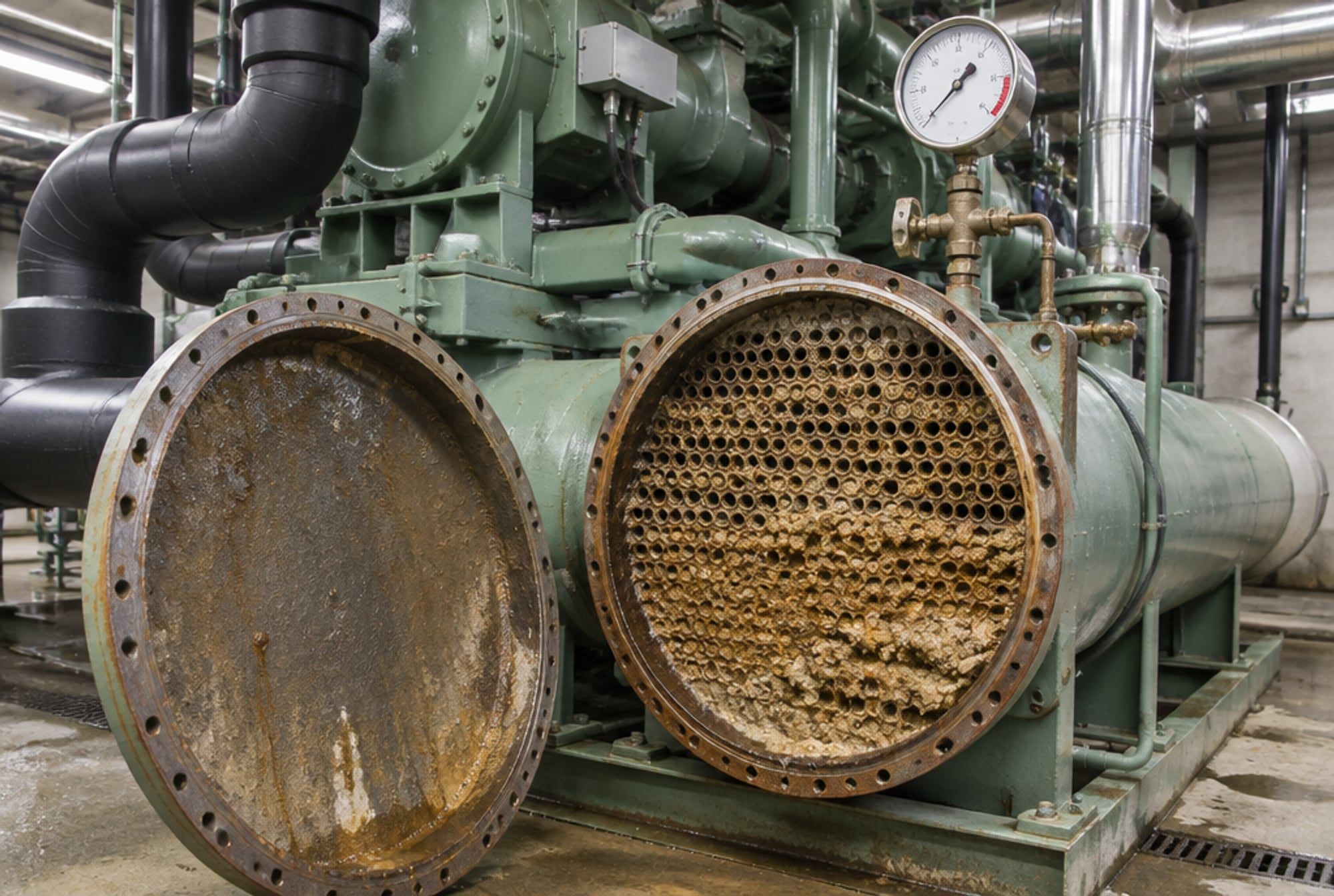
- Tune the chiller plant: chilled water reset, optimized staging, VFDs, clean tubes.
- Use economizers when ambient conditions allow.
- Plan liquid cooling for new dense racks and track total energy, not only PUE.
Frequently asked questions
What is a good PUE?
Under about 1.3 is considered strong for most sites; hyperscale operators report about 1.1 to 1.15. The right target depends on climate and the facility’s age and design.
Can PUE be below 1.0?
No. By definition it cannot fall below 1.0, since total energy includes the IT energy. Heat reuse systems can improve overall efficiency, but they are tracked separately.
Is a lower PUE always better?
Usually, but check water use, carbon and actual IT work done. A lower PUE achieved by using much more water may not be a better outcome in a dry region.
We want to meet engineers who work on data center and industrial cooling in Central Texas. See our open positions or partnership options.