By Priya Raman · Updated August 13, 2026 · 6 min read
Short answer
Chilled water loops are closed, so they need little treatment but cannot go without it. The main risks are corrosion, scale, biological growth and suspended solids. A corrosion inhibitor, correct pH, filtration and a proper fill and flush keep a closed loop healthy. Open condenser water loops need more treatment. Regular testing, with records, shows problems early.
A chilled water loop is a closed system, so water quality problems develop slowly, but they are real. Untreated or poorly filled loops corrode, shed rust, grow bacteria and foul heat exchangers, and the damage often shows up as falling efficiency years later. The basic program has four parts: clean the system at start-up, fill it with suitable water, add the right chemicals and glycol if needed, and test on a schedule. This article is general information. Follow the chiller manufacturer’s water-quality requirements and the guidance of a qualified water treatment specialist.
What problems does water treatment prevent?
| Problem | What happens | Typical result |
|---|---|---|
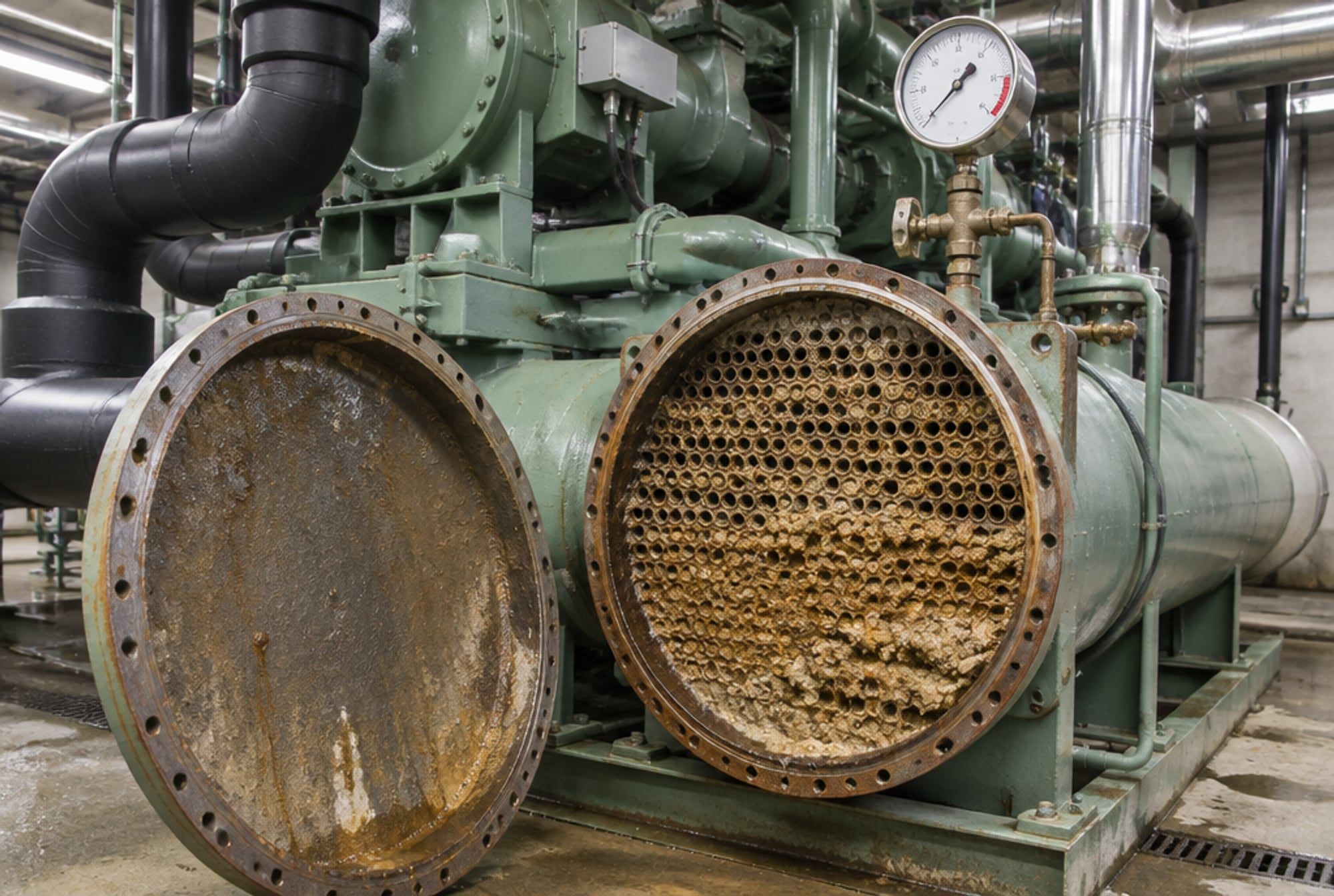
| Corrosion | Oxygen and low pH attack carbon steel, copper and aluminum | Pitting, leaks, rust particles, tube failure |
| Scale | Minerals deposit on hot surfaces, mostly in condenser loops | Lower heat transfer, higher energy use |
| Biological growth | Bacteria and slime form in warm or stagnant water | Fouling, microbiologically influenced corrosion, odor |
| Suspended solids | Rust, weld slag, sand and debris | Plugged strainers, damaged pump seals, fouled coils |
| Galvanic attack | Dissimilar metals in contact | Local corrosion at joints and fittings |
Even a thin layer of scale or fouling on tube surfaces reduces heat transfer, which raises compressor power for the same cooling. See chiller efficiency: kW per ton, COP and IPLV.
How should a new chilled water loop be cleaned and filled?
The first weeks set the tone for the life of the loop.
- Flush and clean the piping before connecting it to the chiller, to remove construction debris, oil and weld scale.
- Use suitable fill water. Very hard water increases scale risk, and water with high chloride or sulfate raises corrosion risk. Softened or demineralized water is sometimes preferred, depending on the materials.
- Add an inhibitor. Common closed-loop inhibitors are nitrite-based, molybdate-based or organic, chosen for the metals in the system.
- Vent air. Trapped air feeds oxygen corrosion and causes pump problems.
- Install filtration. Strainers at pumps and chiller inlets, plus a side-stream filter on larger loops.
- Record the baseline. Take a first sample and keep the results.
Do you need glycol in a chilled water loop?
Glycol is used for freeze protection, for low-temperature process work, and sometimes for outdoor piping that sees cold weather. It also changes the system:
- Lower heat capacity, so more flow is needed for the same load
- Higher viscosity, so more pump power
- Lower chiller capacity at a given leaving temperature
- It needs inhibitors of its own, because uninhibited glycol can become acidic and corrosive as it degrades
Use glycol only as far as the application requires, and test the concentration and inhibitor level regularly. For the performance side, see glycol chillers explained.
What about open condenser water loops?
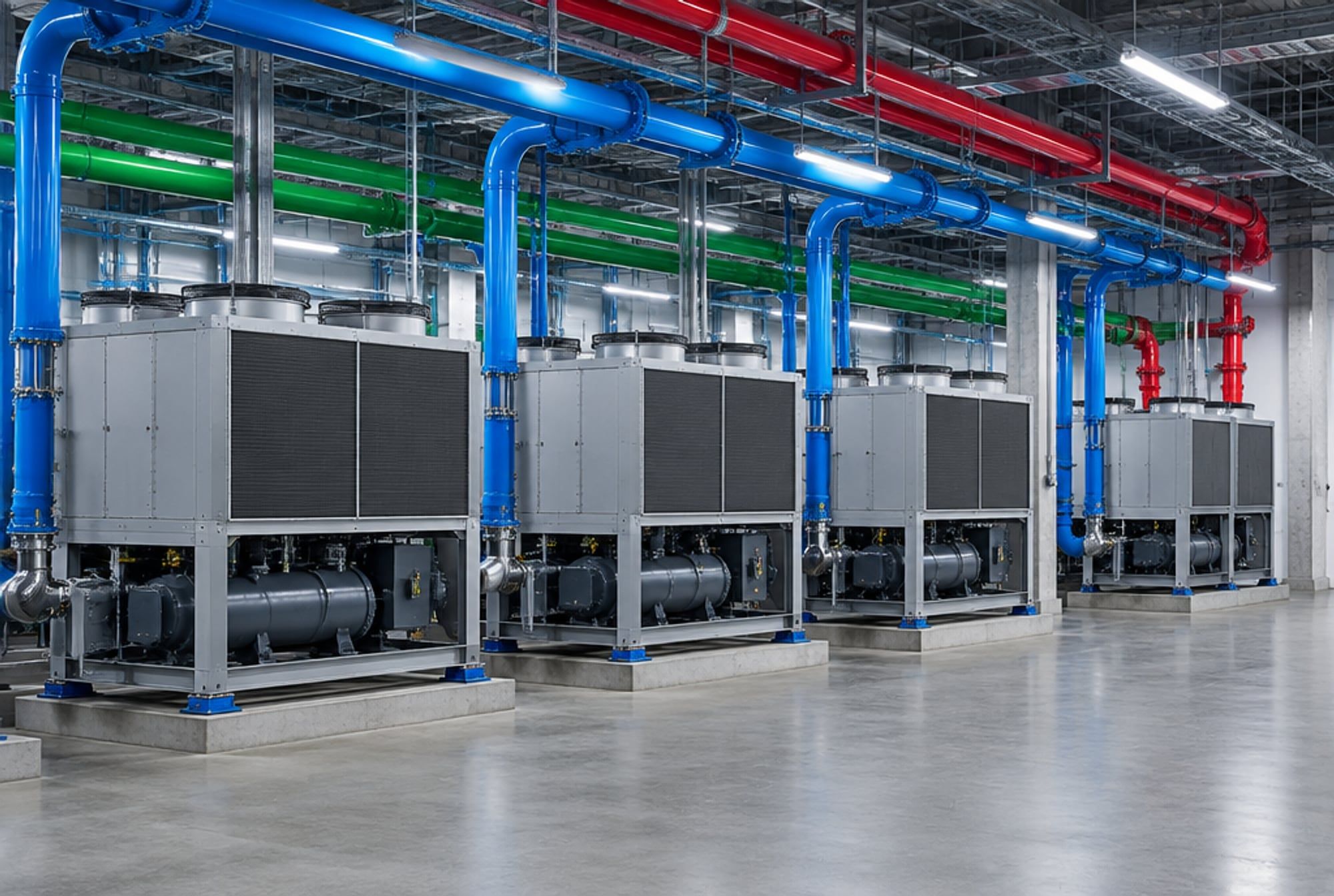
Water-cooled chillers use a cooling tower, which is an open loop. Evaporation concentrates minerals, so treatment is more demanding:
- Scale and corrosion inhibitors
- Controlled blowdown (cycles of concentration)
- Biocides and routine microbiological testing
- Regular tower cleaning and inspection
Cooling towers can support Legionella growth if poorly managed. The CDC publishes guidance on water management programs for building systems, and ASHRAE Standard 188 addresses legionellosis risk management. A qualified water treatment provider should design the program for the site. For how the tower fits into the plant, see water-cooled chillers: components and applications.
What should you test, and how often?
A practical closed-loop testing plan includes:
- pH. A target range suited to the metals present.
- Inhibitor concentration. Nitrite, molybdate or other reserve, per the product.
- Conductivity and total dissolved solids.
- Iron and copper. Rising iron shows active corrosion.
- Bacteria counts. Dip slides or lab tests.
- Glycol concentration and reserve alkalinity, where glycol is present.
- Appearance. Color, odor and visible solids.
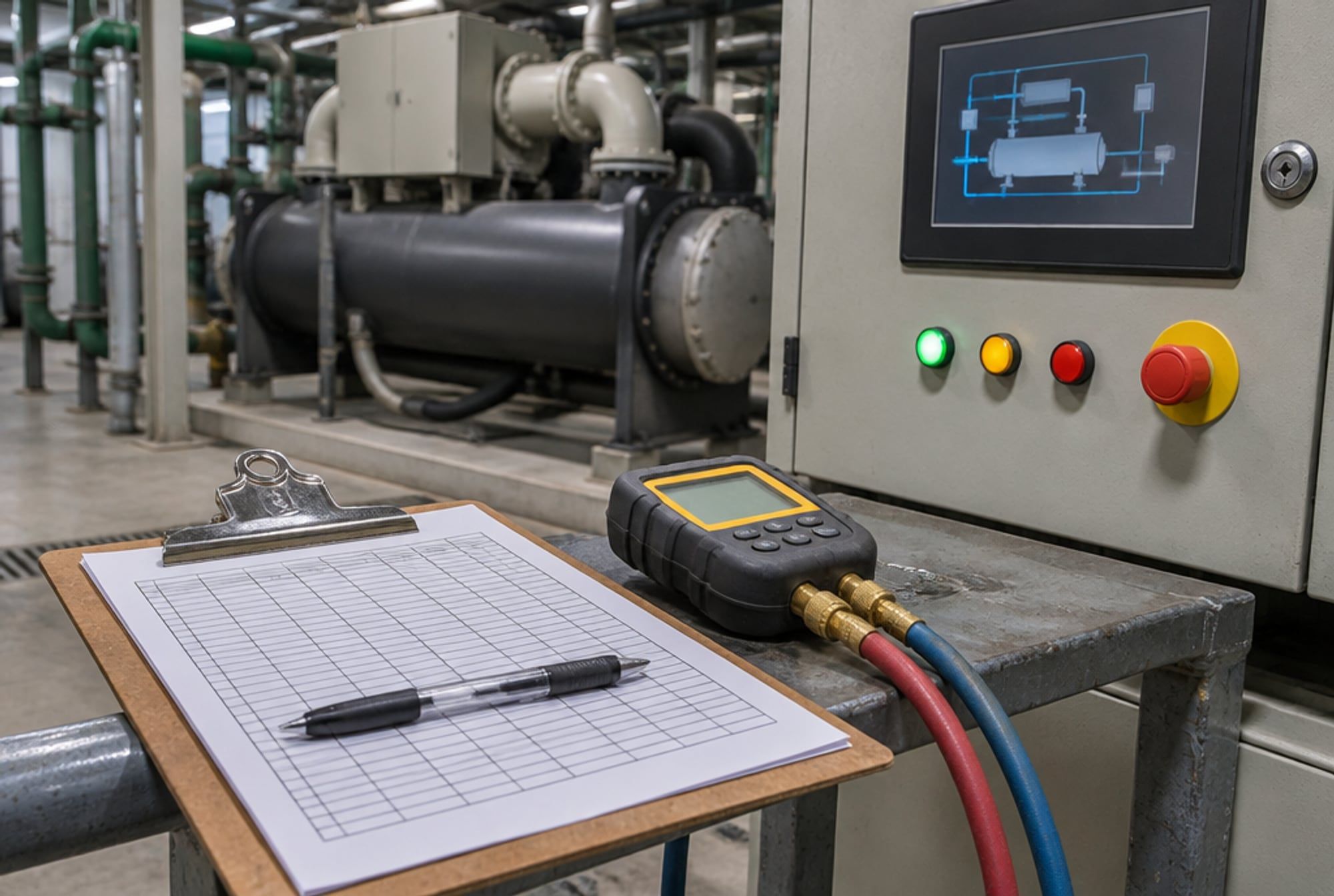
Test frequency depends on the system, from monthly for critical plants to a few times a year for stable small loops. The key is trend data. A single reading means little, while a steady rise in iron means a lot.
Add water-quality checks to the routine in chiller maintenance checklist.
Frequently asked questions
How often should a closed chilled water loop be treated?
Closed loops need treatment at fill and then monitoring and top-ups as results require. Many systems go for long periods without additions if they are tight. Frequent make-up water is a warning sign of leaks and dilutes the inhibitor.
Can I fill a chilled water loop with tap water?
Sometimes, but not blindly. Tap water composition varies, and hard or aggressive water can cause trouble. Test it first and follow the chiller manufacturer’s requirements.
What does black or brown water in a chilled loop mean?
Usually iron oxide from corrosion, or sometimes microbial activity. It calls for testing, filtration and a review of the treatment program, not just a drain and refill.
SpecServis engineers in Ukraine work with industrial chillers and refrigeration plants. We are planning to enter the Central Texas market and are looking for technicians, partners and a company to buy. See our open positions or partnership options.