By Marcus Lindqvist · Updated October 10, 2026 · 8 min read
Short answer
A variable frequency drive (VFD) changes the electrical frequency to a compressor motor so the compressor speed, and therefore its capacity, follows the load. At part load this can cut energy use compared with on/off cycling, unloading slides or hot-gas bypass, and it lowers inrush current. Limits include a restricted speed range for oil return and lubrication, added electrical harmonics and cost, so the design must follow the manufacturer's operating envelope.
A variable-speed compressor matches its output to the cooling load by changing motor speed instead of switching on and off or throttling. The speed change is made by a variable frequency drive (VFD), also called an inverter, which converts incoming AC power to DC and then back to AC at an adjustable frequency. Because most refrigeration and cooling systems spend most hours below full load, variable speed can reduce energy use and improve temperature control, provided the compressor is designed or approved for it.
How does a VFD compressor work?
An AC induction or permanent magnet motor turns at a speed set by the supply frequency and the number of poles. A VFD works in three stages:
- Rectifier. Converts incoming AC to DC.
- DC bus. Smooths the DC with capacitors and sometimes a choke.
- Inverter. Uses fast-switching transistors to create AC at the frequency and voltage the control calls for.
The controller raises or lowers frequency in response to a signal, such as suction pressure, leaving water temperature or a building automation command. Reducing speed reduces refrigerant mass flow and capacity roughly in proportion. The drive also keeps the voltage-to-frequency ratio within limits so the motor does not saturate.
Two broad forms exist. In some products the drive is integrated into the compressor package (common with scroll compressors and many chillers). In others, the compressor is a standard semi-hermetic or open machine with a separate drive, as with many screw and reciprocating machines.
Why use variable speed instead of on/off or unloading?
| Method | How it reduces capacity | Part-load efficiency | Notes |
|---|---|---|---|
| On/off cycling | Compressor starts and stops | Poor in frequent cycling; start-up losses and temperature swing | Simple and cheap |
| Cylinder unloading (reciprocating) | Valves disable cylinders in steps | Moderate | Fixed steps; mechanical wear on unloaders |
| Slide valve (screw) | Valve bypasses gas to reduce displacement | Efficiency falls at low loads | Continuous control but efficiency drops |
| Hot-gas bypass | Discharge gas bypasses to suction | Poor; compressor keeps working | Used for protection or very low loads |
| Inlet guide vanes (centrifugal) | Throttles gas flow | Moderate | Common on large chillers |
| Variable speed | Changes motor speed | Often better, especially at moderate part load | Needs drive and compatible compressor |
The benefit comes from a basic physical relationship. Many cooling systems operate most of the year at partial load and mild conditions. A compressor running slowly also tends to have lower condensing pressure relative to its heat exchanger capacity, because the same coils serve a lower heat flow. A common rule of thumb in fan and pump systems is that power falls with the cube of speed, but compressors do not follow this simple law: the work depends on pressure ratio, and internal losses do not scale evenly. Manufacturers publish part-load efficiency data, such as the integrated part load value (IPLV) for chillers, and that data is the right basis for comparison.
What are the other benefits?
- Tighter control. The system can hold suction pressure or leaving water temperature within a narrow band, which helps process and storage applications.
- Lower inrush current. A drive soft-starts the motor, often reducing starting current to near running current rather than several times higher. This can reduce demand charges and stress on the electrical system.
- Less cycling. Fewer starts reduce stress on the motor and mechanical parts and lower pressure swings.
- Capability to run above nominal speed in some designs, for fast pull-down, within the compressor’s limits.
- Better humidity control in some air conditioning cases, because the coil can stay colder for longer at low capacity.
What are the limits and risks of variable speed?
Variable speed is not free of trade-offs:
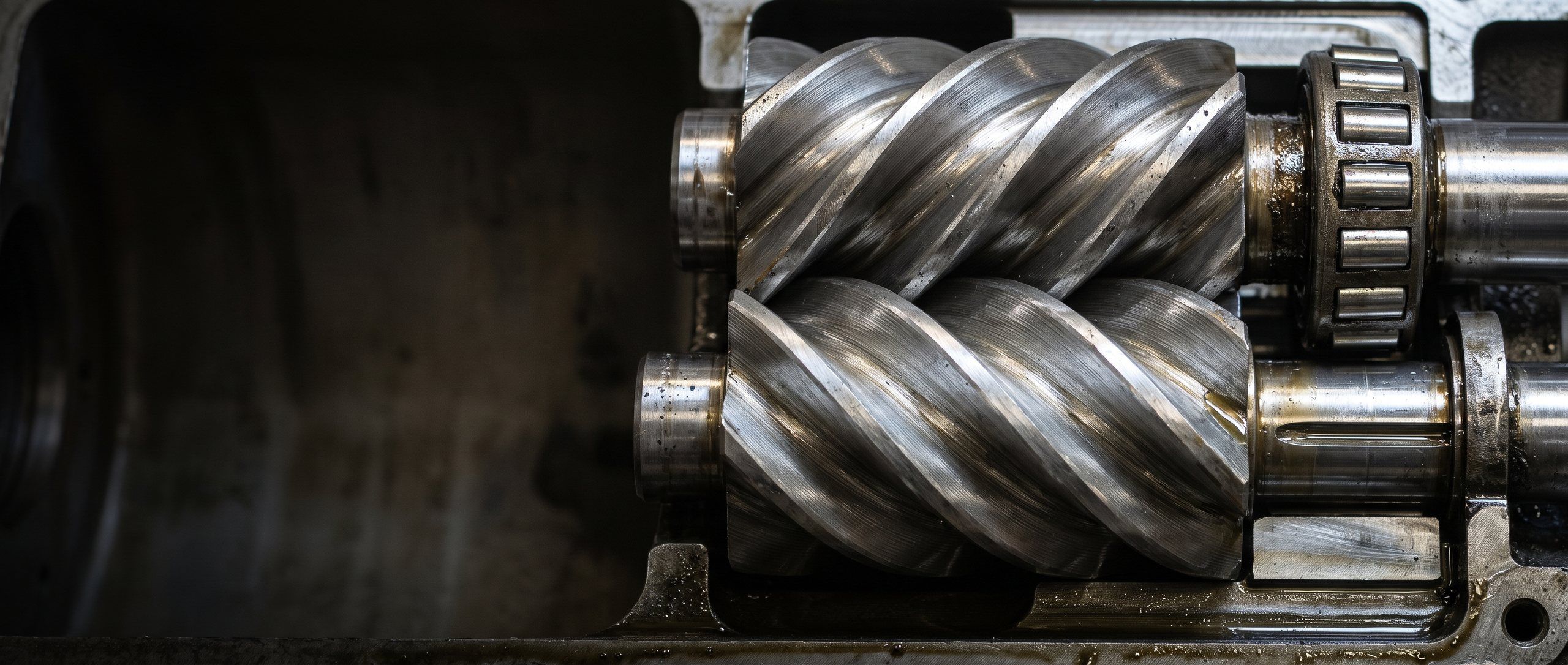
- Speed range. Compressors have minimum and maximum speeds. At low speed, oil may not be pumped properly or returned from the system, and at high speed the motor, bearings and valves face greater stress. Scroll and screw compressors, for example, publish an operating envelope that links speed, suction and discharge pressure. Staying inside it is essential. See screw vs scroll compressors for how the designs differ.
- Lubrication. Compressors with splash lubrication or pressure-fed lubrication depend on shaft speed. A separate oil pump or a defined minimum speed may be needed. Check the manufacturer’s data.
- Oil return. Low refrigerant velocity at low speed can leave oil in risers and the evaporator. Piping design and periodic speed boosts are used to manage this.
- Cost and complexity. A drive adds equipment cost, parameter setup and another component that can fail. Spare parts and trained technicians matter.
- Part-load benefit depends on duty. A system that runs at near full load most of the time gains less.
- Motor compatibility. Not every motor is rated for inverter duty. Fast voltage edges can stress insulation, especially with long cable runs.
What about harmonics and electrical effects?
A VFD draws current in pulses rather than a smooth sine wave. This creates harmonic distortion on the power supply, which can heat transformers and cables, interfere with sensitive equipment and, in extreme cases, cause problems for generators. Typical mitigation includes:
- Line reactors or DC chokes to smooth current;
- Active front end or low-harmonic drives where limits are strict;
- Harmonic filters sized to the load;
- Following IEEE 519, a widely used guide for harmonic limits at the point of common coupling.
On the motor side, fast switching can create voltage reflections on long cables. Output reactors, dV/dt filters, inverter-duty insulation and shaft grounding rings help protect motor insulation and bearings. Electromagnetic interference (EMI) can also affect control signals, so correct shielded cable and grounding practices are needed. The drive manufacturer and compressor manufacturer both publish installation guidance. Follow it.
Where are variable-speed compressors used?
- Chillers. Variable-speed centrifugal, screw and scroll chillers are used where load varies widely, and manufacturers report good part-load performance. See how a chiller works and centrifugal chillers explained.
- Commercial refrigeration. Rack and condensing unit compressors with drives hold suction pressure steadily in supermarkets and cold storage.
- Industrial refrigeration. Screw compressors on drives follow plant load in food processing and cold storage; see ammonia refrigeration system basics.
- Air conditioning and heat pumps. Inverter-driven scroll and rotary compressors are very common in modern residential and light commercial equipment.
- Process cooling and data centers. Loads that change with production or IT demand fit variable capacity well.
What should a team check before choosing a drive-controlled compressor?
- Load profile. How many hours per year does the system run at each load level? A load profile shows whether variable speed will pay back.
- Compressor approval. Confirm that the model is rated for variable-speed operation, and what its speed range is.
- Operating envelope. Check minimum speed, maximum speed and pressure limits at each speed.
- Oil management. Review oil return design and any minimum-speed rules.
- Electrical environment. Check harmonic limits, cable length, motor insulation rating and grounding.
- Controls. Define setpoints, ramp rates and how the system behaves on a fault.
- Service. Confirm who can commission and troubleshoot the drive and the compressor together.
Frequently asked questions
Does a VFD compressor always save energy?
No. Savings depend on how much time the system runs at part load, on the compressor’s efficiency at reduced speed and on the drive losses. Use manufacturer part-load data and a real load profile to estimate.
Can any compressor be run on a VFD?
No. Many compressors are not approved for variable-speed operation because of lubrication, vibration or motor limits. Check the manufacturer’s literature for approved speed ranges.
Do VFDs cause harmonics problems?
They can add harmonic distortion. For one small drive the effect is usually minor, but for large or many drives a harmonic study and mitigation such as chokes or filters may be required.
SpecServis engineers in Ukraine work with compressors and chillers across many control strategies. We are planning to enter the Central Texas market and would like to meet technicians and partners. See our open positions or partnership options.