By Marcus Lindqvist · Updated November 2, 2026 · 6 min read
Short answer
A walk-in cooler that will not hold temperature usually has a dirty condenser, an iced-up evaporator, a failed fan, a worn door gasket, a defrost problem or a refrigerant leak. Owners can safely check coils, doors, airflow and basic settings, and should move product to safe storage and call a qualified refrigeration contractor for electrical, refrigerant or sealed-system faults.
When a walk-in cooler warms up, the cause is usually one of a short list: a dirty condenser, an iced-up evaporator, a failed fan, a leaking door gasket, a defrost fault or low refrigerant from a leak. Several of these can be checked safely by the owner without tools or opening panels. Anything involving refrigerant, live electrical parts or the sealed system should go to a qualified refrigeration contractor, and food safety comes first while the problem is fixed.
What are the most common causes?
| Symptom | Likely cause | Owner-level check |
|---|---|---|
| Cooler warm, condensing unit hot and loud | Dirty condenser coil or blocked airflow | Look for dust, grease, leaves, and objects near the unit |
| Ice on the evaporator coil, or a block of ice | Defrost problem, door left open, or airflow restriction | Look at the coil, drain pan, and whether the fans spin |
| Evaporator fan not turning | Failed motor or blade, or tripped control | Listen and look from outside the housing; do not touch moving parts |
| Warm air at doors, ice at edges | Worn gasket, door sweep or hinge sag | Check the seal by sight and feel |
| Unit runs constantly, poor cooling, oily spots at fittings | Refrigerant leak | Look for oily residue; do not try to find leaks by touching joints |
| Compressor will not start | Electrical, controller or compressor fault | Check that power and the disconnect are on, then stop |
Is the condenser coil dirty?
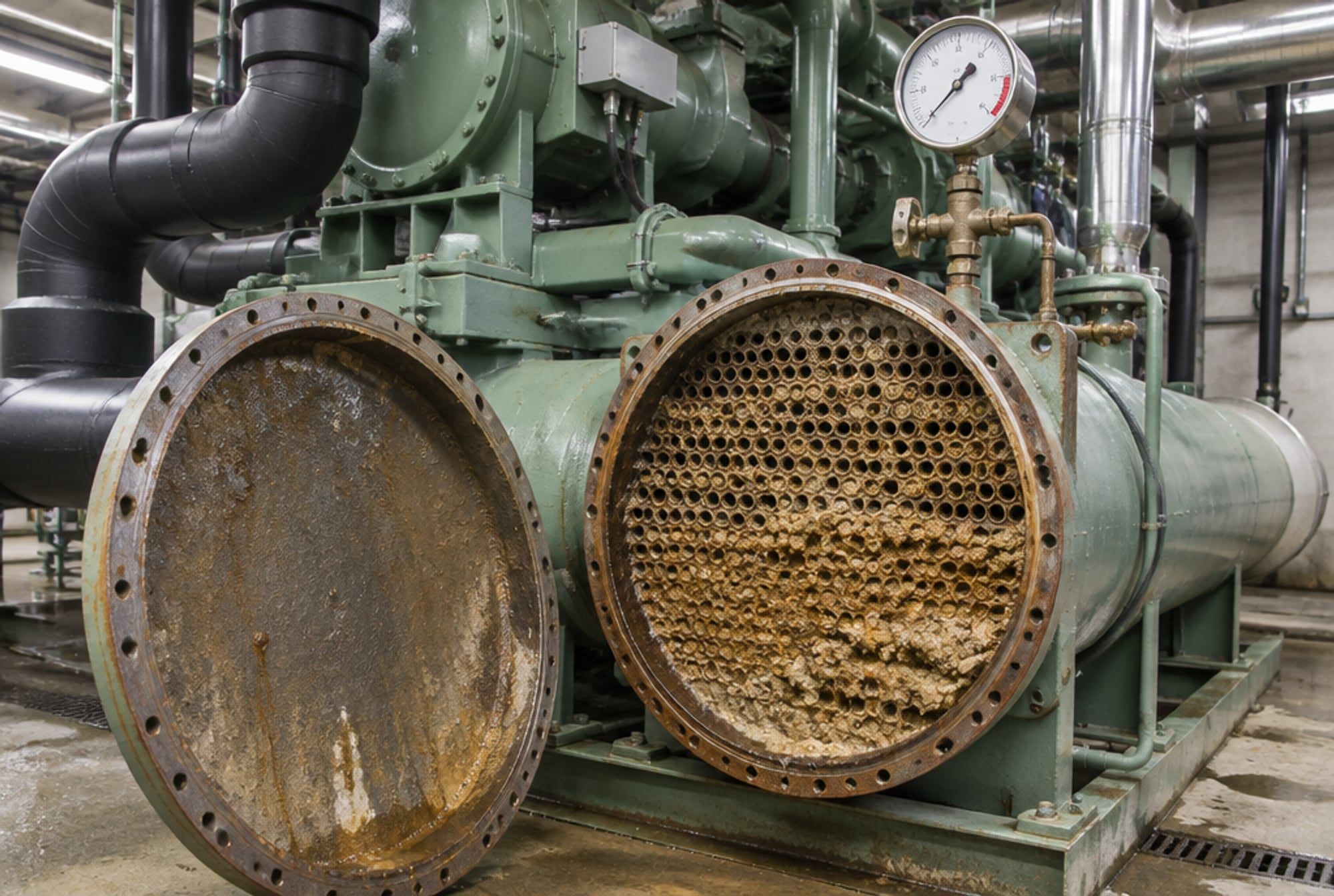
The condenser removes heat from the refrigerant. When its fins are coated in dust, grease or cottonwood fluff, airflow drops and pressures rise, so the cooler cools slowly and the compressor runs hotter. This is the most common cause of poor performance in hot weather, and Texas summers make it worse because ambient air is already close to the unit’s limits.
Owner steps: switch the unit off at the disconnect, look at the coil from the outside, and gently brush loose debris. Keep storage and shrubs clear of the condensing unit. Heavy fouling or bent fins need proper cleaning with the right tools and coil-safe cleaners. For background on how condensers work, see air-cooled condensers: how they work.
Why is the evaporator icing up?
The evaporator coil inside the box is meant to stay cold, but not covered in thick ice. Ice insulates the coil and blocks air, so the room warms even though the unit runs. Common reasons:
- Defrost not working: a failed heater, timer or termination sensor lets frost build up over days.
- Door left ajar or damaged seals: humid air enters and freezes on the coil.
- Blocked airflow: boxes stacked against the evaporator or a failed fan.
- Low refrigerant: a very cold coil section can freeze while the rest is starved.
- Blocked or frozen drain line: melt water refreezes and builds up around the coil.
Owner step: if the coil is heavily iced, turn the unit off and let it thaw with the doors closed. Place towels or a tray to catch water. That restores cooling for a while, but the cause still needs finding, or the ice will return. A forced defrost with heat tools can damage the coil and drain pan, so avoid it.
What if a fan has failed?
Walk-in systems have fans at both ends. The evaporator fan moves cold air around the box, and the condenser fan pulls outside air through the condensing unit. If an evaporator fan stops, the coil may ice up and the room warms unevenly. If the condenser fan stops, head pressure rises and the compressor may trip on a safety. Signs include silence where there used to be airflow, a smell of hot insulation, or a visible blade that is not turning. Fan motors are electrical parts, so replacing them is a task for a qualified contractor. If you want to understand how head pressure ties into efficiency, see chiller efficiency: kW per ton and IPLV, which explains the same lift concept at a larger scale.
Could the door gasket or door be the problem?
Warm humid air entering the box adds load and causes frost. Check:
- The gasket is whole, flexible and touching the frame on all sides. A dollar bill test is a common informal check.
- The door closes by itself and latches fully.
- Hinges are not sagging, and the strip curtain or door sweep is intact.
- The heater wire at freezer doors (if fitted) keeps the frame free of ice.
Replacing gaskets and adjusting hinges is often a simple maintenance task, and it cuts energy use too. See walk-in freezer vs walk-in cooler for differences between the two box types.
Could it be a refrigerant leak?
If the system has lost refrigerant, it will run longer, cool less and may ice up. Look for oily residue on fittings and coils, but do not attempt to open the system. Under U.S. rules, handling refrigerant requires EPA Section 608 certification, and leak rules apply to some equipment, as explained in EPA 608 leak repair rules. A leak must be found and repaired, not just topped off.
What should you do first when the cooler warms up?
- Check the thermostat or controller setpoint and that power is on, including the disconnect and breaker.
- Keep the door closed and move high-risk food to another cooler if the box is above safe holding temperature. Follow your local health department and food safety plan.
- Check the condenser and evaporator areas for blockage, dirt and ice.
- Look at the door gasket and closing.
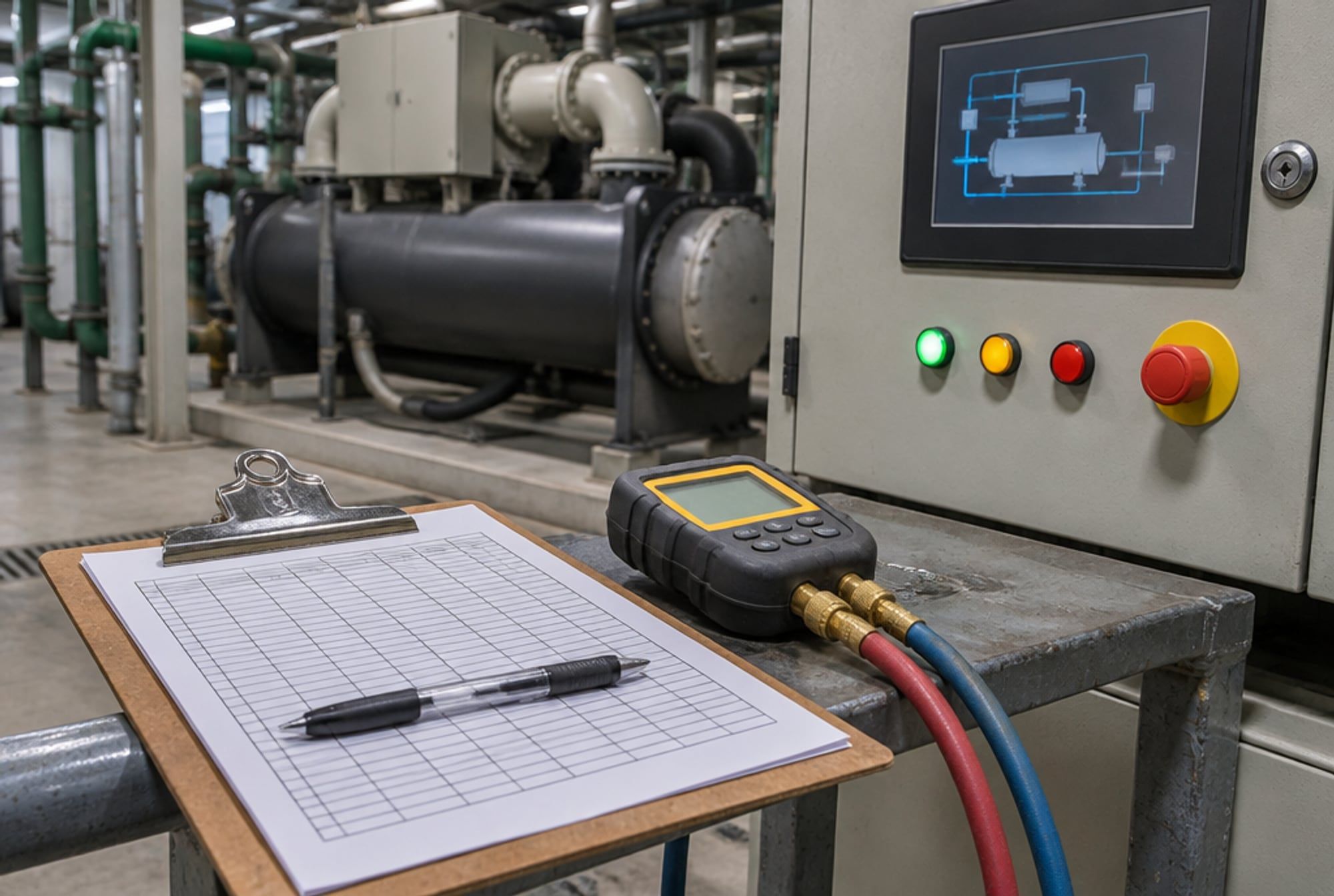
- Write down what you saw and what the controller shows. Notes help a contractor diagnose faster.
- If the compressor, fans or electrical parts are involved, call a qualified contractor and do not reset breakers repeatedly.
Frequently asked questions
How warm can a walk-in cooler get before food is unsafe?
Food safety limits come from regulators and your food safety plan. The FDA Food Code gives the general cold holding guidance. If the box is above the limit for longer than allowed, follow your plan for discarding or evaluating product.
Can I clean the condenser coil myself?
Light brushing of loose debris with the power off is a reasonable owner task. Deep cleaning, fin combing and chemical cleaners are better left to qualified personnel.
Why does my cooler ice up only in summer?
Hotter, more humid air gets in each time the door opens, and a dirty condenser raises pressures, so small problems show up faster in summer.
SpecServis engineers in Ukraine work with commercial refrigeration equipment. We are planning to enter the Central Texas market and are looking for technicians, partners and a company to buy. See our open positions or partnership options.