By Tamika Brooks · Updated August 17, 2026 · 8 min read
Short answer
Whether to repair or replace a chiller depends on age relative to expected service life, refrigerant availability, efficiency, repair history, downtime risk and total lifecycle cost. No single rule decides it. A structured comparison of the cost of continuing with the existing machine against the cost of a new one, including energy, refrigerant and risk, gives the most defensible answer.
A chiller should usually be replaced instead of repaired when its remaining life is short, repairs are becoming frequent, the refrigerant is being phased out, or a new machine would save enough energy and risk to justify the capital. It should usually be repaired when the machine is in good condition overall, the fault is isolated and the refrigerant and parts are still available. The honest answer is a lifecycle comparison, not a rule of thumb. This guide lays out the factors, with a method for weighing them.
How old is too old for a chiller?
Age is the first screen, but not the final answer. Industry surveys such as the ASHRAE equipment service life data suggest that chillers last roughly 20 to 25 years on average, with centrifugal machines at the upper end and air-cooled units often lower. These are medians from past surveys, and individual machines range far on either side.
What matters more than the calendar age is:
- Operating hours and duty. A process chiller running 8,000 hours per year ages faster than a comfort chiller running a few thousand.
- Maintenance history. Machines with documented water treatment, oil analysis and inspections last longer. See chiller maintenance checklist.
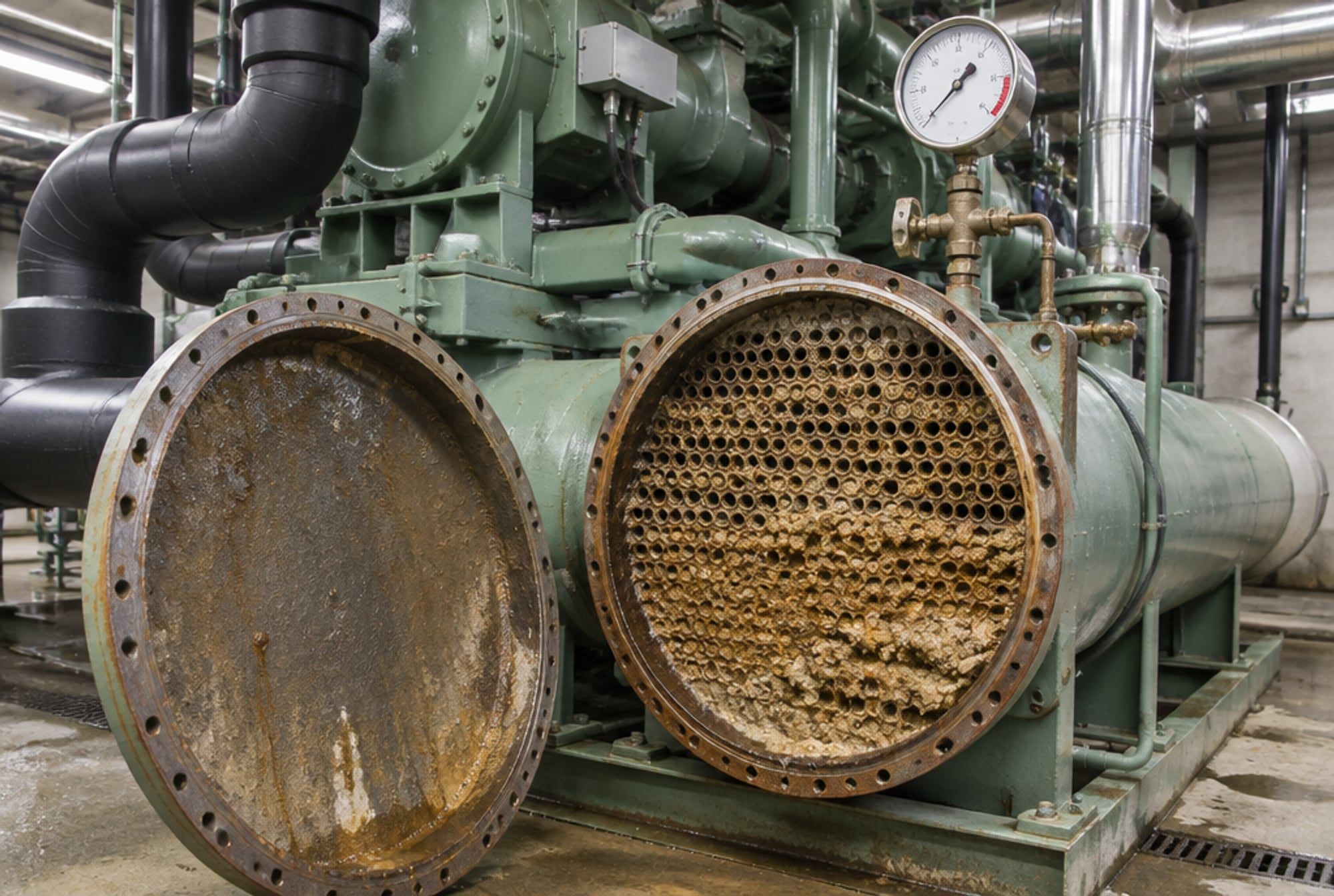
- Environment. Coastal air, dusty sites and poor water quality accelerate corrosion and fouling.
- Remaining life of the major components, such as the compressor, tube bundles and controls.
What are the main factors in the decision?
| Factor | Points toward repair | Points toward replacement |
|---|---|---|
| Age | Well inside expected service life | At or beyond typical service life |
| Failure type | Single, isolated component | Repeated or multiple system failures |
| Refrigerant | Available, reasonable cost, long-term supply | Phased out, scarce or volatile in cost |
| Efficiency | Close to current standards, or load is small | Much worse than current models, high annual run hours |
| Parts and support | Available from the manufacturer or the aftermarket | Obsolete controls or parts, long lead times |
| Downtime tolerance | Redundant capacity or a short outage | Critical load with limited backup |
| Capacity fit | Machine still matches the load | Load has changed, machine is badly sized |
| Code and safety | Meets current requirements | Triggers upgrades, or has safety concerns |
How does refrigerant affect the decision?
Refrigerant is often the deciding factor, so it deserves its own section.
- R-22 and older refrigerants. R-22 production for new equipment ended in the U.S. at the start of 2020, and servicing relies on reclaimed or stockpiled supply. Chillers still using R-12 or R-11 are long past their expected life and often need replacement for refrigerant reasons alone.
- R-123. Used in many low-pressure centrifugal chillers. It is an HCFC under the global phase-out schedule, with new production scheduled to end by 2030 under the Montreal Protocol, and supply for servicing is expected to depend on recovered material afterwards. Check current EPA rules for the exact dates.
- HFC refrigerants such as R-134a and R-410A. The AIM Act is reducing the supply of HFCs in steps and restricts the use of high-GWP refrigerants in new equipment. See what is the AIM Act and the HFC phasedown, technology transitions rule 2026 update and HFC deadlines in January 2027. Existing R-134a chillers can keep running, but refrigerant costs may rise over time.
- Newer options. R-513A, R-1234ze and similar lower-GWP refrigerants are used in new chillers. Some are classified mildly flammable (A2L); see A2L refrigerants explained.
A conversion to a different refrigerant is sometimes possible, but it has to be evaluated for capacity, oil compatibility, seals and safety, and manufacturer support. It is an engineering exercise, not a drop-in.
Does a more efficient chiller pay for itself?
It can, particularly in a high-hour application such as a data center, hospital or process plant. Older machines can use noticeably more energy per ton than a current high-efficiency model, but the difference varies widely with age, condition and load, and the saving only matters in proportion to how many hours the chiller runs and what electricity costs.
To judge it properly:
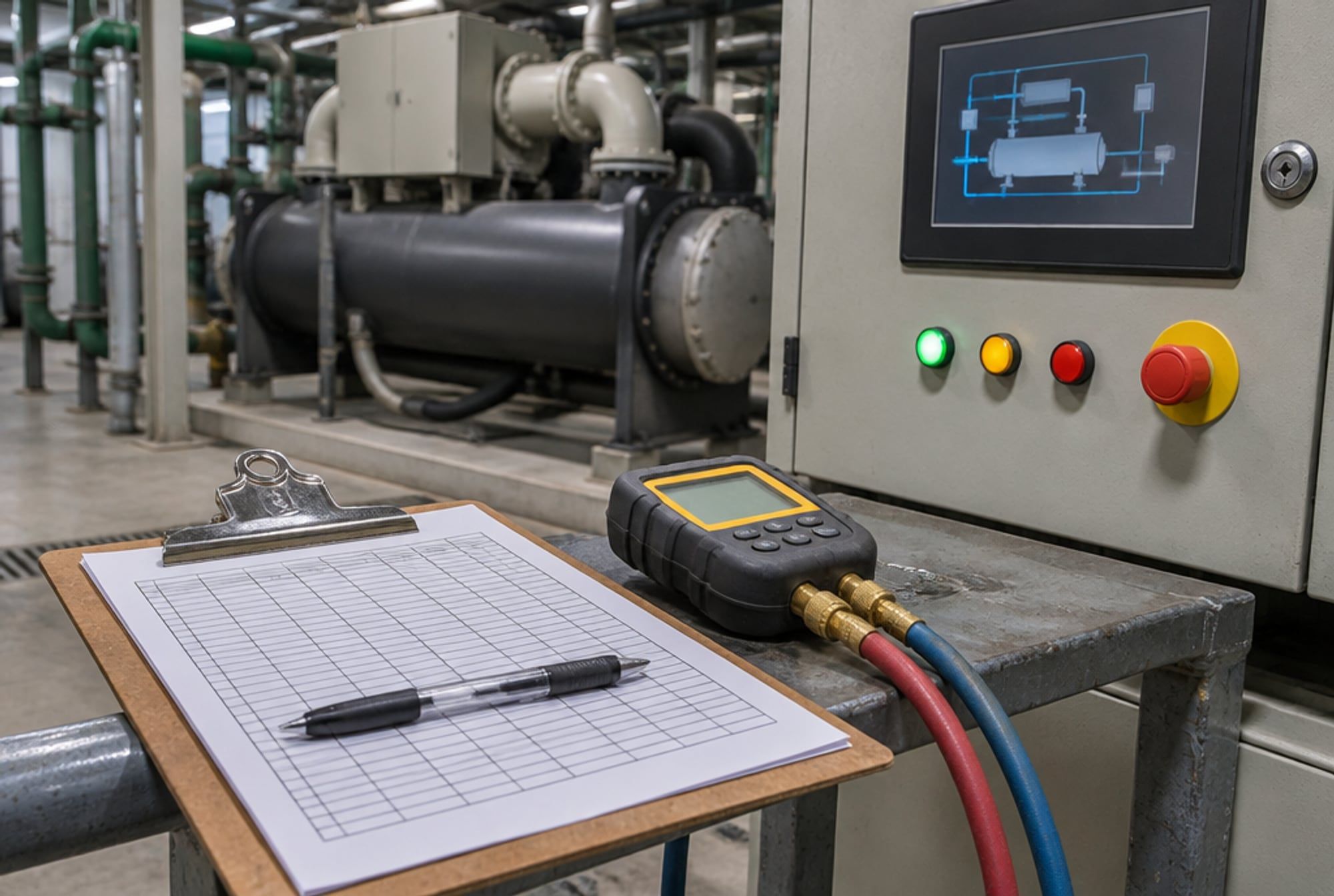
- Measure current efficiency with a power meter and a flow and temperature measurement, because nameplate values for old machines are unreliable. See chiller efficiency: kW per ton and IPLV.
- Build a load profile. Hours at each load level.
- Compare annual energy between the existing and replacement machine, using certified part-load ratings.
- Include utility incentives and tax programs, which change often and should be verified locally.
A lower-cost alternative can be partial: a variable speed drive retrofit, new controls, tube cleaning or a compressor overhaul may capture much of the efficiency gain without full replacement. See compressor rebuild vs replace for that decision at the compressor level.
What does downtime cost?
For comfort cooling in a mild season, a few days of downtime may be tolerable with temporary rental equipment. For a data hall, pharmaceutical process or cold storage, an hour can be costly. Consider:
- Lead times. New chillers often take months to build and ship, and a crane, electrical work and permits add time. A failed machine in July with no spare is a different situation from a planned replacement in a mild season.
- Temporary cooling. Rental chillers and connection points need to be planned ahead.
- Redundancy. If there is N+1 capacity, repair can be scheduled instead of rushed.
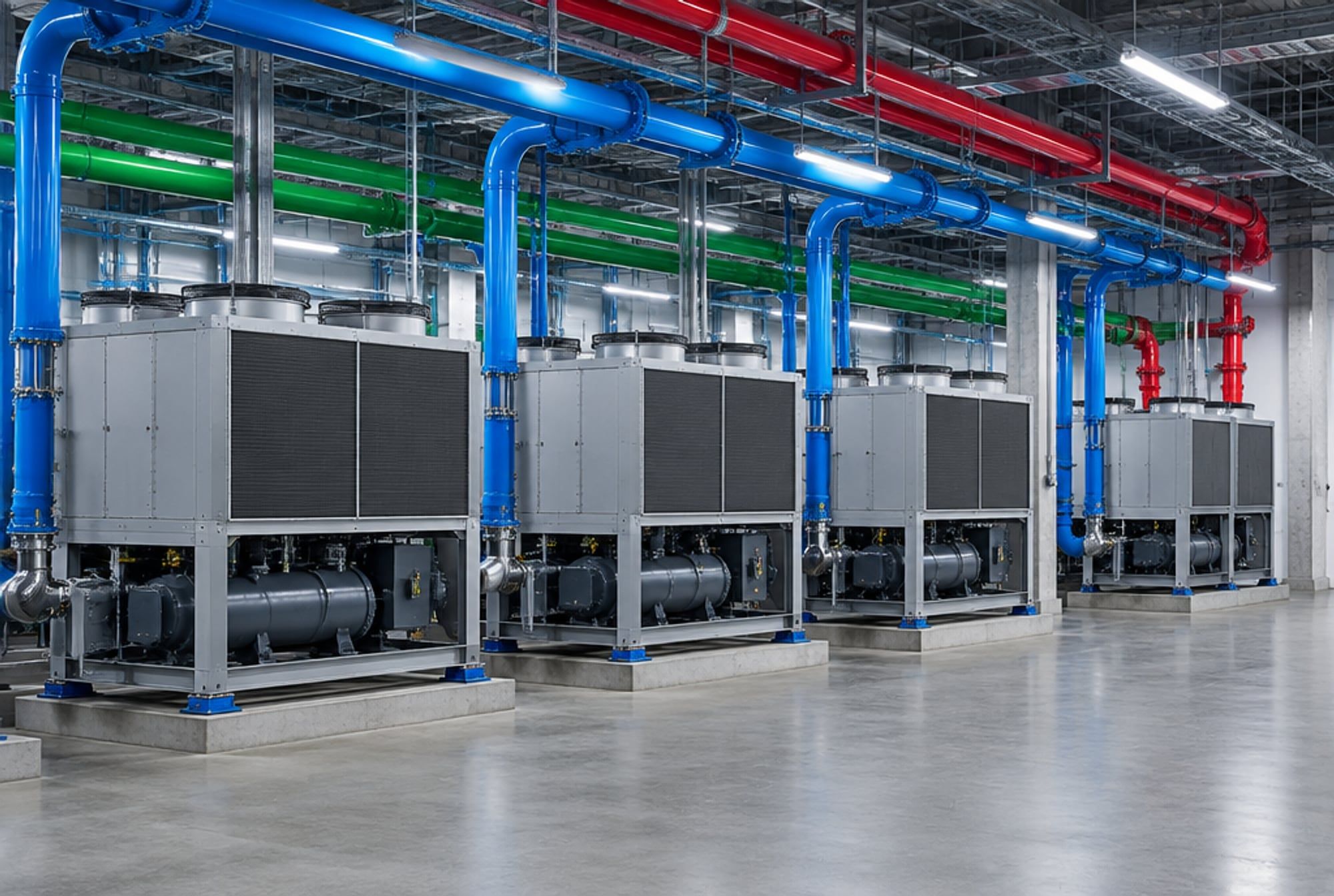
- Phased replacement. In multi-chiller plants, replacing one machine per year spreads cost and risk.
A planned replacement is nearly always cheaper and calmer than an emergency one.
How do you compare lifecycle cost?
Build a simple table comparing options over a 10 to 20 year horizon:
| Cost element | Repair or overhaul | Replacement |
|---|---|---|
| Upfront cost | Repair parts and labor | Equipment, installation, rigging, electrical, commissioning |
| Annual energy | Existing efficiency, likely degraded | New efficiency |
| Maintenance | Often higher and less predictable | Lower initially, under warranty |
| Refrigerant | Possibly rising cost and supply risk | Current lower-GWP refrigerant |
| Downtime risk | Higher if reliability is declining | Lower |
| Residual value | Remaining life limited | Full life ahead |
| Other | Possible code upgrades | Warranty, new controls, possible incentives |
Discount the future costs to present value if your finance team requires it. Use real quotes and measured data, not general percentages. Published guidance, such as DOE and FEMP material on chillers and lifecycle costing, supports this method.
A common heuristic says that if a repair costs more than about half the price of a replacement, replace. It is a starting point for conversation, not a rule, because it ignores efficiency, refrigerant and remaining life.
What questions should you ask before deciding?
- What exactly failed, and is the root cause understood? A replacement compressor on a machine with a hidden oil or contamination problem can fail again. See compressor burnout: causes and symptoms.
- How many repairs in the past three to five years?
- What does the oil analysis and eddy-current tube inspection say about the condition? See what oil analysis tells you.
- What refrigerant does it use, and what is its long-term outlook?
- Does the load today match the machine, or has the building or process changed? See chiller sizing basics.
- Is a different type of chiller a better fit than a like-for-like swap?
- What is the plan for cooling while work is done?
Frequently asked questions
How long does a chiller typically last?
Surveys often cite about 20 to 25 years as an average service life, with large water-cooled centrifugal machines at the long end and air-cooled machines lower. Maintenance, operating hours and environment can move that figure considerably in either direction.
Is it worth rebuilding a chiller compressor?
Often, yes, when the rest of the machine is sound, the refrigerant is current and the compressor design is a serviceable type. It becomes less attractive when the chiller is old, uses a phased-out refrigerant or is inefficient enough that a new machine would pay back its cost through energy savings.
Can I replace only part of a chiller?
Sometimes. Common partial upgrades include compressors, motors, variable speed drives, controls and tubes. These can extend life and improve efficiency, but they need an engineering review to confirm that the remaining components, the refrigerant and the manufacturer support justify the investment.
SpecServis engineers in Ukraine work with industrial chillers and refrigeration plants. We are planning to enter the Central Texas market and are looking for technicians, partners and a company to buy. See our open positions or partnership options.