By Priya Raman · Updated November 1, 2026 · 6 min read
Short answer
Evaporative and water-cooled (cooling tower) condensers reject heat by evaporating water, which gives lower condensing temperatures and better efficiency but consumes water. Air-cooled condensers use no process water but run hotter and use more electricity in summer. Adiabatic designs pre-cool air only on the hottest hours and sit in between. The right choice balances energy, water cost, water risk and maintenance.
Every refrigeration or chiller system has to dump heat somewhere. Evaporative and cooling-tower condensers use water evaporation to do it, which lowers condensing temperature and saves electricity, but they consume water. Air-cooled condensers use no process water but run at higher condensing temperatures, especially on hot afternoons. Adiabatic condensers add water only when it is hot. In a hot, drought-prone state like Texas, the best choice depends on the relative cost and availability of water and power at the site.
How does each condenser type reject heat?
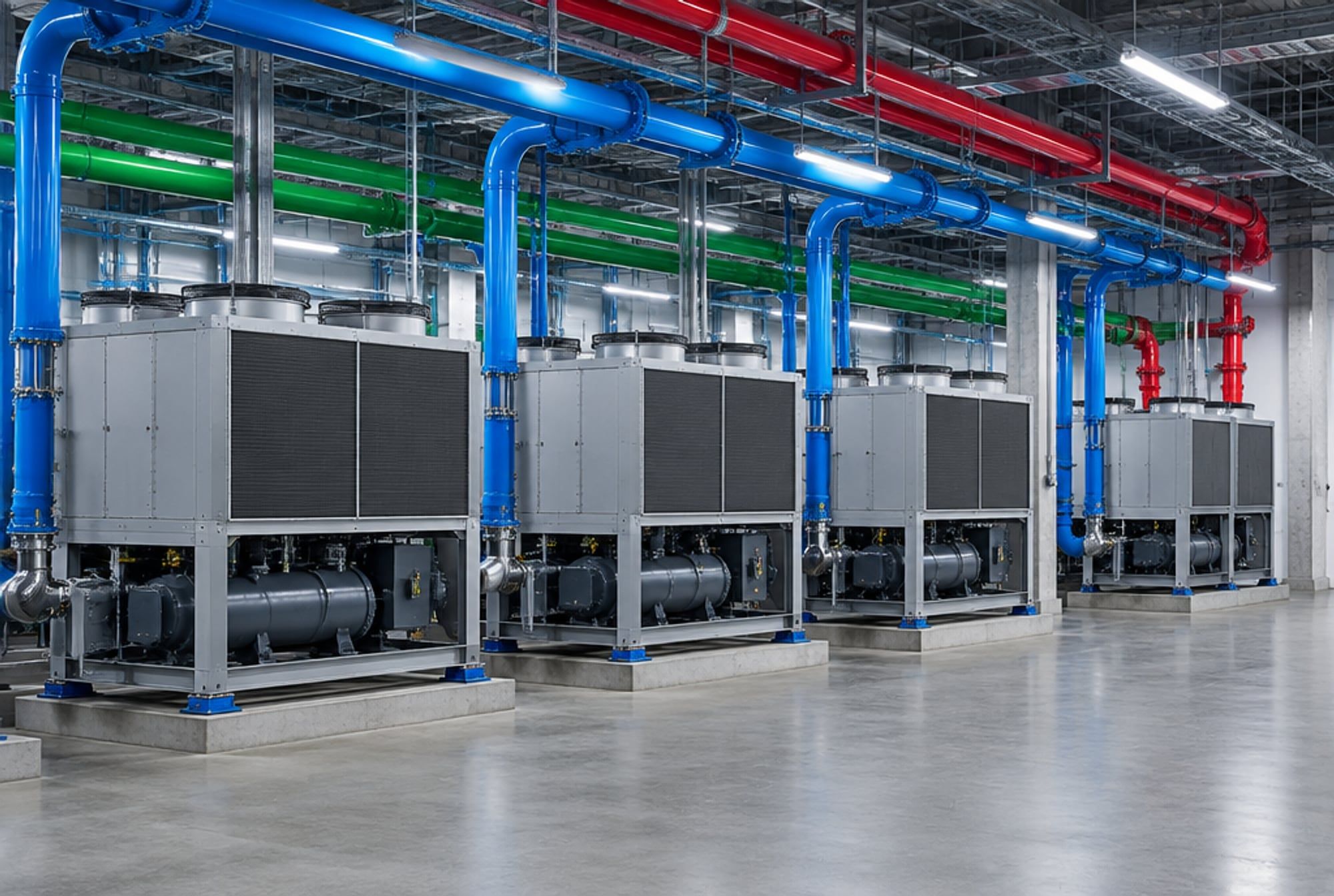
- Air-cooled: fans pull outdoor air across finned coils that carry hot refrigerant. Heat moves by sensible heat transfer. The limit is the dry-bulb temperature of the air. See air-cooled condensers: how they work.
- Water-cooled with cooling tower: the refrigerant condenses in a shell-and-tube or plate exchanger cooled by water that circulates to a separate cooling tower. The limit is the wet-bulb temperature, which is lower than dry-bulb on most hot days. See cooling tower basics.
- Evaporative condenser: refrigerant coils sit inside one unit where water is sprayed over them while air is drawn through. Heat leaves partly by evaporation. It combines the condenser and tower in one device and is common in industrial and ammonia plants.
- Adiabatic (or hybrid) condenser: a dry air-cooled coil with a wetting system that pre-cools the incoming air, or that spray-cools the coil, only when the ambient temperature is high enough to justify it.
Why does wet-bulb versus dry-bulb matter?
Dry-bulb is the ordinary air temperature. Wet-bulb is the lowest temperature that evaporating water can reach. In dry climates, wet-bulb is much lower than dry-bulb, so an evaporative design can hold condensing temperature far below what an air-cooled coil can. In humid weather, such as the Gulf Coast, the gap is smaller and the advantage shrinks. Lower condensing temperature reduces compressor lift and power. The relationship between lift and efficiency is also behind chiller efficiency metrics like kW per ton.
How do the options compare?
| Feature | Air-cooled | Water-cooled + tower | Evaporative condenser | Adiabatic |
|---|---|---|---|---|
| Process water use | None (or minimal) | Highest, from evaporation, drift and blowdown | High | Low to moderate |
| Condensing temperature on hot days | Highest | Lowest | Low | In between |
| Compressor energy on hot days | Higher | Lower | Lower | Moderate |
| Water treatment needed | No | Yes | Yes | Often limited, but wetted surfaces still need care |
| Legionella management | Not applicable | Yes | Yes | Depends on design |
| Freeze protection | Simple | Required in cold weather | Required in cold weather | Usually simple |
| Maintenance focus | Coil cleaning, fans | Fill, water chemistry, pumps | Spray nozzles, coil scale, water chemistry | Pads or nozzles, coil cleaning |
Treat the table as a general guide. Real results depend on the model, the load profile and local conditions.
What are the tradeoffs of water use in Texas?
Texas summers combine very high dry-bulb temperatures with peak electric demand, and many regions face drought cycles and water restrictions. That creates two competing pressures:
- Electricity: a condenser that runs hot in July raises compressor power right when the grid is tight. For background, see ERCOT summer peaks and commercial cooling load.
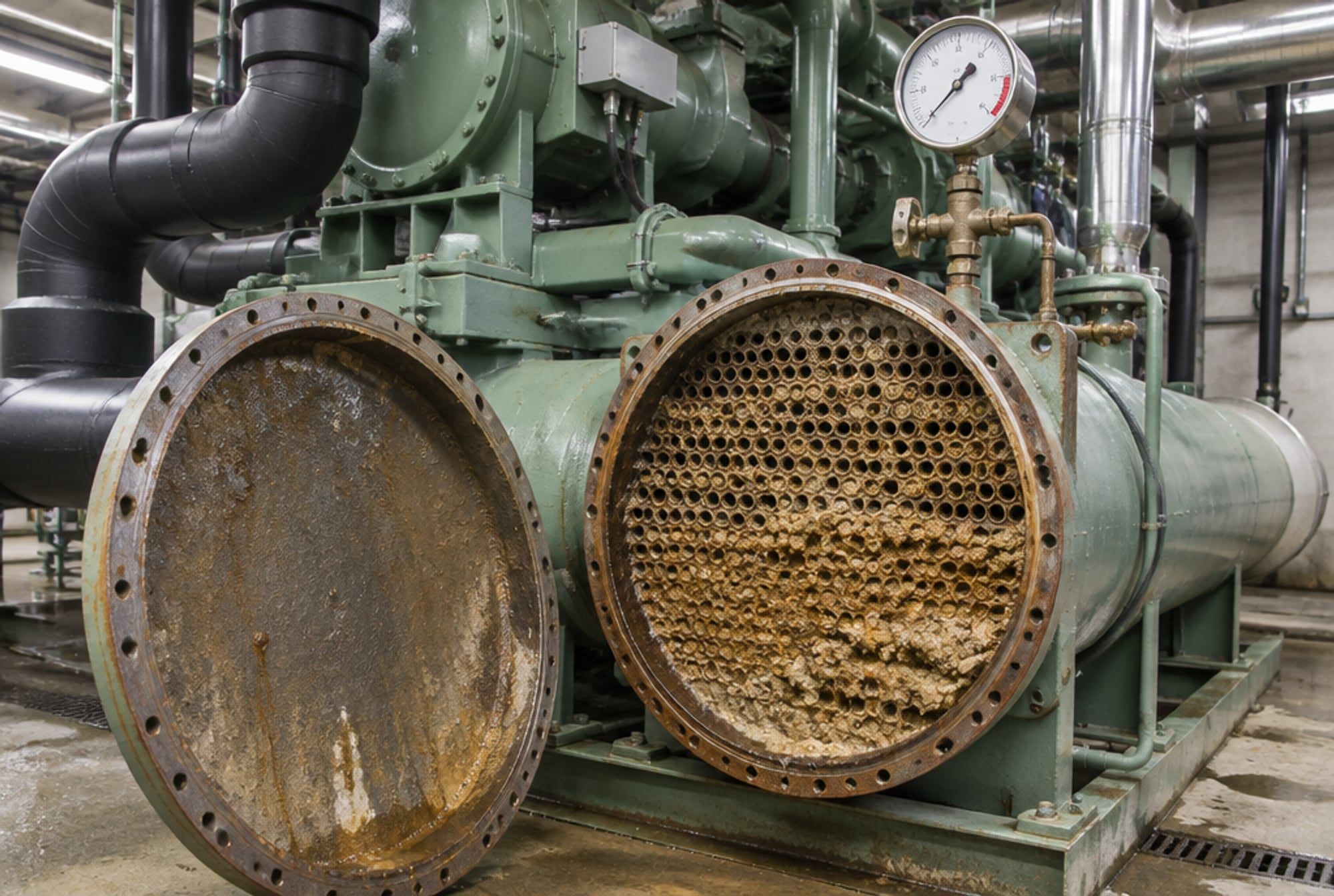
- Water: evaporative cooling uses a lot of water per ton-hour of heat rejected. Municipal water cost, supply restrictions and discharge rules for blowdown all matter. The same tension appears in Texas data centers and water use.
A useful way to compare: ask how many gallons are evaporated per unit of cooling, how many kilowatt-hours that saves, and what each costs at the site. The answer is a case-by-case calculation, and a mechanical engineer can model it with hourly weather data. Do not assume an evaporative system is always cheaper to run once water, chemicals and labor are included.
Where do adiabatic designs fit?
Adiabatic condensers use water only on the hottest hours, so annual water use is a fraction of a full evaporative system, while peak-hour condensing temperature stays much lower than with a dry coil. They suit sites that want most of the efficiency benefit with lower water exposure and simpler water treatment. Cautions include water quality (mineral deposits on pads and coils), the need for good drainage and the fact that savings depend on how many hours the wetting system actually runs.
What else should be considered when choosing?
- Refrigerant charge: air-cooled condensers hold more refrigerant in a larger system, which matters under leak rules and for A2L refrigerants.
- Space and noise: towers and large air-cooled banks need roof or yard space and airflow clearance.
- Corporate water goals: some owners track water use as a sustainability metric.
- Lifecycle cost: coils, fill, nozzles, treatment programs and labor differ in cost and failure modes.
- Local rules: water restrictions, discharge requirements and code requirements vary; check current local rules.
Frequently asked questions
Do air-cooled condensers use any water?
Normally no process water, apart from occasional coil washing. That is their main advantage in water-limited regions. The tradeoff is higher condensing temperature and more compressor power on the hottest days.
Is an evaporative condenser more efficient than a cooling tower with a water-cooled condenser?
They work on the same principle. An evaporative condenser removes the intermediate water loop, so it can reach a slightly lower condensing temperature in some applications and uses less pumping, but real performance depends on the specific equipment and conditions.
Can an existing air-cooled system be improved without changing to water?
Often, yes. Clean coils, working fans, correct charge and controls that float head pressure sensibly all help. Adiabatic pre-cooling can sometimes be added to some coils; check with the equipment manufacturer first.
SpecServis engineers in Ukraine have worked with condensers and heat rejection systems of all three types. We are planning to enter the Central Texas market and are looking for technicians, partners and a company to buy. See our open positions or partnership options.