By Yevhen Kovalchuk · Updated October 18, 2026 · 7 min read
Short answer
York chillers, now part of Johnson Controls, are grouped by compressor type: scroll for compact air-cooled units, screw for mid-size air-cooled and water-cooled plants, centrifugal for large water-cooled systems and absorption for heat-driven use. The nameplate model and serial numbers identify the family, vintage and refrigerant. Confirm current names and specifications with Johnson Controls literature, since product lines change.
York is one of the oldest names in refrigeration, and its chillers are installed in buildings and plants across the United States. Today the brand belongs to Johnson Controls. The catalog is easiest to understand by compressor type: scroll, screw, centrifugal and absorption. This article is a general orientation to those families and to the nameplate, not a replacement for current York literature. Product names, refrigerants and capacity ranges change, so confirm every detail at york.com before comparing or specifying equipment.
How are York chillers organized?
Like other major manufacturers, York sorts its range by compressor type, then by cooling method. The size bands below are typical across the industry, not published York specifications.
| Compressor type | Typical size band | Cooling method | Common use |
|---|---|---|---|
| Scroll | Small to mid-size | Mostly air-cooled | Light commercial, small process loads |
| Screw | Mid-size to large | Air-cooled or water-cooled | Campuses, commercial buildings, industrial process |
| Centrifugal | Large | Water-cooled | Large buildings, district cooling, data centers |
| Absorption | Varies | Heat-driven | Sites with steam or waste heat |
York model families are usually identified by a prefix of letters, for example codes beginning with YK for centrifugal machines or YC, YV and YL for various air-cooled and water-cooled designs. The letters have meaning, but the specific coding differs by family and generation. Use the manufacturer’s model-number guide, not a rule of thumb, before relying on any decoded detail.
What are York scroll chillers used for?
Scroll chillers use multiple scroll compressors in parallel on one or two circuits. Capacity follows load by turning compressors on and off. They are compact and relatively simple, which suits smaller buildings and light process work. A short primer is in how a scroll compressor works.
Good questions for any scroll machine:
- How many compressors and circuits are there?
- What refrigerant does it use, and what is the plan if that refrigerant becomes harder to source?
- Is the condenser coil in a corrosive or dusty environment?
What are York screw chillers used for?
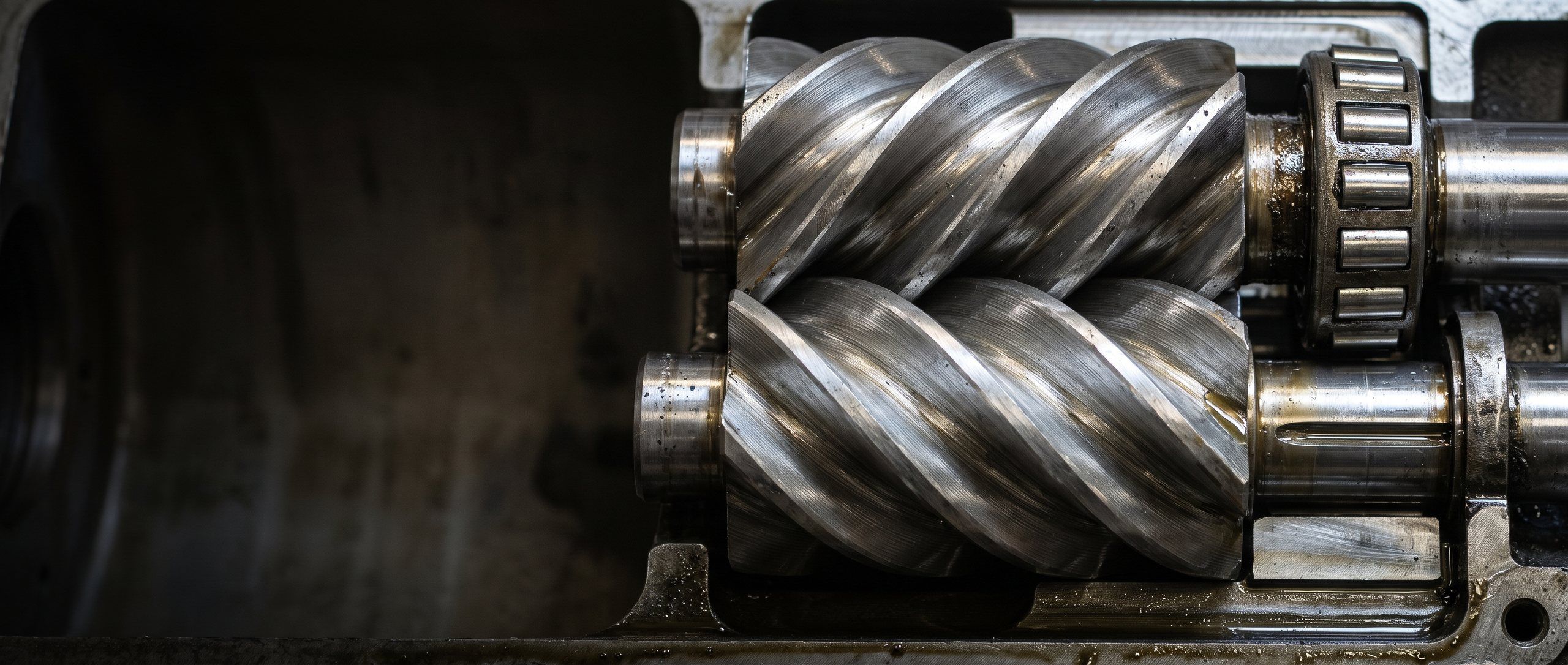
Screw chillers occupy the middle of the market. A pair of meshing rotors compresses refrigerant continuously, and capacity is controlled by a slide valve or a variable-speed drive. Both air-cooled and water-cooled versions exist. Air-cooled screw units are popular on rooftops and equipment yards, where they remove the need for a cooling tower. For the mechanical detail, see how a screw compressor works, and for the comparison with scroll, see screw vs scroll compressors.
Variable-speed drives on screw machines can improve part-load efficiency noticeably, since most hours of the year are spent well below full load. See chiller efficiency: kW per ton and IPLV.
What are York centrifugal chillers used for?
Centrifugal chillers are the standard solution for big water-cooled plants. York’s centrifugal history is long, and many older machines are still running in hospitals, universities and commercial towers. What differs between generations includes:
- Drive type: fixed speed, variable-speed or open-drive designs
- Bearings: conventional oil-lubricated or oil-free magnetic bearings in newer designs
- Refrigerant: older machines may use refrigerants that are now phased out, while newer ones use low-GWP fluids
- Controls: from relay panels to modern microprocessor panels with network connectivity
For the principle and applications, read centrifugal chillers explained.
How do you read a York chiller nameplate?
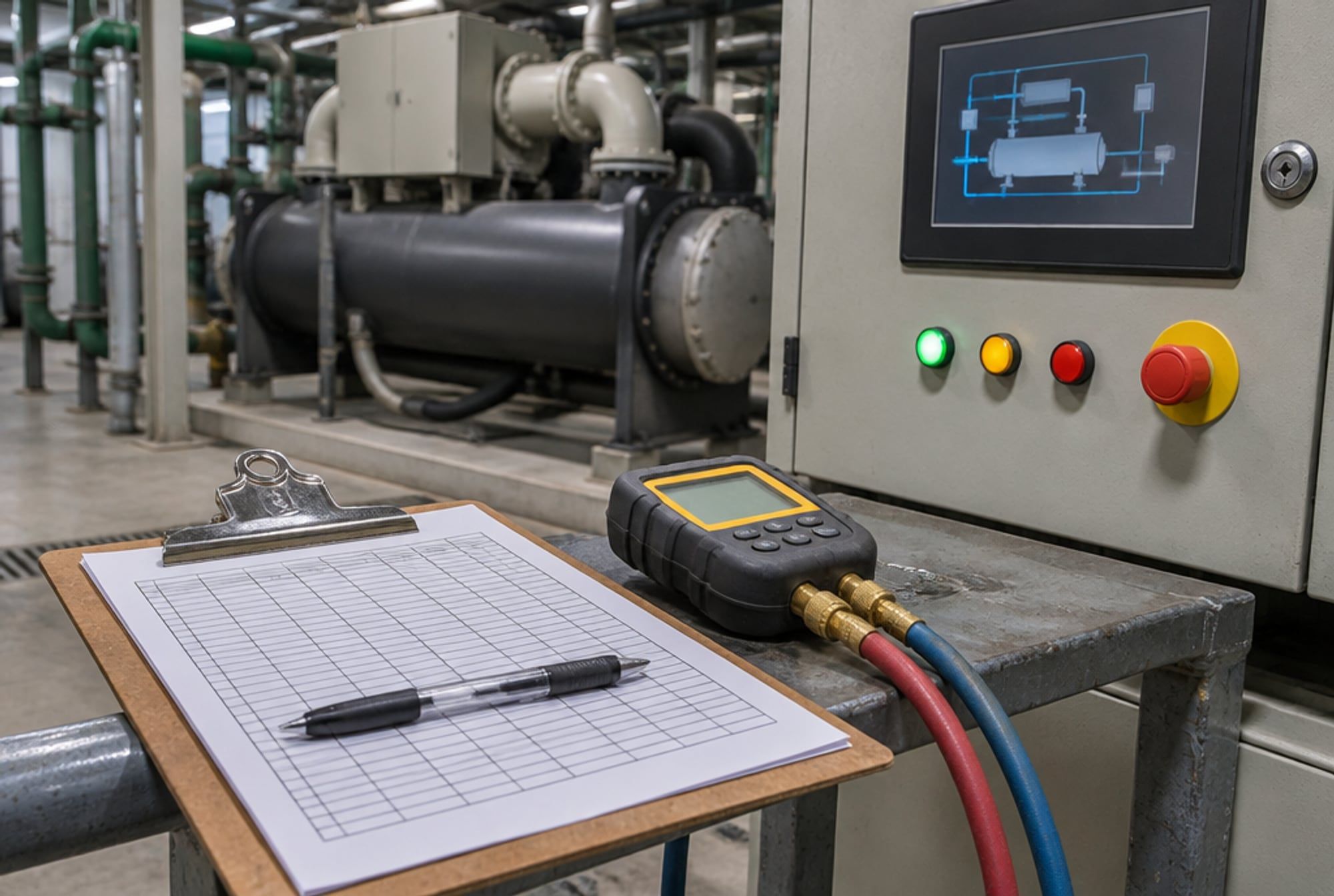
The nameplate is normally attached near the control panel or on the shell. Collect the same data every time:
- Model number: coded letters and digits for family, cooling method, compressor and frame
- Serial number: lets the manufacturer find the original build record
- Refrigerant and factory charge
- Electrical data: voltage, phase, frequency, ampacity and overcurrent protection
- Design pressure for each circuit and the shell
- Date of manufacture, where printed
Photograph the plate and write the numbers into your asset register. With a model and serial number, the manufacturer can typically provide the original documentation for that unit. For general advice on plates, see how to read a compressor nameplate.
What should you check on an older York chiller?
Many older chillers remain in service for decades, and chiller lifespan depends heavily on how they were maintained. A sensible review looks at:
- Refrigerant: type, leak history and availability. See EPA 608 leak repair rules for the regulatory context.
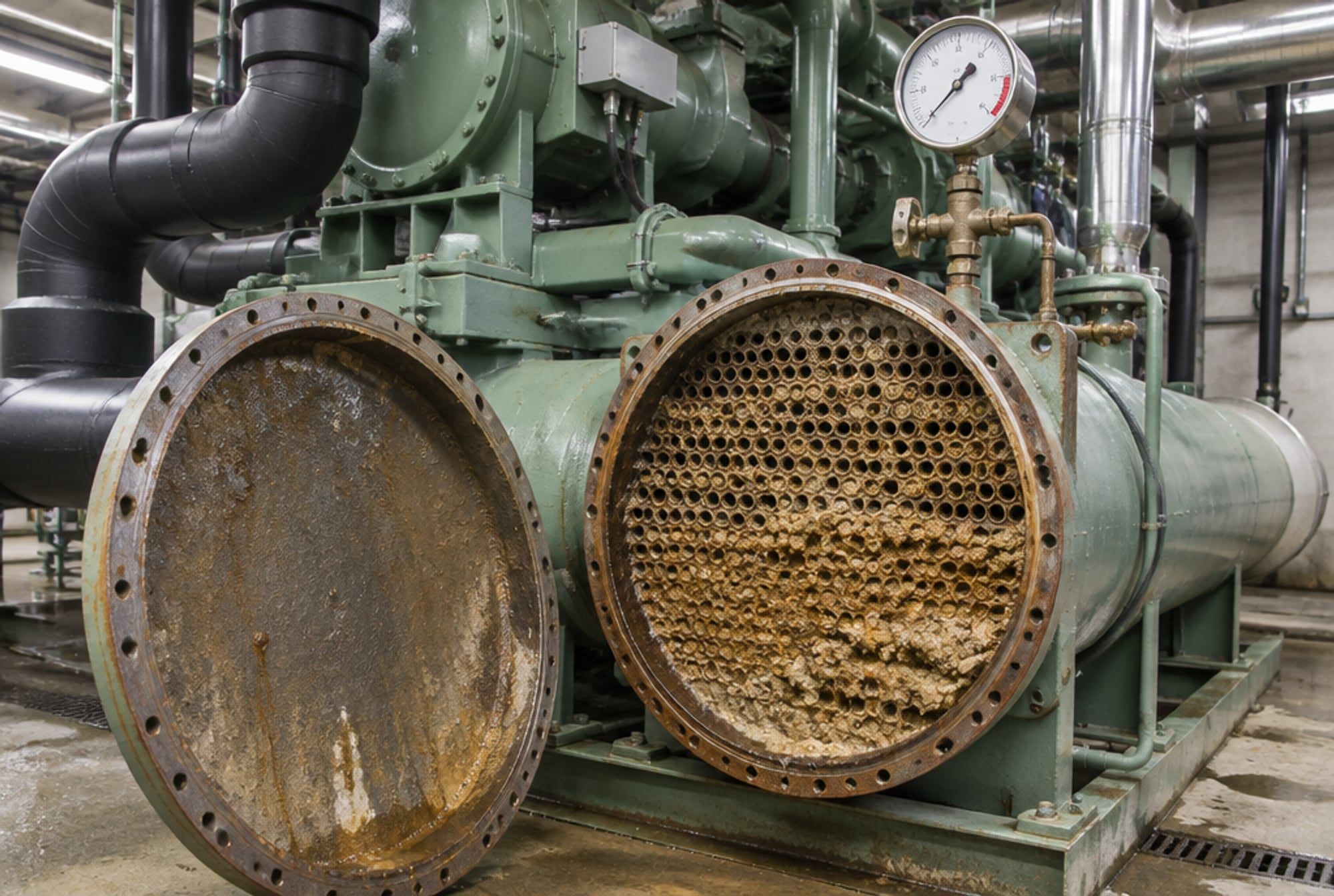
- Water quality: tube fouling and corrosion, discussed in chilled-water system water treatment basics
- Controls: obsolete panels can limit staging and reporting
- Records: oil and refrigerant analysis trends, run hours and start counts
- Efficiency: compare against current machines before deciding to keep or replace
These items feed a replace-or-keep decision, which is covered in chiller replacement vs repair.
Frequently asked questions
Is York still a separate brand?
York is a brand of Johnson Controls. Product literature, parts and documentation are available through the Johnson Controls and York channels, and the exact organization can change, so check york.com for the current structure.
How do I tell if a York chiller is screw, scroll or centrifugal?
Look at the model number and the physical machine. A centrifugal has a large shell-and-tube design with a gear or direct-drive impeller housing. A screw has a compact oil separator and one or two screw compressors. A scroll chiller has several small hermetic compressors in a cabinet. Confirm with the manufacturer’s model-number key.
Can York chillers run on newer refrigerants?
Not automatically. A machine is designed, tested and listed for particular refrigerants. Changing the refrigerant on an existing chiller affects capacity, pressures, oil and safety systems, so it needs manufacturer guidance and code review. See refrigerants: what is changing in 2026.
SpecServis engineers in Ukraine work with industrial chillers and refrigeration plants, and we are planning to enter the Central Texas market. If you are a technician, a license holder or a business owner who wants to talk, see our open positions or partnership options.