

Insights
Compressor, chiller and refrigerant guides, page 9
- Chillers · August 5, 2026Air-Cooled vs Water-Cooled Chillers: How to ChooseWater-cooled chillers are more efficient and last longer but need a cooling tower, water treatment and a steady water supply. Air-cooled chillers are simpler and use no water, but they lose capacity and efficiency in high heat. In hot, water-conscious regions like Central Texas the choice depends on load size, water availability and how many hours the plant runs.
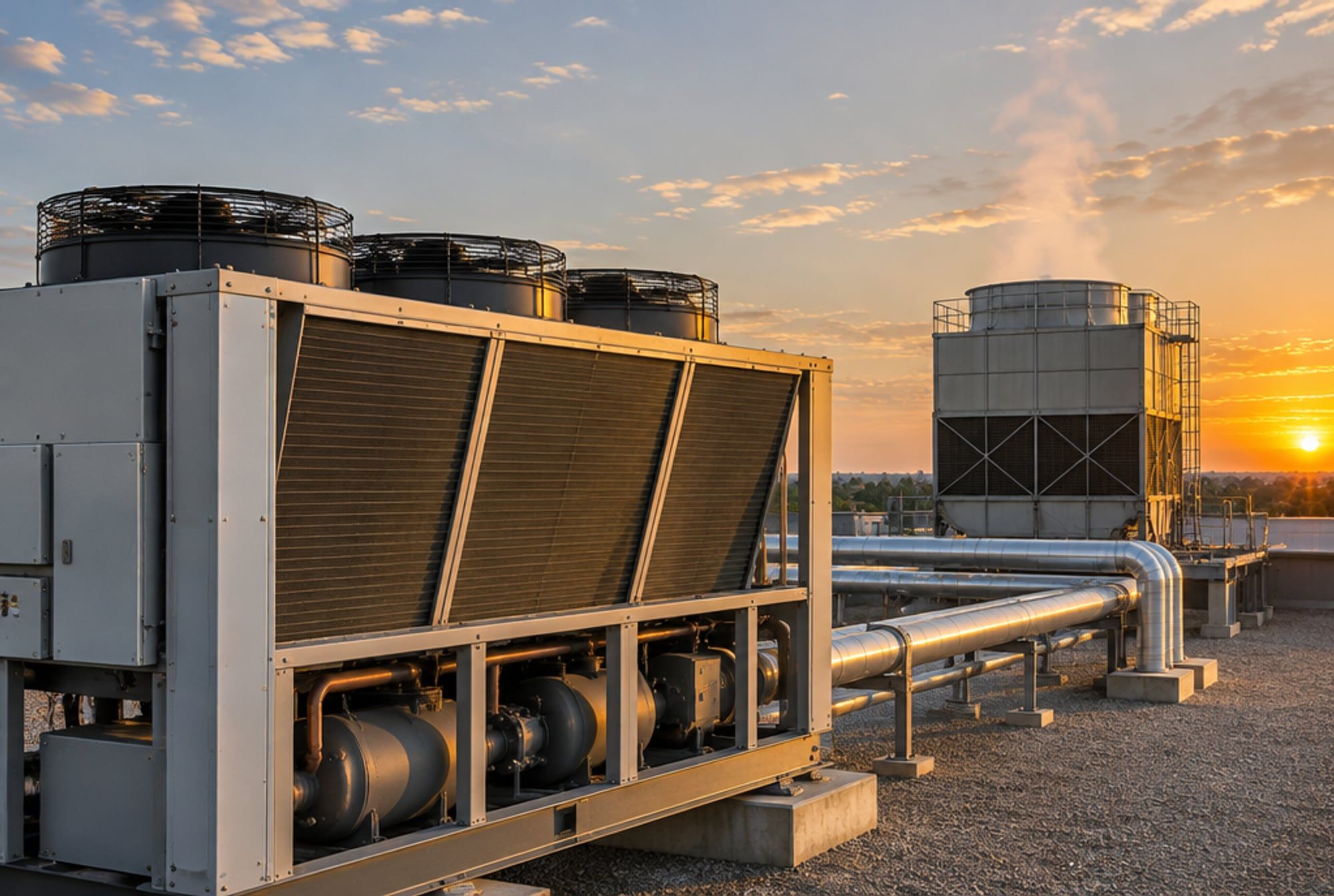
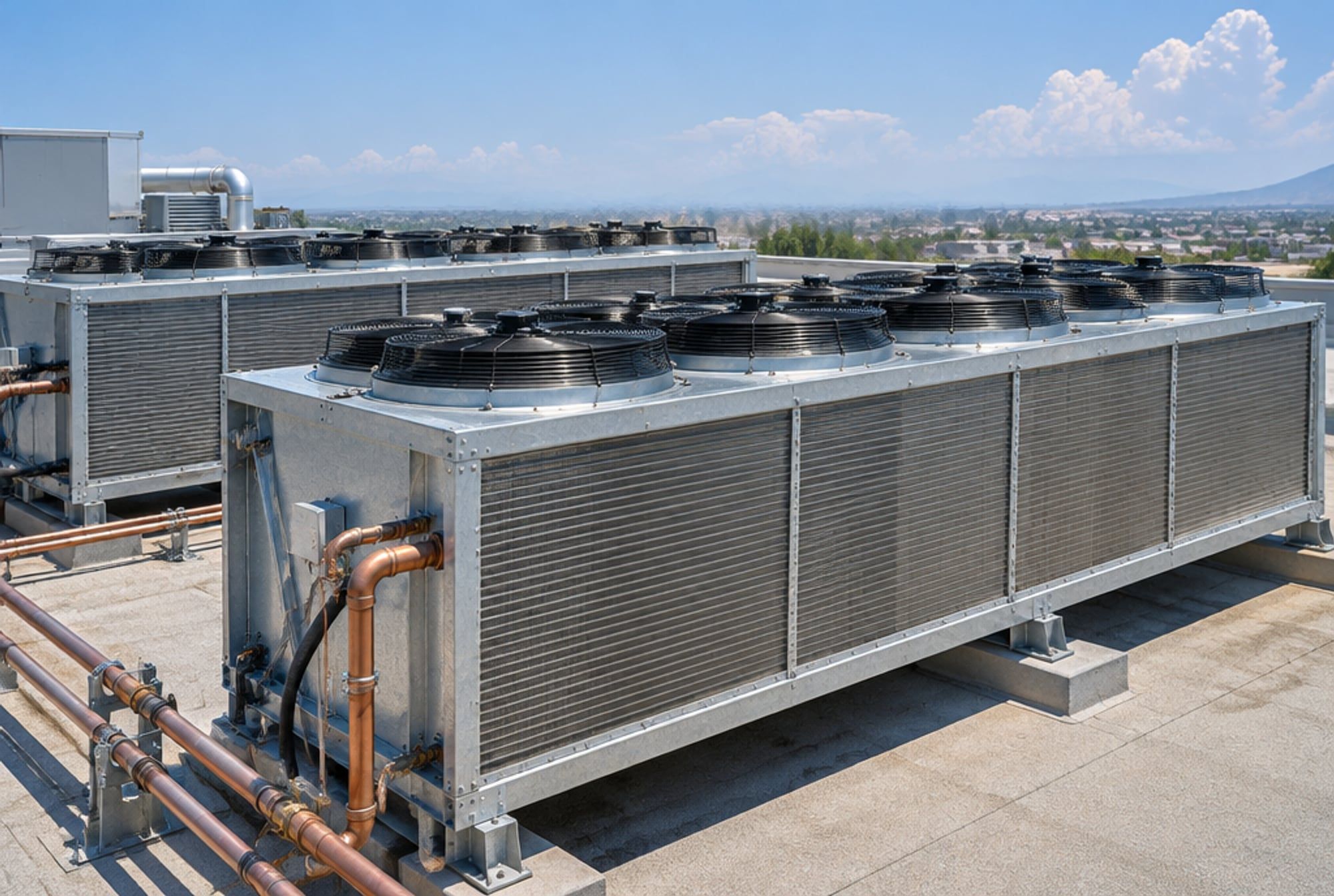
- Commercial HVAC · August 4, 2026Air-Cooled Condensers: How They Work and SizingAn air-cooled condenser rejects heat from refrigerant to outdoor air using a finned coil and fans. It desuperheats, condenses and subcools the refrigerant. Capacity depends on the temperature difference between condensing refrigerant and ambient air, so hot weather raises head pressure and cuts efficiency. Clean coils, working fans and correct sizing for design ambient keep it performing.
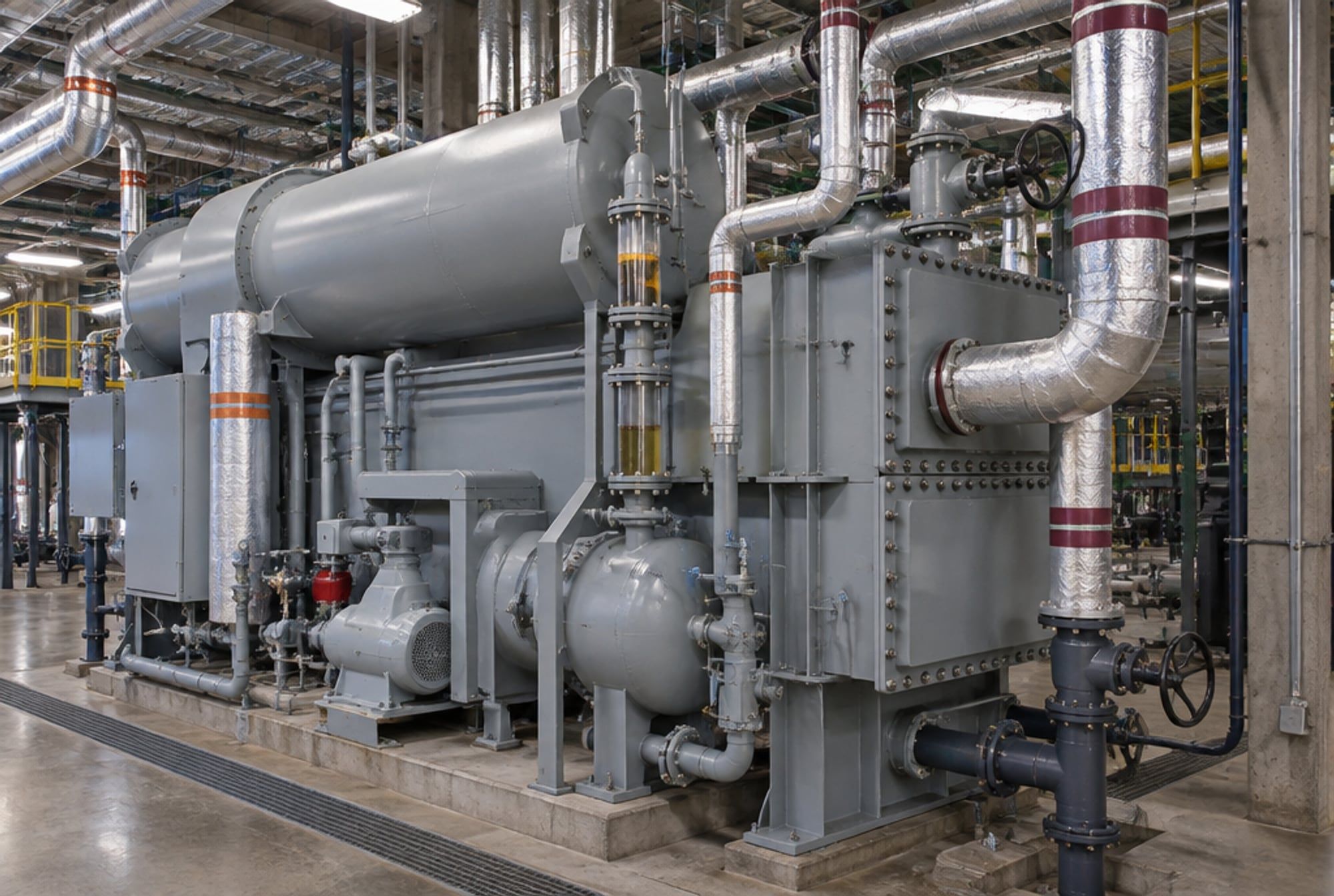
- Chillers · August 3, 2026Absorption Chillers Explained: How the Cycle WorksAn absorption chiller makes chilled water using heat instead of a mechanical compressor. In the common lithium bromide-water type, water is the refrigerant and LiBr is the absorbent; ammonia-water units use ammonia as the refrigerant. Single-effect machines run on low-grade heat, double-effect on hotter steam or gas. They make sense where waste heat or cheap fuel is available, but are bulkier and less efficient than electric chillers.
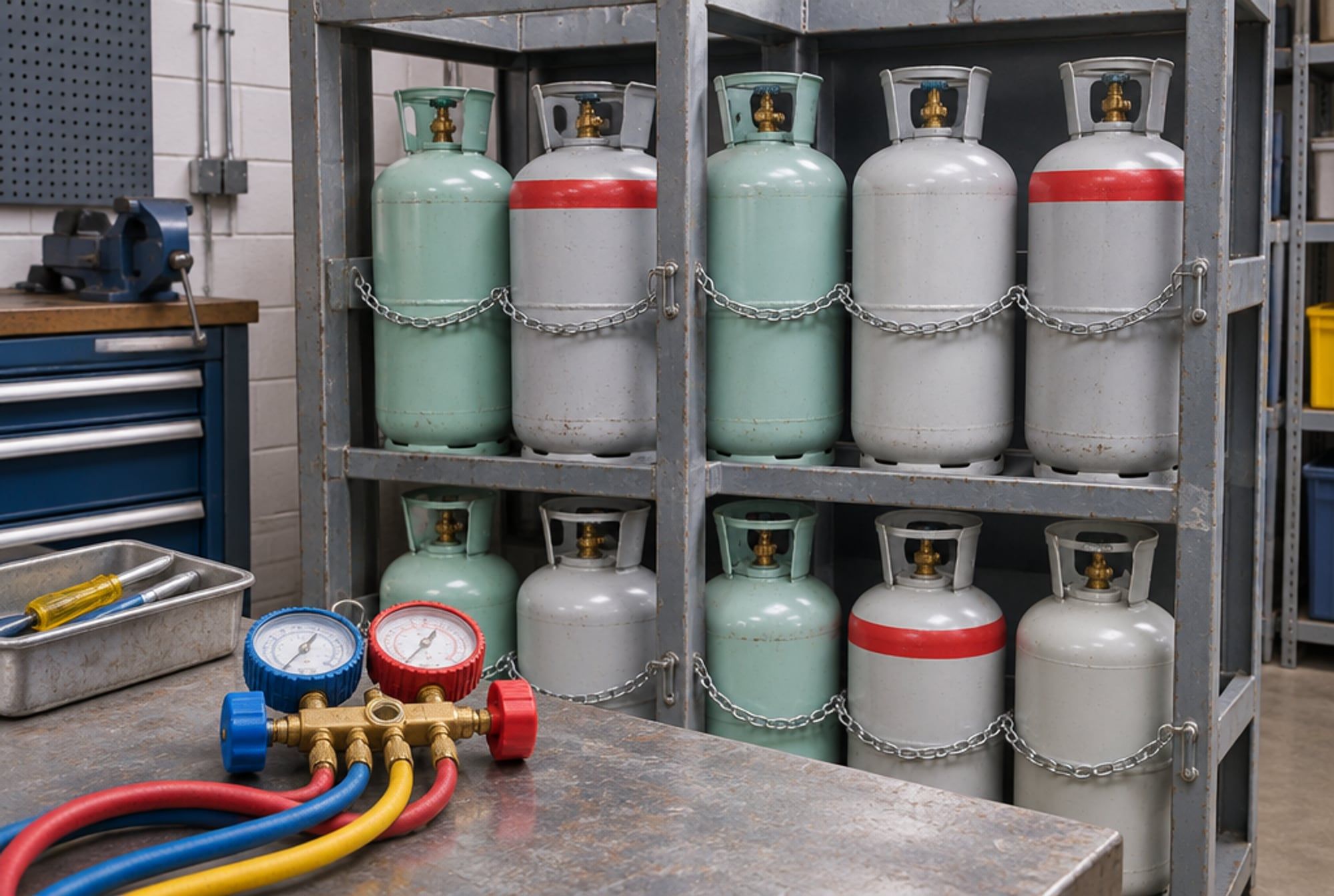
- Refrigerants · August 2, 2026A2L Refrigerants Explained: R-454B, R-32 and SafetyA2L is an ASHRAE safety class for refrigerants with low toxicity and mild flammability. R-32 and R-454B are the best-known A2Ls and replace R-410A in new comfort-cooling equipment because their global warming potential is much lower. They need A2L-rated equipment, leak detection where required, updated codes and technician training. Federal rules changed in May 2026, so check the current dates.
Subscribe
New articles, by email.
Let’s build it together.