

Insights
Compressor, chiller and refrigerant guides, page 8
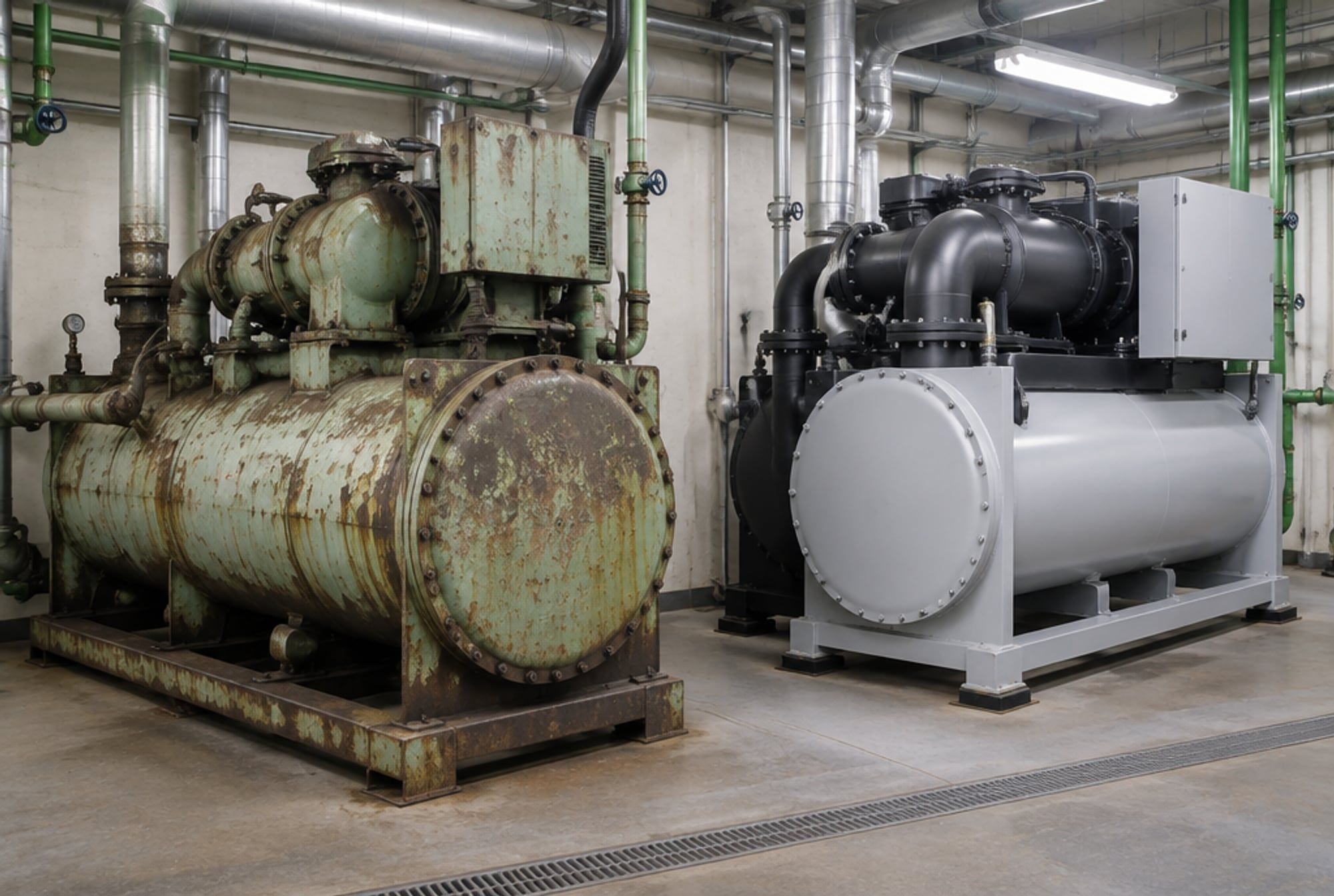
- Chillers · August 17, 2026Chiller Replacement vs Repair: How to DecideWhether to repair or replace a chiller depends on age relative to expected service life, refrigerant availability, efficiency, repair history, downtime risk and total lifecycle cost. No single rule decides it. A structured comparison of the cost of continuing with the existing machine against the cost of a new one, including energy, refrigerant and risk, gives the most defensible answer.
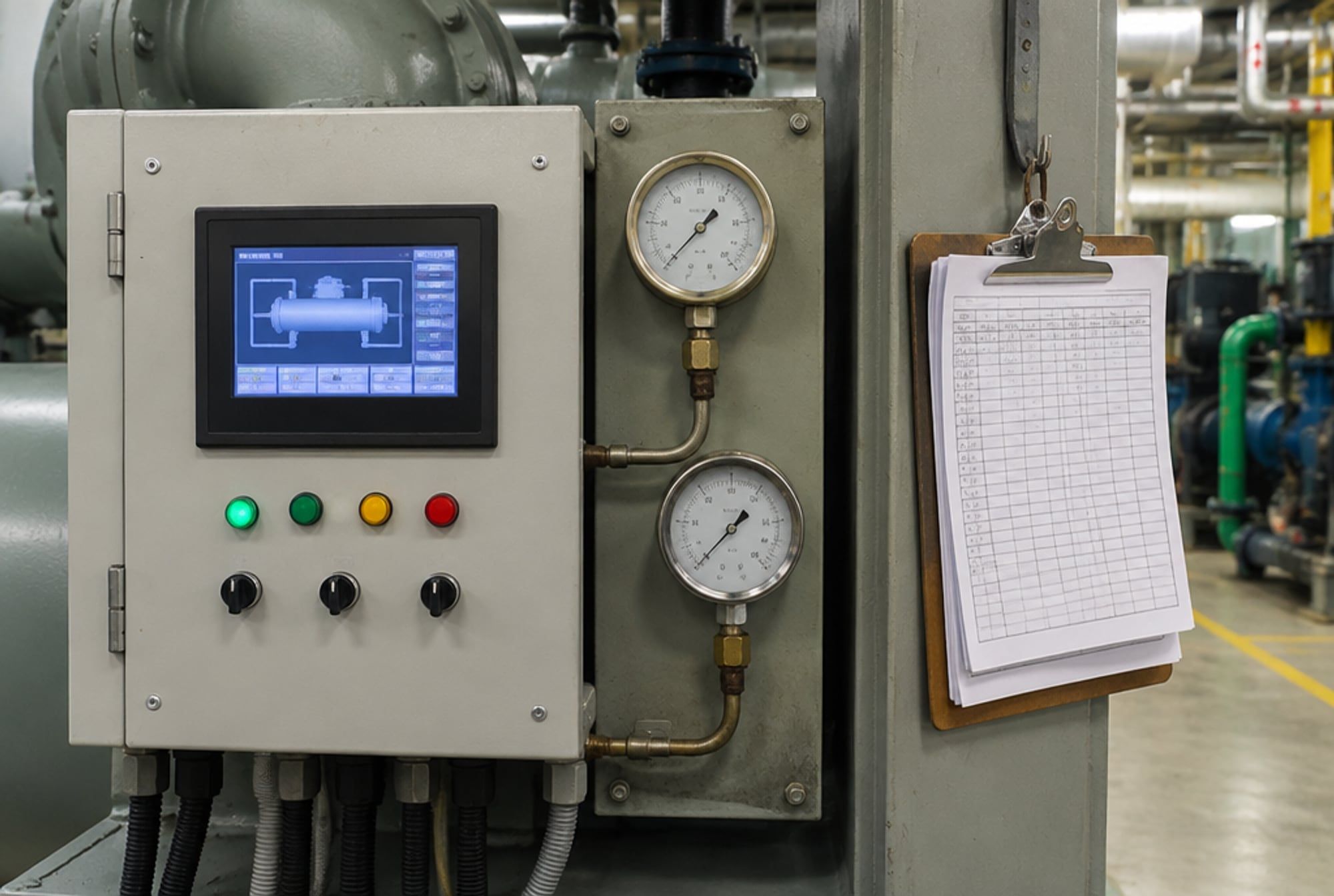
- Chillers · August 16, 2026Chiller Maintenance Checklist: Daily to AnnualChiller upkeep works best as a routine: daily readings logged and compared with the machine's own history, monthly visual and functional checks, and annual inspections of tubes, oil, controls, safeties, refrigerant leaks and water treatment. Trends in approach temperatures, pressures, amps and oil condition show developing problems long before a trip.
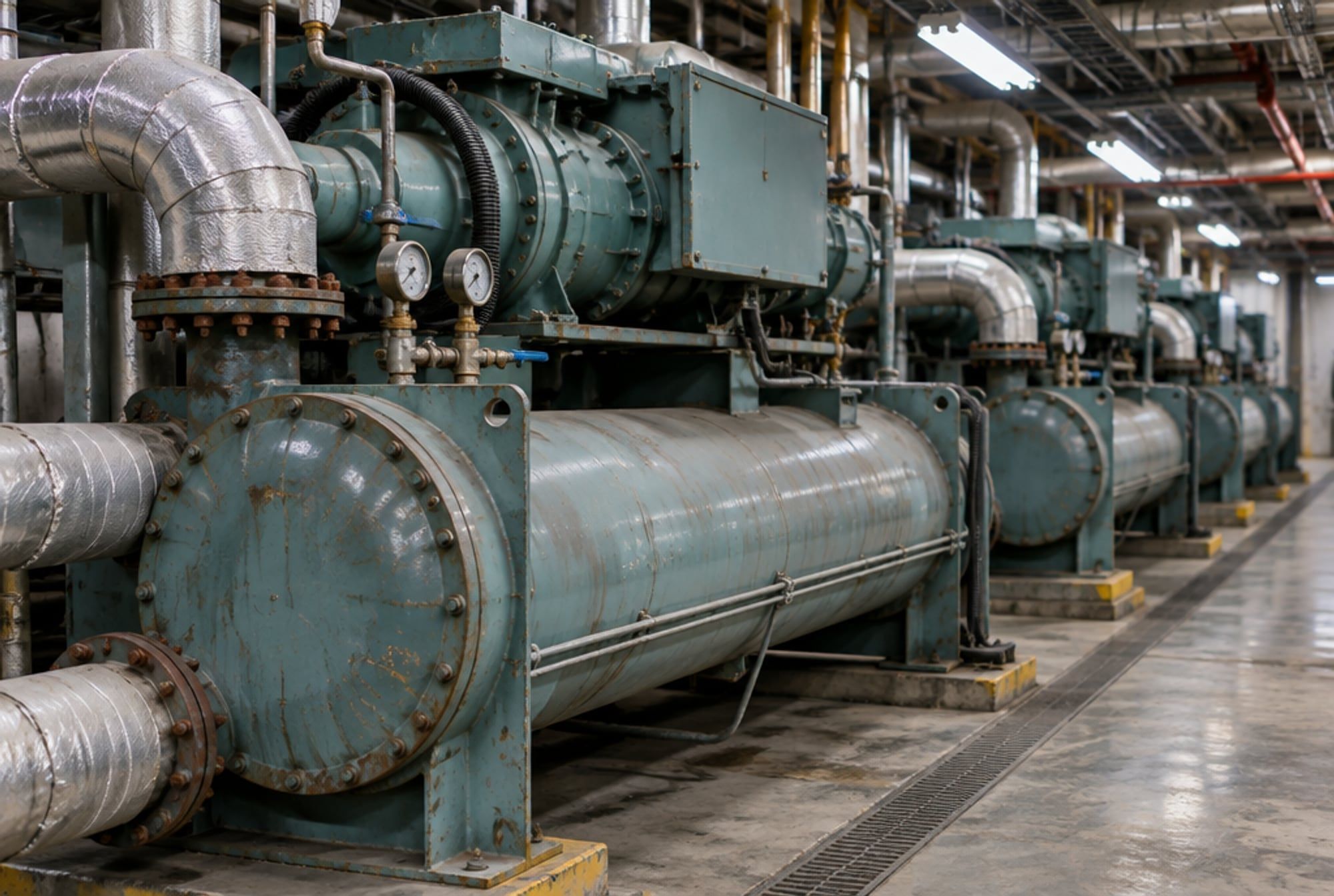
- Chillers · August 15, 2026Chiller Lifespan: How Long Do Chillers Last?Most commercial chillers last roughly 15 to 30 years, depending on type, duty and care. Centrifugal machines sit at the long end, air-cooled packaged units at the short end. Water quality, maintenance, run hours, ambient conditions and refrigerant availability decide the real number. Rising repair frequency, falling efficiency and obsolete refrigerant are the usual signs of end of life.
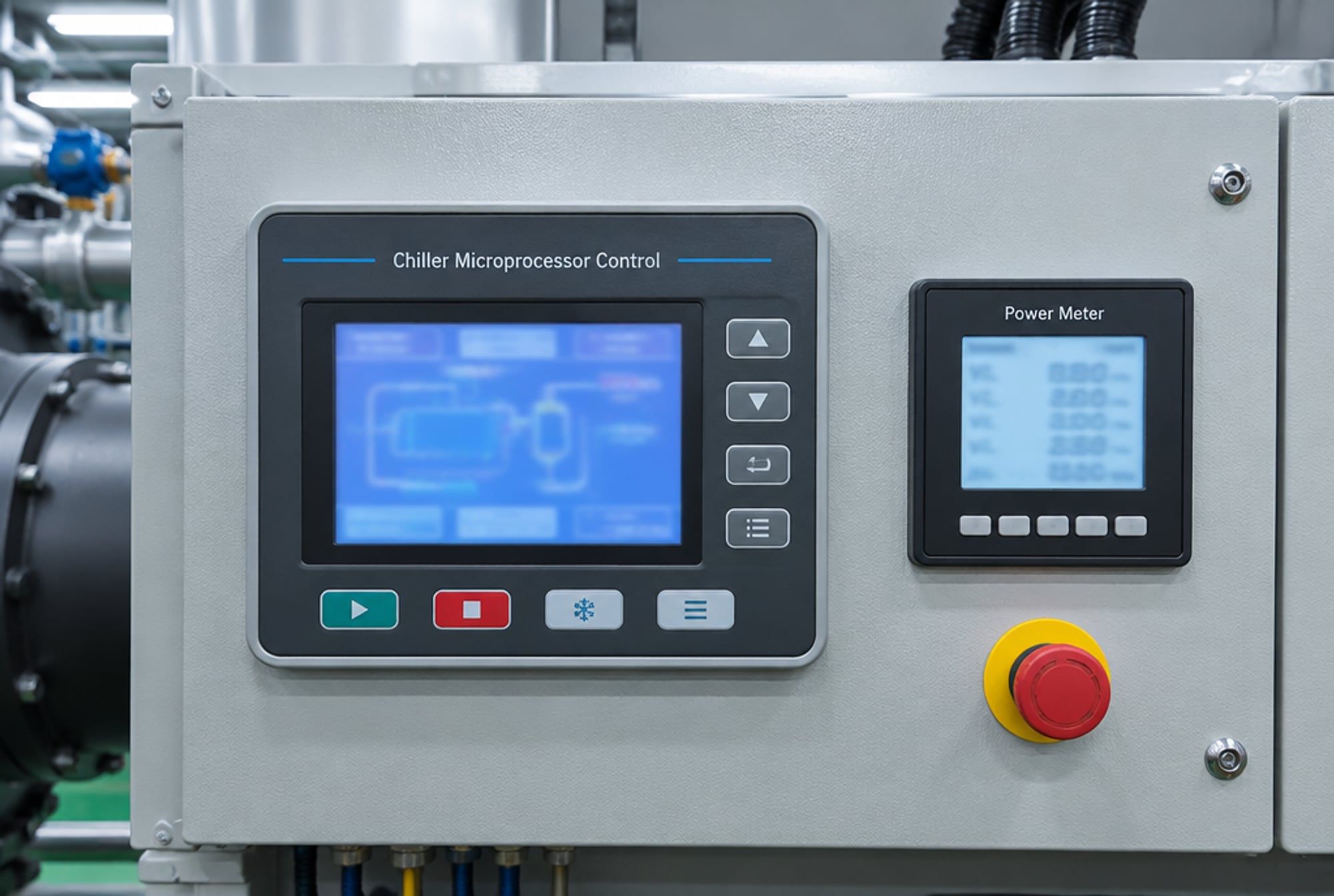
- Chillers · August 14, 2026Chiller Efficiency: kW per Ton, COP, EER and IPLV ExplainedChiller efficiency is expressed as kW per ton (lower is better), COP or EER (higher is better). They convert directly: kW/ton = 12 / EER = 3.516 / COP. Full-load figures are rated at standard conditions, while IPLV and NPLV weight performance at 100, 75, 50 and 25 percent load under AHRI Standard 550/590. Compare ratings only at the same conditions and with the same scope of included equipment.
- Chillers · August 13, 2026Chilled Water System Water Treatment BasicsChilled water loops are closed, so they need little treatment but cannot go without it. The main risks are corrosion, scale, biological growth and suspended solids. A corrosion inhibitor, correct pH, filtration and a proper fill and flush keep a closed loop healthy. Open condenser water loops need more treatment. Regular testing, with records, shows problems early.
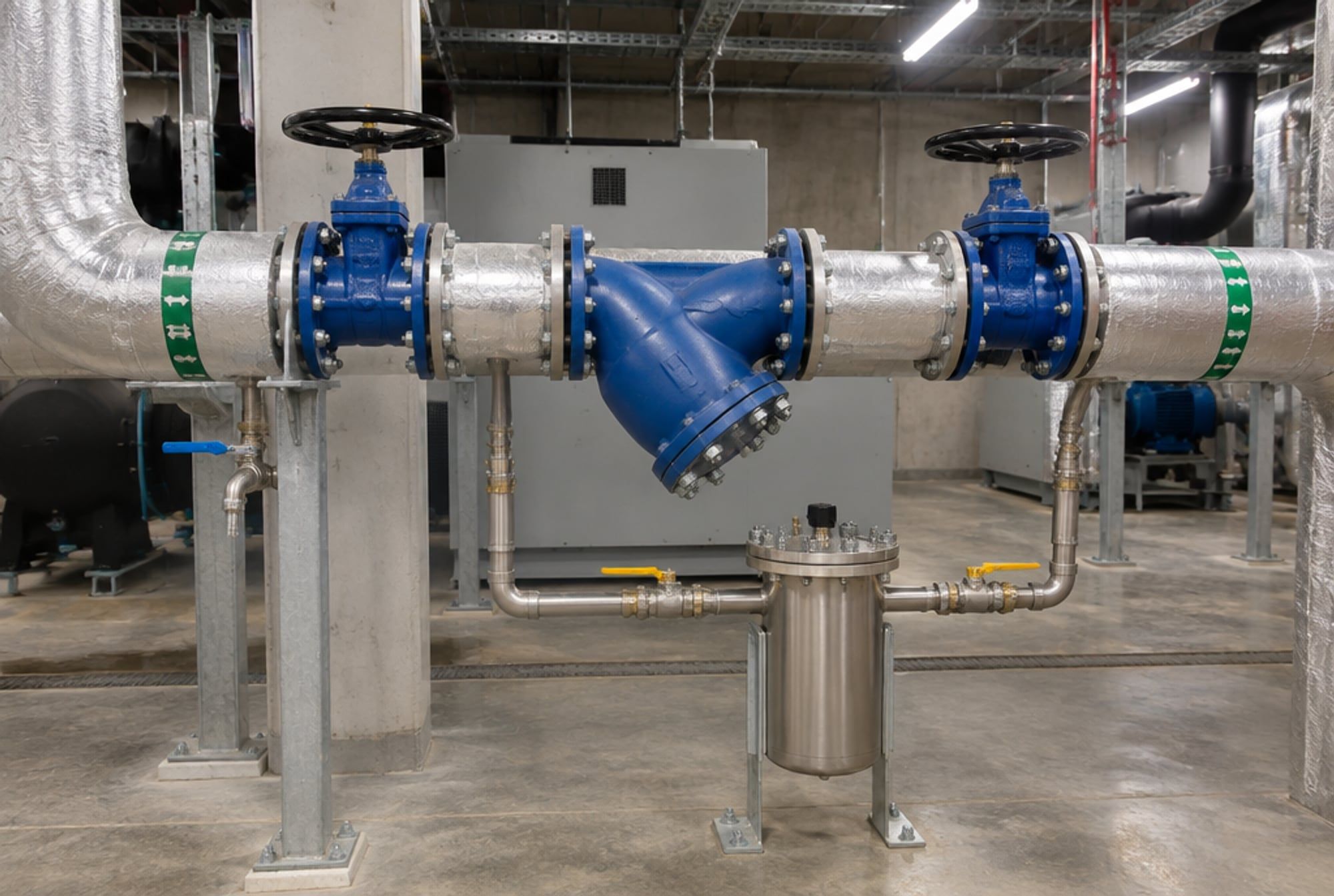
- Chillers · August 12, 2026Centrifugal Chillers Explained: How They WorkA centrifugal chiller compresses refrigerant with a high-speed impeller instead of pistons or screws. It is efficient and compact at large capacity, from about 100 tons to several thousand, and suits hospitals, campuses and data centers. Variable-speed drives and magnetic bearings improve part-load efficiency, while surge at low load and refrigerant choice are the main design limits.
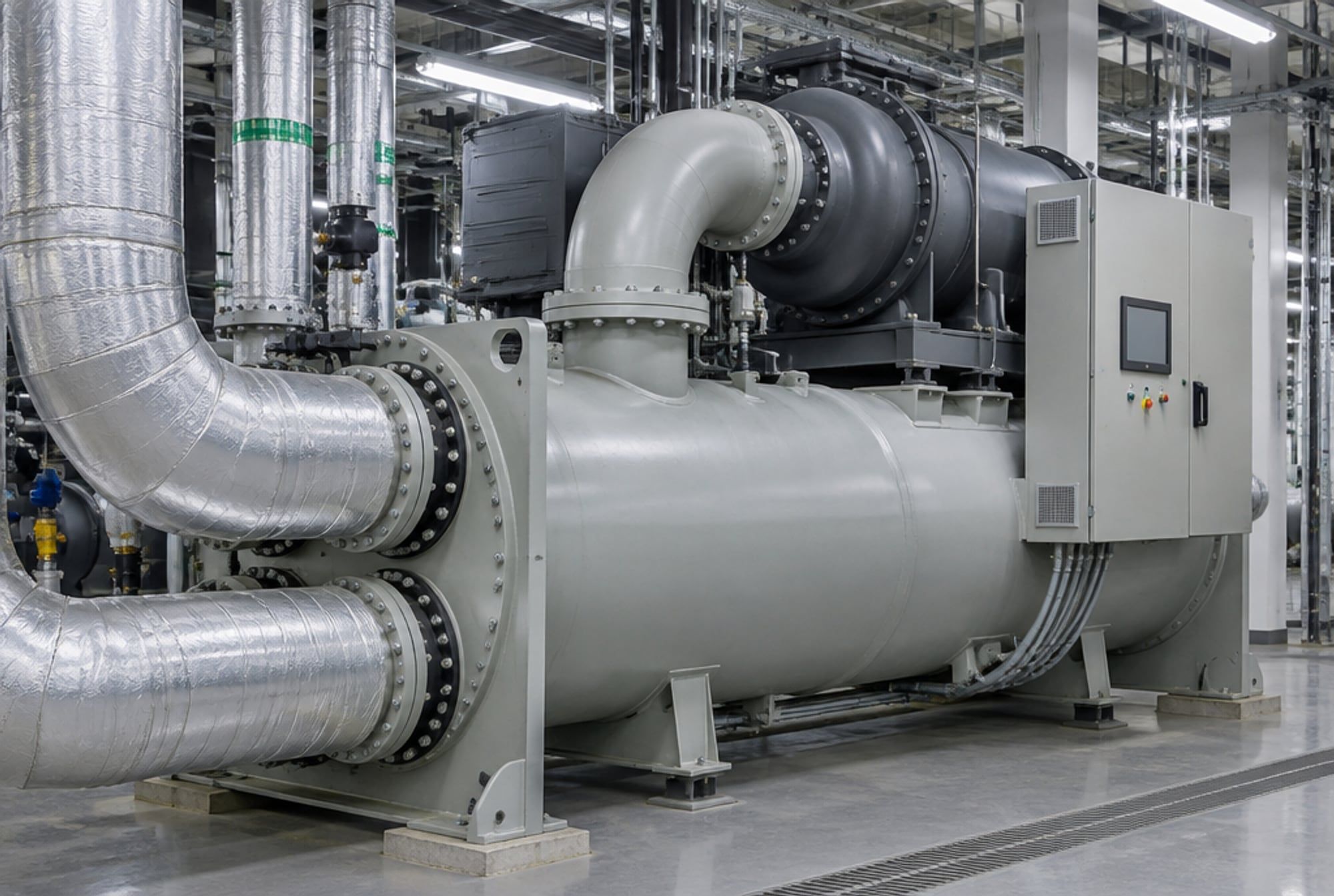
- Texas licensing · August 11, 2026Advertising HVAC Services in Texas: License RulesIn Texas, a company generally should not solicit or advertise air conditioning and refrigeration work without an ACR contractor license behind it, and advertising by a contracting company that holds a license must include the affiliated licensee's license number. The rules are in Texas Occupations Code Chapter 1302 and 16 Texas Administrative Code Section 75.71. General company information, history and educational content is a different matter from soliciting work, but the line is a legal question to confirm with a Texas attorney or TDLR.

- Business · August 10, 2026Buying an HVAC Company in Texas: How the License WorksBuying an HVAC or refrigeration company in Texas usually means an asset or equity purchase after due diligence. The contractor license is issued by TDLR to a qualified individual and business, not sold like a truck or a customer list. A buyer who is not a license holder generally needs a qualified license holder to stay or join, so retention and transition terms are part of the deal. Rules change; verify with TDLR and a Texas attorney.

- Compressors · August 9, 2026Bitzer vs Copeland vs Bock: Compressor Brands OverviewBitzer, Copeland and Bock (now GEA Bock) are three widely used refrigeration compressor brands. Copeland is best known for scroll and Discus semi-hermetic compressors, Bitzer for semi-hermetic reciprocating, screw and scroll products, and Bock for semi-hermetic and open-drive reciprocating compressors, including transcritical CO2 models. Selection depends on refrigerant, capacity, temperature range, parts availability and local support, not on a single best brand.
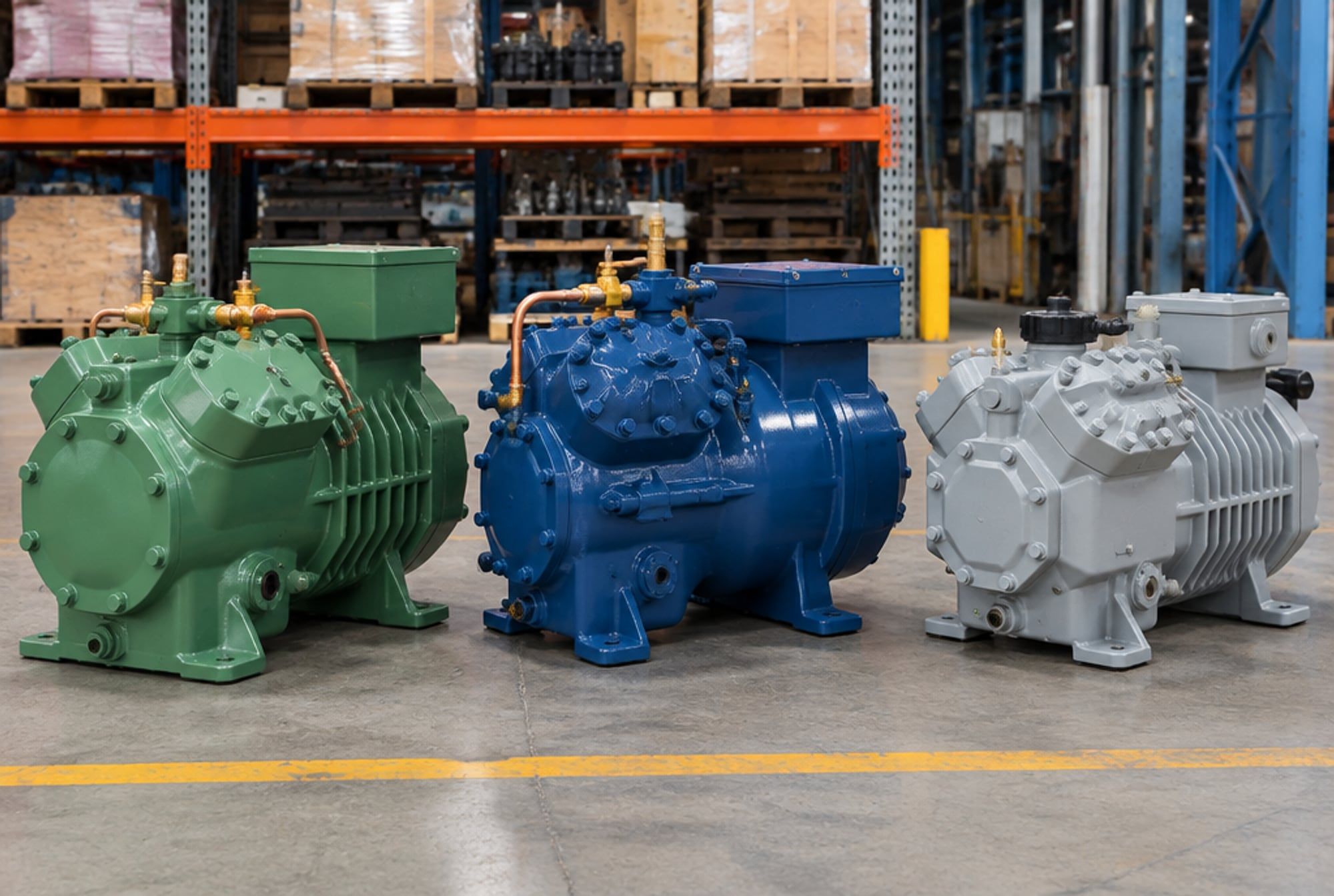
- Texas licensing · August 8, 2026Austin Mechanical Code vs Dallas: Why Texas Cities DifferTexas does not have a single statewide mechanical code for commercial buildings. Each city or county adopts a model code, commonly the International Mechanical Code (IMC) or the Uniform Mechanical Code (UMC), by ordinance and then amends it, so Austin and Dallas can follow different editions with different local changes. The reliable way to know which code applies is to ask the local building department for the adopted edition and amendments for your project.
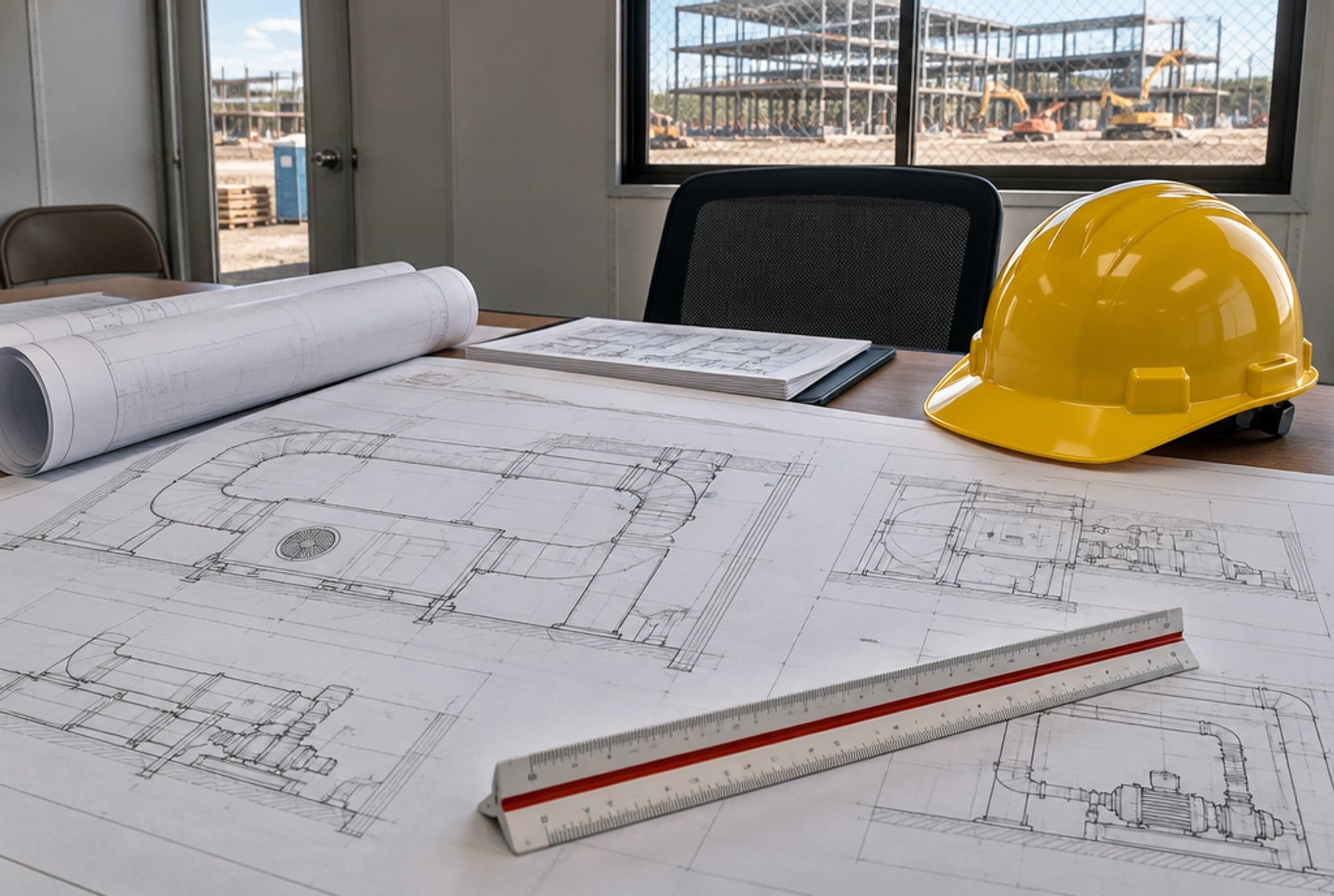
- Industrial refrigeration · August 7, 2026Ammonia vs Freon Refrigeration: Which Fits Where?Ammonia (R-717) is the standard refrigerant for large industrial plants because it is efficient, inexpensive and has no ozone or direct global warming impact, but it is toxic and brings process safety obligations. Freon-type HFC and HFO systems are common in small and mid-size commercial refrigeration because they are non-toxic at normal levels and use standard components, but they face a refrigerant phasedown. The right choice depends mainly on system size, location and the people who will operate it.
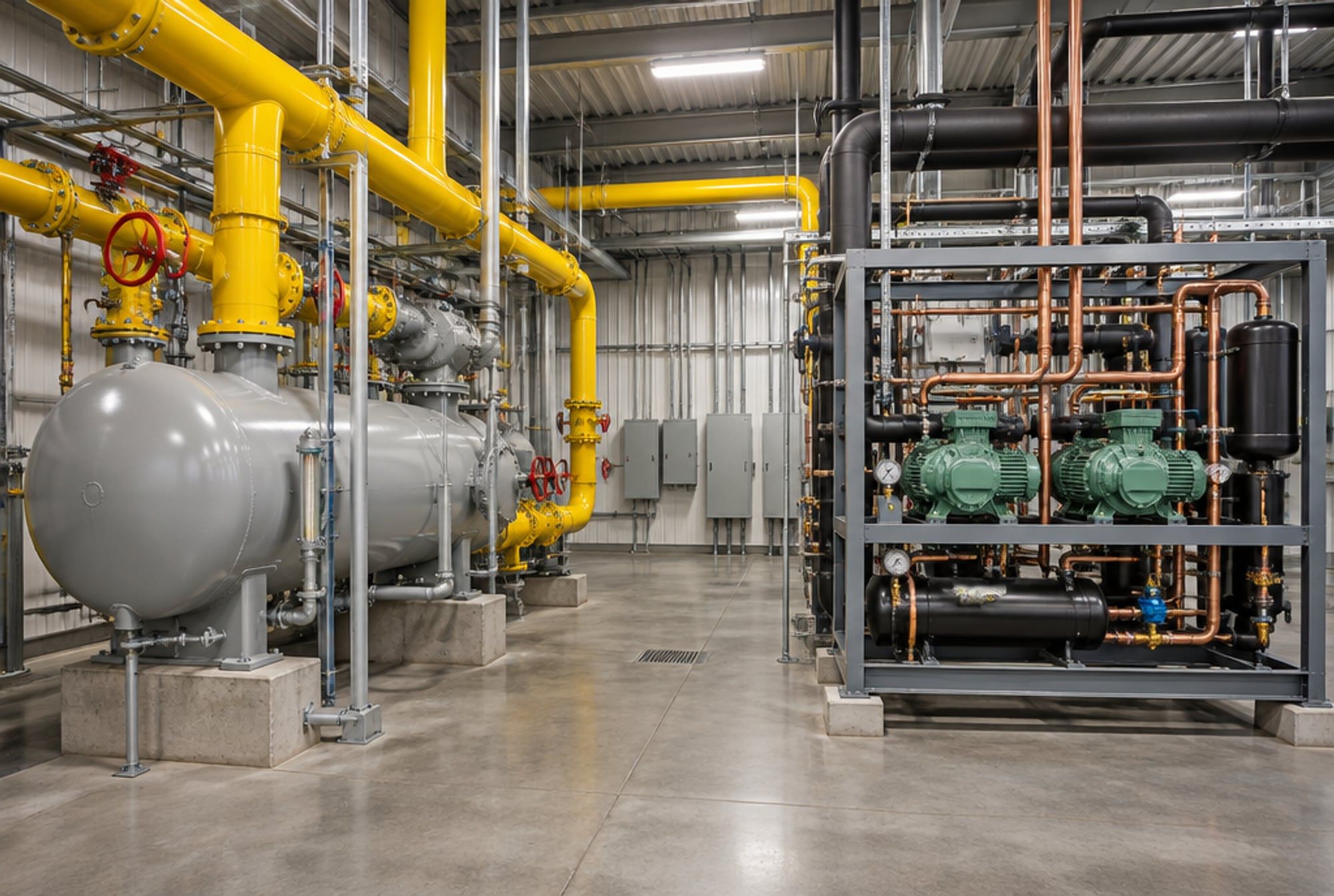
- Industrial refrigeration · August 6, 2026Ammonia Refrigeration System Basics: How It WorksAn ammonia refrigeration system uses R-717 in a vapor-compression cycle with an open-drive compressor, condenser, receiver, expansion devices and evaporators. Ammonia is efficient and has zero ozone depletion and no global warming potential, but it is toxic and needs careful design, training and compliance. Facilities holding 10,000 pounds or more are generally covered by OSHA Process Safety Management and EPA Risk Management Program rules.
Subscribe
New articles, by email.
Let’s build it together.